

nols, uorides, ammonia, and lubricating oil wastes than do plants using the
new technology, but in terms of the overall effect of total wastes produced
per day, considerably more pollution is created by a typical advanced tech—
nology mill than by a typical old technology mill. The former produces more
than four times the total ingot tons per day and, in doing so, creates vastly
more waste, as can be seen in the table (page 95) presenting typical waste
loads of old and advanced steel plants [9].
The comparison between the two mills is indirect, since the output of the
mill with advanced processes
is much greater. When considering the table,
also bear in mind that in both cases the totals are for wastes produced before
various forms of industrial waste treatment such as sedimentation, coag—
ulation, biological treatment, and sludge lagooning. F urthermore, advanced
,
steelmaking technology is anticipated in only 47 percent of all steel plants by
1977, with 24 percent still using the old technology and 29 percent some
form of intermediate technology. The point is that intensied demand for
steel has prompted the introduction of new steelmaking methods that inherently produce more waste in a number of important categories [10]. To
counter this increased pollution potential, wastewater treatment facilities
worth 85865 million in replacement value were installed in steel plants by
1966. This represented only 1.44 percent of total investment in steel plants
and equipment that year, however. The projection of waste pollution loads to
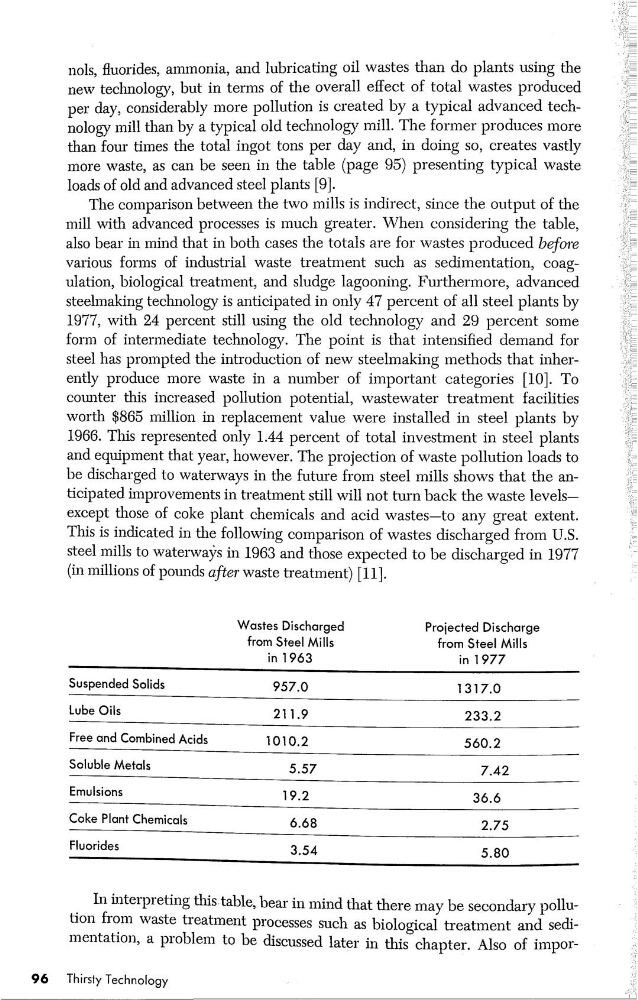
be discharged to waterways in the future from steel mills shows that the an—
ticipated irnprovements in treatment still will not turn back the waste levels—
except those of coke plant chemicals and acid wastes—to any great extent.
This is indicated in the following comparison of wastes discharged from U.S.
steel mills to waterwaÿs in 1963 and those expected to be discharged in 1977
(in millions of pounds after waste treatment) [Il].
,
Wastes Discharged
Proiectecl Discharge
from Steel Mills
from Steel Mills
in 1963
in 1977
Suspended Solids
957_0
1317_0
…
Lube Oils
211.9
233.2
Free and Combined Acids
101 0.2
560.2
…__
Soluble Metals
5_57
7_42
Emulsions
19.2
36,6
Coke Plant Chemicals
6,68
2.75
Fluorides
5 80
In interpreting thistable, bear in mind that there may be secondary pollu—
-
tion from
waste treatment processes such as biological treatment and sedimentation, a problem to be discussed later in this chapter. Also of impor96
Thirsty Technology
»
new technology, but in terms of the overall effect of total wastes produced
per day, considerably more pollution is created by a typical advanced tech—
nology mill than by a typical old technology mill. The former produces more
than four times the total ingot tons per day and, in doing so, creates vastly
more waste, as can be seen in the table (page 95) presenting typical waste
loads of old and advanced steel plants [9].
The comparison between the two mills is indirect, since the output of the
mill with advanced processes
is much greater. When considering the table,
also bear in mind that in both cases the totals are for wastes produced before
various forms of industrial waste treatment such as sedimentation, coag—
ulation, biological treatment, and sludge lagooning. F urthermore, advanced
,
steelmaking technology is anticipated in only 47 percent of all steel plants by
1977, with 24 percent still using the old technology and 29 percent some
form of intermediate technology. The point is that intensied demand for
steel has prompted the introduction of new steelmaking methods that inherently produce more waste in a number of important categories [10]. To
counter this increased pollution potential, wastewater treatment facilities
worth 85865 million in replacement value were installed in steel plants by
1966. This represented only 1.44 percent of total investment in steel plants
and equipment that year, however. The projection of waste pollution loads to
be discharged to waterways in the future from steel mills shows that the an—
ticipated irnprovements in treatment still will not turn back the waste levels—
except those of coke plant chemicals and acid wastes—to any great extent.
This is indicated in the following comparison of wastes discharged from U.S.
steel mills to waterwaÿs in 1963 and those expected to be discharged in 1977
(in millions of pounds after waste treatment) [Il].
,
Wastes Discharged
Proiectecl Discharge
from Steel Mills
from Steel Mills
in 1963
in 1977
Suspended Solids
957_0
1317_0
…
Lube Oils
211.9
233.2
Free and Combined Acids
101 0.2
560.2
…__
Soluble Metals
5_57
7_42
Emulsions
19.2
36,6
Coke Plant Chemicals
6,68
2.75
Fluorides
5 80
In interpreting thistable, bear in mind that there may be secondary pollu—
-
tion from
waste treatment processes such as biological treatment and sedimentation, a problem to be discussed later in this chapter. Also of impor96
Thirsty Technology
»