

188
7: Hua-mei Chen, Pramod K. Varshney
a
b
c
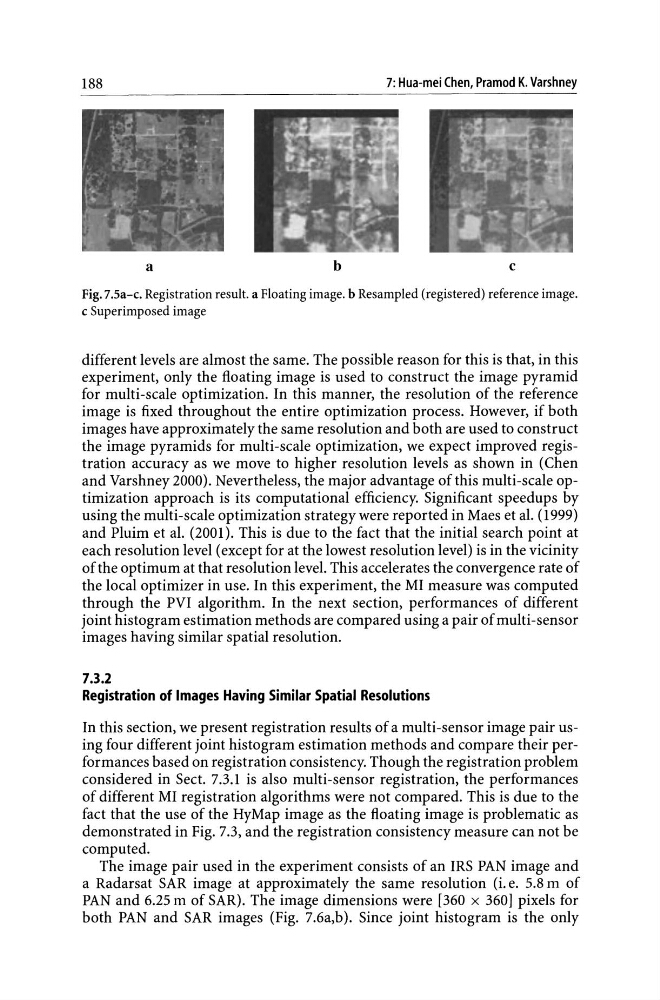
Fig. 7.Sa-c. Registration result. a Floating image. b Resampled (registered) reference image.
c Superimposed image
different levels are almost the same. The possible reason for this is that, in this
experiment, only the floating image is used to construct the image pyramid
for multi-scale optimization. In this manner, the resolution of the reference
image is fixed throughout the entire optimization process. However, if both
images have approximately the same resolution and both are used to construct
the image pyramids for multi-scale optimization, we expect improved registration accuracy as we move to higher resolution levels as shown in (Chen
and Varshney 2000). Nevertheless, the major advantage of this multi-scale optimization approach is its computational efficiency. Significant speedups by
using the multi-scale optimization strategy were reported in Maes et al. (1999)
and Pluim et al. (2001). This is due to the fact that the initial search point at
each resolution level (except for at the lowest resolution level) is in the vicinity
of the optimum at that resolution level. This accelerates the convergence rate of
the local optimizer in use. In this experiment, the MI measure was computed
through the PVI algorithm. In the next section, performances of different
joint histogram estimation methods are compared using a pair of multi-sensor
images having similar spatial resolution.
7.3.2
Registration of Images Having Similar Spatial Resolutions
In this section, we present registration results of a multi-sensor image pair using four different joint histogram estimation methods and compare their performances based on registration consistency. Though the registration problem
considered in Sect. 7.3.1 is also multi-sensor registration, the performances
of different MI registration algorithms were not compared. This is due to the
fact that the use of the HyMap image as the floating image is problematic as
demonstrated in Fig. 7.3, and the registration consistency measure can not be
computed.
The image pair used in the experiment consists of an IRS PAN image and
a Radarsat SAR image at approximately the same resolution (i. e. 5.8 m of
PAN and 6.25 m of SAR). The image dimensions were [360 x 360] pixels for
both PAN and SAR images (Fig. 7.6a,b). Since joint histogram is the only
7: Hua-mei Chen, Pramod K. Varshney
a
b
c
Fig. 7.Sa-c. Registration result. a Floating image. b Resampled (registered) reference image.
c Superimposed image
different levels are almost the same. The possible reason for this is that, in this
experiment, only the floating image is used to construct the image pyramid
for multi-scale optimization. In this manner, the resolution of the reference
image is fixed throughout the entire optimization process. However, if both
images have approximately the same resolution and both are used to construct
the image pyramids for multi-scale optimization, we expect improved registration accuracy as we move to higher resolution levels as shown in (Chen
and Varshney 2000). Nevertheless, the major advantage of this multi-scale optimization approach is its computational efficiency. Significant speedups by
using the multi-scale optimization strategy were reported in Maes et al. (1999)
and Pluim et al. (2001). This is due to the fact that the initial search point at
each resolution level (except for at the lowest resolution level) is in the vicinity
of the optimum at that resolution level. This accelerates the convergence rate of
the local optimizer in use. In this experiment, the MI measure was computed
through the PVI algorithm. In the next section, performances of different
joint histogram estimation methods are compared using a pair of multi-sensor
images having similar spatial resolution.
7.3.2
Registration of Images Having Similar Spatial Resolutions
In this section, we present registration results of a multi-sensor image pair using four different joint histogram estimation methods and compare their performances based on registration consistency. Though the registration problem
considered in Sect. 7.3.1 is also multi-sensor registration, the performances
of different MI registration algorithms were not compared. This is due to the
fact that the use of the HyMap image as the floating image is problematic as
demonstrated in Fig. 7.3, and the registration consistency measure can not be
computed.
The image pair used in the experiment consists of an IRS PAN image and
a Radarsat SAR image at approximately the same resolution (i. e. 5.8 m of
PAN and 6.25 m of SAR). The image dimensions were [360 x 360] pixels for
both PAN and SAR images (Fig. 7.6a,b). Since joint histogram is the only