

Quantitative Analysis of AMLI-ETO Fusion Transcripts in t(8;21) Positive AML Using Real-Time RT-PCR ITiJiJ
taken twice a week. AMLl-ETO was normalized to the housekeeping genes
G6PDH and cABL. The relative quantification of AMLl-ETO/G6PDH and AMLlETO/cABL at each point of analysis during induction therapy revealed virtually
identical results. Thus G6PDH as well as cABL are appropriate reference genes for
AMLl-ETO quantification. This confirms data described previously for quantitative analysis of BCR-ABL fusion transcripts in CML [10).
Quantification of AMLl-ETO levels using real-time RT-PCR during the course of
therapy of a patient demonstrates that real-time PCR has the potential to diagnose molecular relapse before it is detectable by cytogenetics or cytomorphology
(Fig. 6).
Conclusions
Quantitative monitoring of AMLl-ETO fusion transcript levels in t(8;2l) positive
AML using real-time PCR offers several advantages. Compared to competitive
f 55~~==========~--~~==========~~~~=;==~
:.J 5
45
T orgel. 06P0H
1:10
1' 100
1' 1000
1:10000
Patiert
-
No I ~ . control
0.5
a
.Q.5 ,
a
,
5
-
Lne~ Regesoion
. Crotmg Poirto
SIope. ·3247
IntelcepI • 43 50
EnOl-o.l29
,. ·"00
b
36
~34
z
!32
:Il
28,
1.5
,
10
,
2
I
15
,
2.5
,
,
20
25
C¥CIe NlITIber
,
3
,
,
:Il
3.5
Log ConceMabon
,
35
I
4.5
I
45
I
5
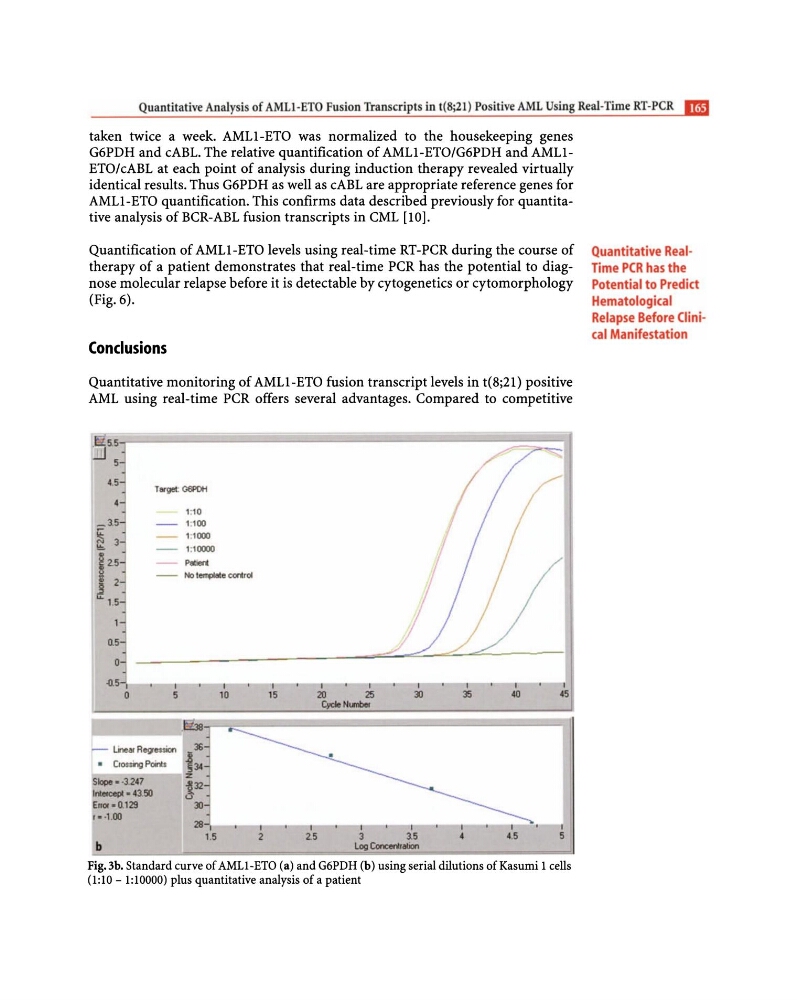
Fig.3b. Standard curve of AMLl-ETO (a) and G6PDH (b) using serial dilutions of Kasumi 1 cells
(1:10 - 1:lO000) plus quantitative analysis of a patient
Quantitative RealTime peR has the
Potential to Predict
Hematological
Relapse Before Clinical Manifestation
taken twice a week. AMLl-ETO was normalized to the housekeeping genes
G6PDH and cABL. The relative quantification of AMLl-ETO/G6PDH and AMLlETO/cABL at each point of analysis during induction therapy revealed virtually
identical results. Thus G6PDH as well as cABL are appropriate reference genes for
AMLl-ETO quantification. This confirms data described previously for quantitative analysis of BCR-ABL fusion transcripts in CML [10).
Quantification of AMLl-ETO levels using real-time RT-PCR during the course of
therapy of a patient demonstrates that real-time PCR has the potential to diagnose molecular relapse before it is detectable by cytogenetics or cytomorphology
(Fig. 6).
Conclusions
Quantitative monitoring of AMLl-ETO fusion transcript levels in t(8;2l) positive
AML using real-time PCR offers several advantages. Compared to competitive
f 55~~==========~--~~==========~~~~=;==~
:.J 5
45
T orgel. 06P0H
1:10
1' 100
1' 1000
1:10000
Patiert
-
No I ~ . control
0.5
a
.Q.5 ,
a
,
5
-
Lne~ Regesoion
. Crotmg Poirto
SIope. ·3247
IntelcepI • 43 50
EnOl-o.l29
,. ·"00
b
36
~34
z
!32
:Il
28,
1.5
,
10
,
2
I
15
,
2.5
,
,
20
25
C¥CIe NlITIber
,
3
,
,
:Il
3.5
Log ConceMabon
,
35
I
4.5
I
45
I
5
Fig.3b. Standard curve of AMLl-ETO (a) and G6PDH (b) using serial dilutions of Kasumi 1 cells
(1:10 - 1:lO000) plus quantitative analysis of a patient
Quantitative RealTime peR has the
Potential to Predict
Hematological
Relapse Before Clinical Manifestation