

429
... -
.. ,-
- 1.6
-2
b _ 400m
3
3,'
• ' .S 5
•
1110 4
X 10'"'
.10~1
.'
II: 10..a
.'
1.'
I,S
.'
"
., '
0.5
. 0
.... , . ..
. ... ....
-0,$
_1
..•.•
-1.5
.. .'
b . 7()()'n
b _ 000m
-2
2.5
3
3.'
•
. .5
S
2.. 3 3 .S •
• . S
5
" ' O~
U
. ,04
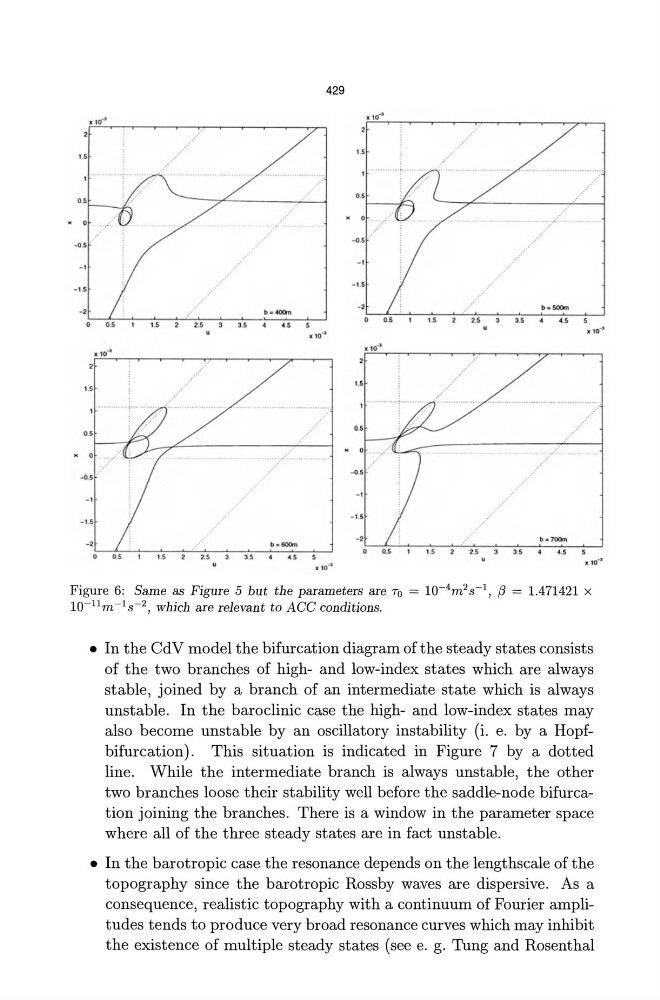
Figure 6: Same as Figure 5 but the parameters are TO = 1O-4m 2 S-I, (J = 1.471421 x
1O-llm- 1 s- 2 , which are relevant to ACC conditions .
• In the CdV model the bifurcation diagram of the steady states consists
of the two branches of high- and low-index states which are always
stable, joined by a branch of an intermediate state which is always
unstable. In the baroclinic case the high- and low-index states may
also become unstable by an oscillatory instability (i. e. by a Hopfbifurcation). This situation is indicated in Figure 7 by a dotted
line. While the intermediate branch is always unstable, the other
two branches loose their stability well before the saddle-node bifurcation joining the branches. There is a window in the parameter space
where all of the three steady states are in fact unstable.
• In the barotropic case the resonance depends on the lengthscale of the
topography since the barotropic Rossby waves are dispersive. As a
consequence, realistic topography with a continuum of Fourier amplitudes tends to produce very broad resonance curves which may inhibit
the existence of multiple steady states (see e. g. Tung and Rosenthal
... -
.. ,-
- 1.6
-2
b _ 400m
3
3,'
• ' .S 5
•
1110 4
X 10'"'
.10~1
.'
II: 10..a
.'
1.'
I,S
.'
"
., '
0.5
. 0
.... , . ..
. ... ....
-0,$
_1
..•.•
-1.5
.. .'
b . 7()()'n
b _ 000m
-2
2.5
3
3.'
•
. .5
S
2.. 3 3 .S •
• . S
5
" ' O~
U
. ,04
Figure 6: Same as Figure 5 but the parameters are TO = 1O-4m 2 S-I, (J = 1.471421 x
1O-llm- 1 s- 2 , which are relevant to ACC conditions .
• In the CdV model the bifurcation diagram of the steady states consists
of the two branches of high- and low-index states which are always
stable, joined by a branch of an intermediate state which is always
unstable. In the baroclinic case the high- and low-index states may
also become unstable by an oscillatory instability (i. e. by a Hopfbifurcation). This situation is indicated in Figure 7 by a dotted
line. While the intermediate branch is always unstable, the other
two branches loose their stability well before the saddle-node bifurcation joining the branches. There is a window in the parameter space
where all of the three steady states are in fact unstable.
• In the barotropic case the resonance depends on the lengthscale of the
topography since the barotropic Rossby waves are dispersive. As a
consequence, realistic topography with a continuum of Fourier amplitudes tends to produce very broad resonance curves which may inhibit
the existence of multiple steady states (see e. g. Tung and Rosenthal