

1 Theoretical Chemistry for Advanced Nanomaterials: Computational. . .
19
Hydrogen Society in the Future
Renewable Energy
Hydropower
Windpower
Solar
Electric Energy
Hydrogen
Hydrogen Tank
Hydrogen Storage Material
Fuel Cell
Fuel
Cell
Oil
Natural Gas
Fossil Fuel
Secondary Battery
Save Electric Energy
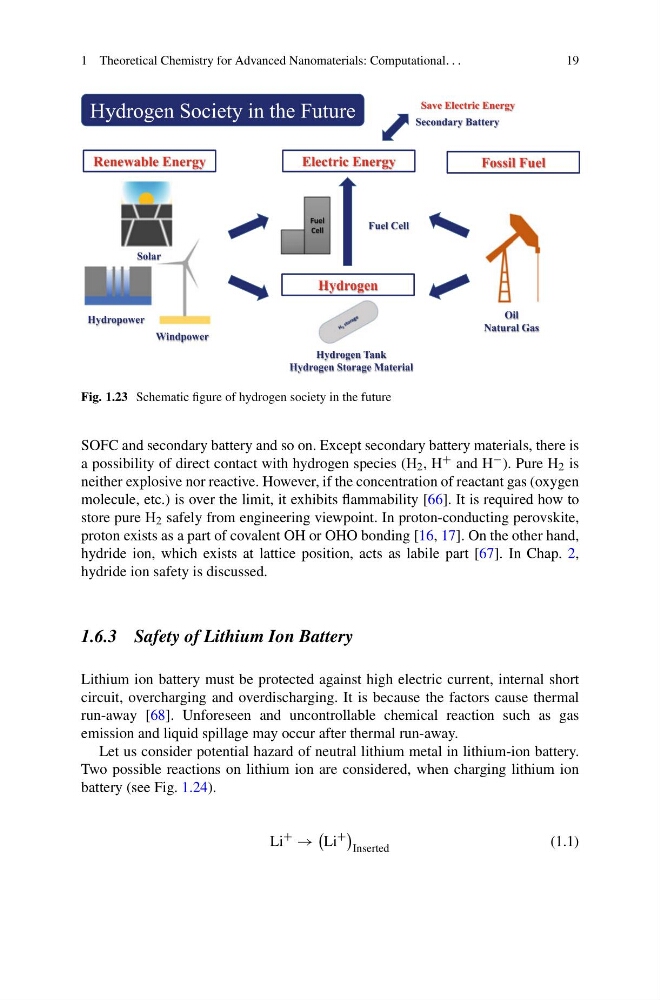
Fig. 1.23 Schematic figure of hydrogen society in the future
SOFC and secondary battery and so on. Except secondary battery materials, there is
a possibility of direct contact with hydrogen species (H 2 , H + and H − ). Pure H 2 is
neither explosive nor reactive. However, if the concentration of reactant gas (oxygen
molecule, etc.) is over the limit, it exhibits flammability [66]. It is required how to
store pure H 2 safely from engineering viewpoint. In proton-conducting perovskite,
proton exists as a part of covalent OH or OHO bonding [16, 17]. On the other hand,
hydride ion, which exists at lattice position, acts as labile part [67]. In Chap. 2,
hydride ion safety is discussed.
1.6.3 Safety of Lithium Ion Battery
Lithium ion battery must be protected against high electric current, internal short
circuit, overcharging and overdischarging. It is because the factors cause thermal
run-away [68]. Unforeseen and uncontrollable chemical reaction such as gas
emission and liquid spillage may occur after thermal run-away.
Let us consider potential hazard of neutral lithium metal in lithium-ion battery.
Two possible reactions on lithium ion are considered, when charging lithium ion
battery (see Fig. 1.24).
Li
+
→
Li
+
Inserted
(1.1)
19
Hydrogen Society in the Future
Renewable Energy
Hydropower
Windpower
Solar
Electric Energy
Hydrogen
Hydrogen Tank
Hydrogen Storage Material
Fuel Cell
Fuel
Cell
Oil
Natural Gas
Fossil Fuel
Secondary Battery
Save Electric Energy
Fig. 1.23 Schematic figure of hydrogen society in the future
SOFC and secondary battery and so on. Except secondary battery materials, there is
a possibility of direct contact with hydrogen species (H 2 , H + and H − ). Pure H 2 is
neither explosive nor reactive. However, if the concentration of reactant gas (oxygen
molecule, etc.) is over the limit, it exhibits flammability [66]. It is required how to
store pure H 2 safely from engineering viewpoint. In proton-conducting perovskite,
proton exists as a part of covalent OH or OHO bonding [16, 17]. On the other hand,
hydride ion, which exists at lattice position, acts as labile part [67]. In Chap. 2,
hydride ion safety is discussed.
1.6.3 Safety of Lithium Ion Battery
Lithium ion battery must be protected against high electric current, internal short
circuit, overcharging and overdischarging. It is because the factors cause thermal
run-away [68]. Unforeseen and uncontrollable chemical reaction such as gas
emission and liquid spillage may occur after thermal run-away.
Let us consider potential hazard of neutral lithium metal in lithium-ion battery.
Two possible reactions on lithium ion are considered, when charging lithium ion
battery (see Fig. 1.24).
Li
+
→
Li
+
Inserted
(1.1)