
 French

Permalien :
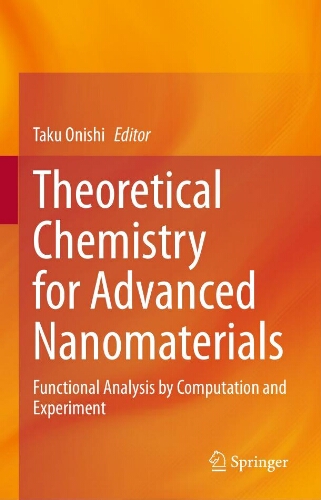
Theoretical chemistry for advanced nanomaterials functional analysis by computation and experiment
- Date_TXT
- Singapore: Springer, 2020
- Auteur
- Onishi Taku
- Type de document
- Livre
Description :
This book collects recent topics of theoretical chemistry for advanced nanomaterials from the points of view of both computational and experimental chemistry. It is written for computational and experimental chemists, including undergraduate students, who are working with advanced nanomaterials, where collaboration and interplay between computation and experiment are essential. After the general introduction of nanomaterials, several computational approaches are explained in Part II. Each chapter presents not only calculation methods but also concrete calculation results for advanced nanomaterials. Hydride ion conducting nanomaterials, high-k dielectric nanomaterials, and organic electronics are focused on. In Part III, the interplay between computational and experimental approaches is explained. The chapters show calculation results, combined with corresponding experimental data. Dimensionality of nanomaterials, electronic structure of oligomers and nanorods, carbon nanomaterials, and the electronic structure of a nanosized sandwich cluster is looked at carefully. In Part IV, functionality analysis is explained from the point of view of the experimental approach. The emphasis is on the mechanism of photoluminescence and hydrogen generation using silicon nanopowder, the superionic conducting mechanism of glass ceramics, nanoclusters formation on the surface of metal oxides, and the magnetic property of an organic one-dimensional nanochannel. Finally, forthcoming theoretical methods for excited states and quantum dynamics are introduced in Part V.