

280
P. Veerakumar et al.
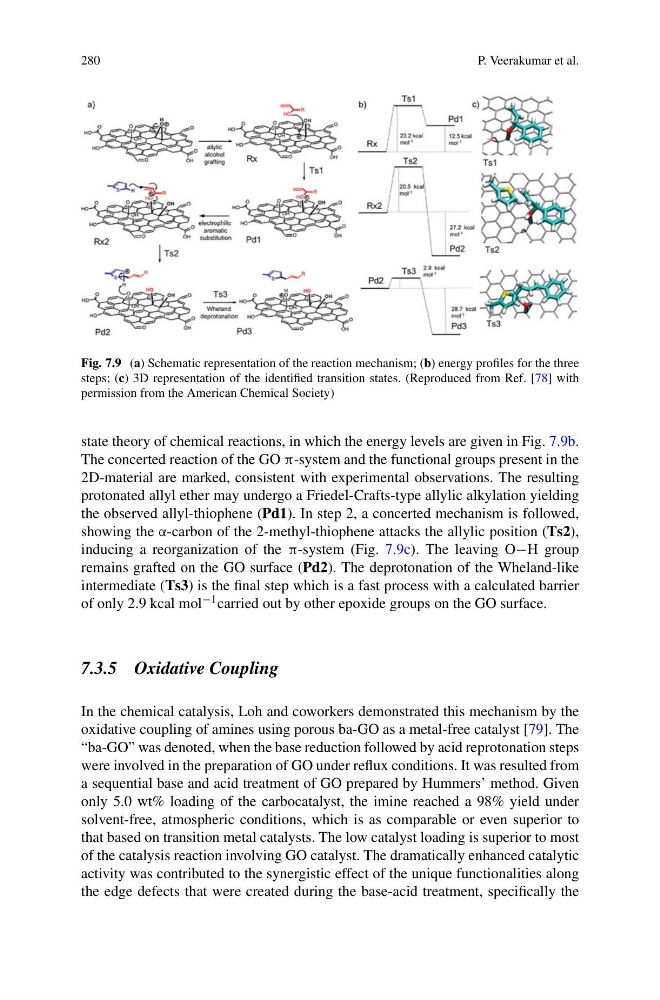
Fig. 7.9 (a) Schematic representation of the reaction mechanism; (b) energy profiles for the three
steps; (c) 3D representation of the identified transition states. (Reproduced from Ref. [78] with
permission from the American Chemical Society)
state theory of chemical reactions, in which the energy levels are given in Fig. 7.9b.
The concerted reaction of the GO π-system and the functional groups present in the
2D-material are marked, consistent with experimental observations. The resulting
protonated allyl ether may undergo a Friedel-Crafts-type allylic alkylation yielding
the observed allyl-thiophene (Pd1). In step 2, a concerted mechanism is followed,
showing the α-carbon of the 2-methyl-thiophene attacks the allylic position (Ts2),
inducing a reorganization of the π-system (Fig. 7.9c). The leaving O−H group
remains grafted on the GO surface (Pd2). The deprotonation of the Wheland-like
intermediate (Ts3) is the final step which is a fast process with a calculated barrier
of only 2.9 kcal mol −1 carried out by other epoxide groups on the GO surface.
7.3.5 Oxidative Coupling
In the chemical catalysis, Loh and coworkers demonstrated this mechanism by the
oxidative coupling of amines using porous ba-GO as a metal-free catalyst [79]. The
“ba-GO” was denoted, when the base reduction followed by acid reprotonation steps
were involved in the preparation of GO under reflux conditions. It was resulted from
a sequential base and acid treatment of GO prepared by Hummers’ method. Given
only 5.0 wt% loading of the carbocatalyst, the imine reached a 98% yield under
solvent-free, atmospheric conditions, which is as comparable or even superior to
that based on transition metal catalysts. The low catalyst loading is superior to most
of the catalysis reaction involving GO catalyst. The dramatically enhanced catalytic
activity was contributed to the synergistic effect of the unique functionalities along
the edge defects that were created during the base-acid treatment, specifically the
P. Veerakumar et al.
Fig. 7.9 (a) Schematic representation of the reaction mechanism; (b) energy profiles for the three
steps; (c) 3D representation of the identified transition states. (Reproduced from Ref. [78] with
permission from the American Chemical Society)
state theory of chemical reactions, in which the energy levels are given in Fig. 7.9b.
The concerted reaction of the GO π-system and the functional groups present in the
2D-material are marked, consistent with experimental observations. The resulting
protonated allyl ether may undergo a Friedel-Crafts-type allylic alkylation yielding
the observed allyl-thiophene (Pd1). In step 2, a concerted mechanism is followed,
showing the α-carbon of the 2-methyl-thiophene attacks the allylic position (Ts2),
inducing a reorganization of the π-system (Fig. 7.9c). The leaving O−H group
remains grafted on the GO surface (Pd2). The deprotonation of the Wheland-like
intermediate (Ts3) is the final step which is a fast process with a calculated barrier
of only 2.9 kcal mol −1 carried out by other epoxide groups on the GO surface.
7.3.5 Oxidative Coupling
In the chemical catalysis, Loh and coworkers demonstrated this mechanism by the
oxidative coupling of amines using porous ba-GO as a metal-free catalyst [79]. The
“ba-GO” was denoted, when the base reduction followed by acid reprotonation steps
were involved in the preparation of GO under reflux conditions. It was resulted from
a sequential base and acid treatment of GO prepared by Hummers’ method. Given
only 5.0 wt% loading of the carbocatalyst, the imine reached a 98% yield under
solvent-free, atmospheric conditions, which is as comparable or even superior to
that based on transition metal catalysts. The low catalyst loading is superior to most
of the catalysis reaction involving GO catalyst. The dramatically enhanced catalytic
activity was contributed to the synergistic effect of the unique functionalities along
the edge defects that were created during the base-acid treatment, specifically the