

7 Computational and Experimental Analysis of Carbon Functional Nanomaterials
281
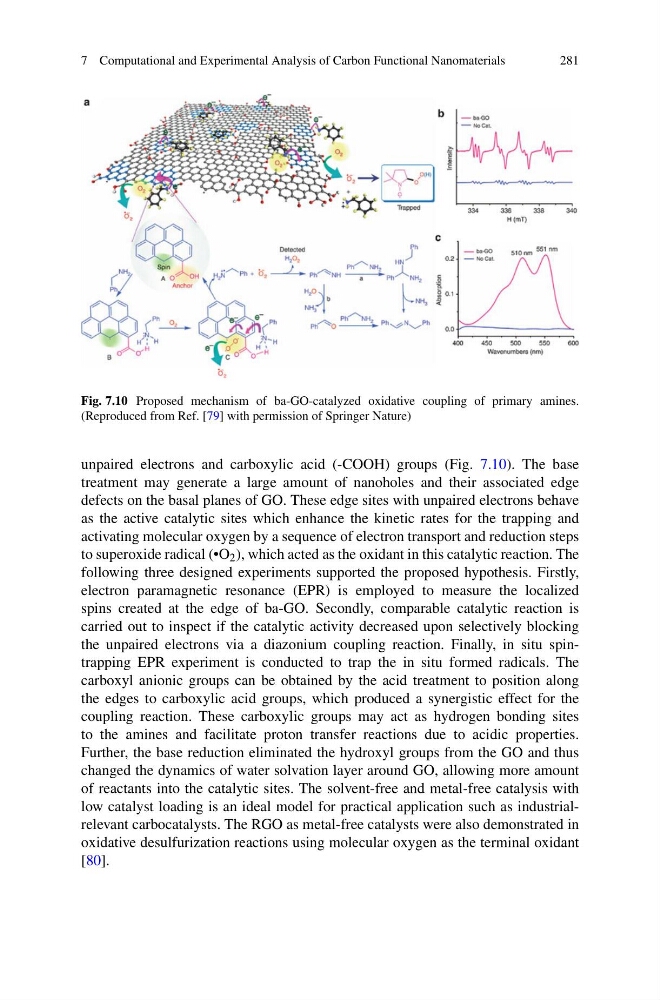
Fig. 7.10 Proposed mechanism of ba-GO-catalyzed oxidative coupling of primary amines.
(Reproduced from Ref. [79] with permission of Springer Nature)
unpaired electrons and carboxylic acid (-COOH) groups (Fig. 7.10). The base
treatment may generate a large amount of nanoholes and their associated edge
defects on the basal planes of GO. These edge sites with unpaired electrons behave
as the active catalytic sites which enhance the kinetic rates for the trapping and
activating molecular oxygen by a sequence of electron transport and reduction steps
to superoxide radical (•O 2 ), which acted as the oxidant in this catalytic reaction. The
following three designed experiments supported the proposed hypothesis. Firstly,
electron paramagnetic resonance (EPR) is employed to measure the localized
spins created at the edge of ba-GO. Secondly, comparable catalytic reaction is
carried out to inspect if the catalytic activity decreased upon selectively blocking
the unpaired electrons via a diazonium coupling reaction. Finally, in situ spintrapping EPR experiment is conducted to trap the in situ formed radicals. The
carboxyl anionic groups can be obtained by the acid treatment to position along
the edges to carboxylic acid groups, which produced a synergistic effect for the
coupling reaction. These carboxylic groups may act as hydrogen bonding sites
to the amines and facilitate proton transfer reactions due to acidic properties.
Further, the base reduction eliminated the hydroxyl groups from the GO and thus
changed the dynamics of water solvation layer around GO, allowing more amount
of reactants into the catalytic sites. The solvent-free and metal-free catalysis with
low catalyst loading is an ideal model for practical application such as industrialrelevant carbocatalysts. The RGO as metal-free catalysts were also demonstrated in
oxidative desulfurization reactions using molecular oxygen as the terminal oxidant
[80].
281
Fig. 7.10 Proposed mechanism of ba-GO-catalyzed oxidative coupling of primary amines.
(Reproduced from Ref. [79] with permission of Springer Nature)
unpaired electrons and carboxylic acid (-COOH) groups (Fig. 7.10). The base
treatment may generate a large amount of nanoholes and their associated edge
defects on the basal planes of GO. These edge sites with unpaired electrons behave
as the active catalytic sites which enhance the kinetic rates for the trapping and
activating molecular oxygen by a sequence of electron transport and reduction steps
to superoxide radical (•O 2 ), which acted as the oxidant in this catalytic reaction. The
following three designed experiments supported the proposed hypothesis. Firstly,
electron paramagnetic resonance (EPR) is employed to measure the localized
spins created at the edge of ba-GO. Secondly, comparable catalytic reaction is
carried out to inspect if the catalytic activity decreased upon selectively blocking
the unpaired electrons via a diazonium coupling reaction. Finally, in situ spintrapping EPR experiment is conducted to trap the in situ formed radicals. The
carboxyl anionic groups can be obtained by the acid treatment to position along
the edges to carboxylic acid groups, which produced a synergistic effect for the
coupling reaction. These carboxylic groups may act as hydrogen bonding sites
to the amines and facilitate proton transfer reactions due to acidic properties.
Further, the base reduction eliminated the hydroxyl groups from the GO and thus
changed the dynamics of water solvation layer around GO, allowing more amount
of reactants into the catalytic sites. The solvent-free and metal-free catalysis with
low catalyst loading is an ideal model for practical application such as industrialrelevant carbocatalysts. The RGO as metal-free catalysts were also demonstrated in
oxidative desulfurization reactions using molecular oxygen as the terminal oxidant
[80].