

8
T. Onishi
Bulk
Nanosize material
Atom or Molecule
Quantum interaction
Dissociation Reaction
Quantum interaction
Aggregation Reaction
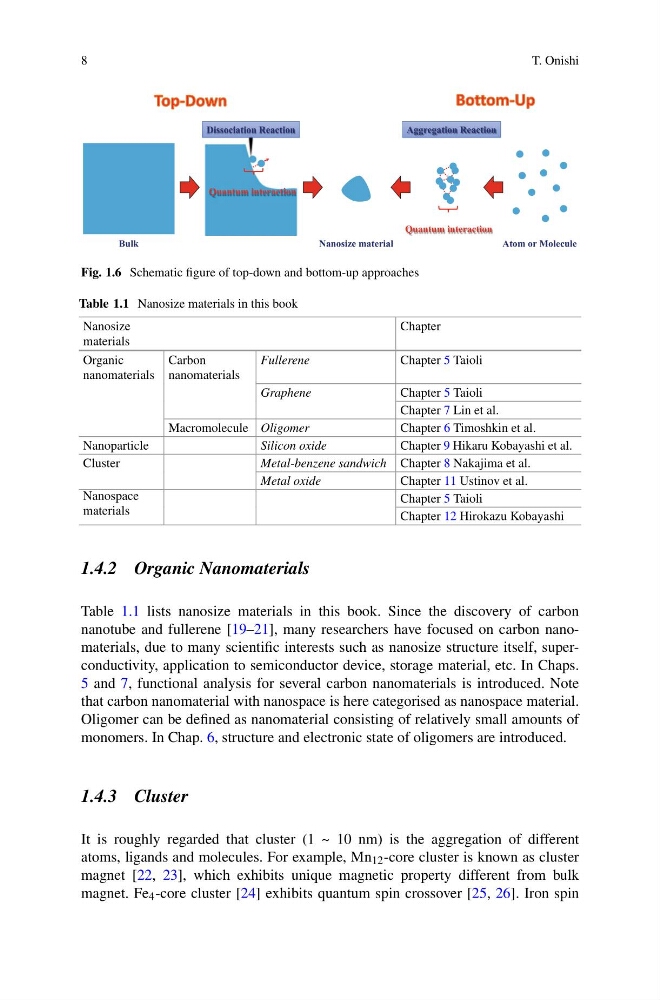
Fig. 1.6 Schematic figure of top-down and bottom-up approaches
Table 1.1 Nanosize materials in this book
Nanosize
materials
Chapter
Organic
nanomaterials
Carbon
nanomaterials
Fullerene
Chapter 5 Taioli
Graphene
Chapter 5 Taioli
Chapter 7 Lin et al.
Macromolecule Oligomer
Chapter 6 Timoshkin et al.
Nanoparticle
Silicon oxide
Chapter 9 Hikaru Kobayashi et al.
Cluster
Metal-benzene sandwich Chapter 8 Nakajima et al.
Metal oxide
Chapter 11 Ustinov et al.
Nanospace
materials
Chapter 5 Taioli
Chapter 12 Hirokazu Kobayashi
1.4.2 Organic Nanomaterials
Table 1.1 lists nanosize materials in this book. Since the discovery of carbon
nanotube and fullerene [19–21], many researchers have focused on carbon nanomaterials, due to many scientific interests such as nanosize structure itself, superconductivity, application to semiconductor device, storage material, etc. In Chaps.
5 and 7, functional analysis for several carbon nanomaterials is introduced. Note
that carbon nanomaterial with nanospace is here categorised as nanospace material.
Oligomer can be defined as nanomaterial consisting of relatively small amounts of
monomers. In Chap. 6, structure and electronic state of oligomers are introduced.
1.4.3 Cluster
It is roughly regarded that cluster (1 ~ 10 nm) is the aggregation of different
atoms, ligands and molecules. For example, Mn 12 -core cluster is known as cluster
magnet [22, 23], which exhibits unique magnetic property different from bulk
magnet. Fe 4 -core cluster [24] exhibits quantum spin crossover [25, 26]. Iron spin
T. Onishi
Bulk
Nanosize material
Atom or Molecule
Quantum interaction
Dissociation Reaction
Quantum interaction
Aggregation Reaction
Fig. 1.6 Schematic figure of top-down and bottom-up approaches
Table 1.1 Nanosize materials in this book
Nanosize
materials
Chapter
Organic
nanomaterials
Carbon
nanomaterials
Fullerene
Chapter 5 Taioli
Graphene
Chapter 5 Taioli
Chapter 7 Lin et al.
Macromolecule Oligomer
Chapter 6 Timoshkin et al.
Nanoparticle
Silicon oxide
Chapter 9 Hikaru Kobayashi et al.
Cluster
Metal-benzene sandwich Chapter 8 Nakajima et al.
Metal oxide
Chapter 11 Ustinov et al.
Nanospace
materials
Chapter 5 Taioli
Chapter 12 Hirokazu Kobayashi
1.4.2 Organic Nanomaterials
Table 1.1 lists nanosize materials in this book. Since the discovery of carbon
nanotube and fullerene [19–21], many researchers have focused on carbon nanomaterials, due to many scientific interests such as nanosize structure itself, superconductivity, application to semiconductor device, storage material, etc. In Chaps.
5 and 7, functional analysis for several carbon nanomaterials is introduced. Note
that carbon nanomaterial with nanospace is here categorised as nanospace material.
Oligomer can be defined as nanomaterial consisting of relatively small amounts of
monomers. In Chap. 6, structure and electronic state of oligomers are introduced.
1.4.3 Cluster
It is roughly regarded that cluster (1 ~ 10 nm) is the aggregation of different
atoms, ligands and molecules. For example, Mn 12 -core cluster is known as cluster
magnet [22, 23], which exhibits unique magnetic property different from bulk
magnet. Fe 4 -core cluster [24] exhibits quantum spin crossover [25, 26]. Iron spin