

6 Group 13–15 Needle-Shaped Oligomers and Nanorods: Structures. . .
205
R 3 M . NH 2 R'
[R2MNHR'] 2,3
-RH
[RMNR']m
DA complex
amido
imino
MR 3 + NH 2 R'
-RH
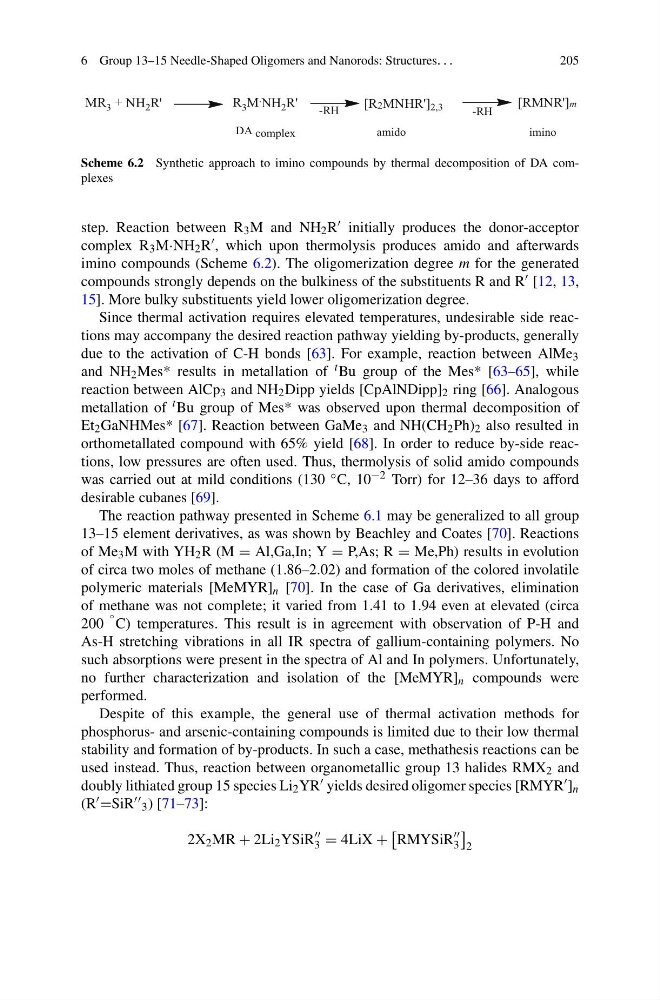
Scheme 6.2 Synthetic approach to imino compounds by thermal decomposition of DA complexes
step. Reaction between R 3 M and NH 2 R initially produces the donor-acceptor
complex R 3 M·NH 2 R , which upon thermolysis produces amido and afterwards
imino compounds (Scheme 6.2). The oligomerization degree m for the generated
compounds strongly depends on the bulkiness of the substituents R and R [12, 13,
15]. More bulky substituents yield lower oligomerization degree.
Since thermal activation requires elevated temperatures, undesirable side reactions may accompany the desired reaction pathway yielding by-products, generally
due to the activation of C-H bonds [63]. For example, reaction between AlMe 3
and NH 2 Mes* results in metallation of t Bu group of the Mes* [63–65], while
reaction between AlCp 3 and NH 2 Dipp yields [CpAlNDipp] 2 ring [66]. Analogous
metallation of t Bu group of Mes* was observed upon thermal decomposition of
Et 2 GaNHMes* [67]. Reaction between GaMe 3 and NH(CH 2 Ph) 2 also resulted in
orthometallated compound with 65% yield [68]. In order to reduce by-side reactions, low pressures are often used. Thus, thermolysis of solid amido compounds
was carried out at mild conditions (130 ◦ C, 10 −2 Torr) for 12–36 days to afford
desirable cubanes [69].
The reaction pathway presented in Scheme 6.1 may be generalized to all group
13–15 element derivatives, as was shown by Beachley and Coates [70]. Reactions
of Me 3 M with YH 2 R (M = Al,Ga,In; Y = P,As; R = Me,Ph) results in evolution
of circa two moles of methane (1.86–2.02) and formation of the colored involatile
polymeric materials [MeMYR] n [70]. In the case of Ga derivatives, elimination
of methane was not complete; it varied from 1.41 to 1.94 even at elevated (circa
200
◦ C) temperatures. This result is in agreement with observation of P-H and
As-H stretching vibrations in all IR spectra of gallium-containing polymers. No
such absorptions were present in the spectra of Al and In polymers. Unfortunately,
no further characterization and isolation of the [MeMYR] n compounds were
performed.
Despite of this example, the general use of thermal activation methods for
phosphorus- and arsenic-containing compounds is limited due to their low thermal
stability and formation of by-products. In such a case, methathesis reactions can be
used instead. Thus, reaction between organometallic group 13 halides RMX 2 and
doubly lithiated group 15 species Li 2 YR yields desired oligomer species [RMYR ] n
(R =SiR 3 ) [71–73]:
2X 2 MR + 2Li 2 YSiR
3 = 4LiX +
RMYSiR
3
2
205
R 3 M . NH 2 R'
[R2MNHR'] 2,3
-RH
[RMNR']m
DA complex
amido
imino
MR 3 + NH 2 R'
-RH
Scheme 6.2 Synthetic approach to imino compounds by thermal decomposition of DA complexes
step. Reaction between R 3 M and NH 2 R initially produces the donor-acceptor
complex R 3 M·NH 2 R , which upon thermolysis produces amido and afterwards
imino compounds (Scheme 6.2). The oligomerization degree m for the generated
compounds strongly depends on the bulkiness of the substituents R and R [12, 13,
15]. More bulky substituents yield lower oligomerization degree.
Since thermal activation requires elevated temperatures, undesirable side reactions may accompany the desired reaction pathway yielding by-products, generally
due to the activation of C-H bonds [63]. For example, reaction between AlMe 3
and NH 2 Mes* results in metallation of t Bu group of the Mes* [63–65], while
reaction between AlCp 3 and NH 2 Dipp yields [CpAlNDipp] 2 ring [66]. Analogous
metallation of t Bu group of Mes* was observed upon thermal decomposition of
Et 2 GaNHMes* [67]. Reaction between GaMe 3 and NH(CH 2 Ph) 2 also resulted in
orthometallated compound with 65% yield [68]. In order to reduce by-side reactions, low pressures are often used. Thus, thermolysis of solid amido compounds
was carried out at mild conditions (130 ◦ C, 10 −2 Torr) for 12–36 days to afford
desirable cubanes [69].
The reaction pathway presented in Scheme 6.1 may be generalized to all group
13–15 element derivatives, as was shown by Beachley and Coates [70]. Reactions
of Me 3 M with YH 2 R (M = Al,Ga,In; Y = P,As; R = Me,Ph) results in evolution
of circa two moles of methane (1.86–2.02) and formation of the colored involatile
polymeric materials [MeMYR] n [70]. In the case of Ga derivatives, elimination
of methane was not complete; it varied from 1.41 to 1.94 even at elevated (circa
200
◦ C) temperatures. This result is in agreement with observation of P-H and
As-H stretching vibrations in all IR spectra of gallium-containing polymers. No
such absorptions were present in the spectra of Al and In polymers. Unfortunately,
no further characterization and isolation of the [MeMYR] n compounds were
performed.
Despite of this example, the general use of thermal activation methods for
phosphorus- and arsenic-containing compounds is limited due to their low thermal
stability and formation of by-products. In such a case, methathesis reactions can be
used instead. Thus, reaction between organometallic group 13 halides RMX 2 and
doubly lithiated group 15 species Li 2 YR yields desired oligomer species [RMYR ] n
(R =SiR 3 ) [71–73]:
2X 2 MR + 2Li 2 YSiR
3 = 4LiX +
RMYSiR
3
2