

6
T. Onishi
HartreeFock
Density
Functional
Theory
(DFT)
Time dependent DFT
DFT under magnetic field
Improved DFT for specific cases
Selection of Functional
B3LYP, BHHLYP
PBE, LDA, GGA etc
Including
strong correlation
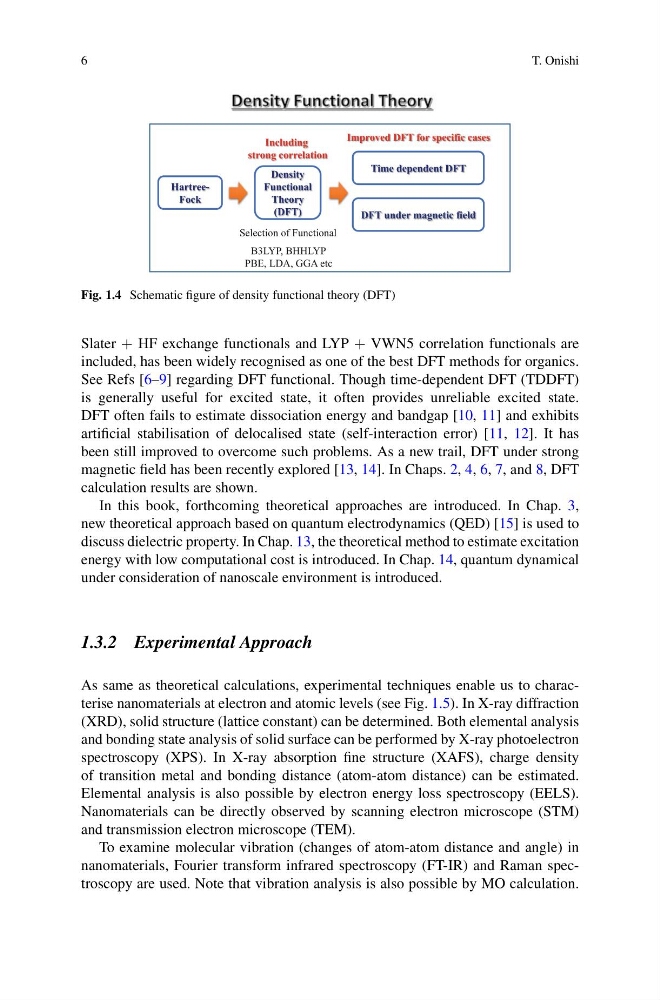
Fig. 1.4 Schematic figure of density functional theory (DFT)
Slater + HF exchange functionals and LYP + VWN5 correlation functionals are
included, has been widely recognised as one of the best DFT methods for organics.
See Refs [6–9] regarding DFT functional. Though time-dependent DFT (TDDFT)
is generally useful for excited state, it often provides unreliable excited state.
DFT often fails to estimate dissociation energy and bandgap [10, 11] and exhibits
artificial stabilisation of delocalised state (self-interaction error) [11, 12]. It has
been still improved to overcome such problems. As a new trail, DFT under strong
magnetic field has been recently explored [13, 14]. In Chaps. 2, 4, 6, 7, and 8, DFT
calculation results are shown.
In this book, forthcoming theoretical approaches are introduced. In Chap. 3,
new theoretical approach based on quantum electrodynamics (QED) [15] is used to
discuss dielectric property. In Chap. 13, the theoretical method to estimate excitation
energy with low computational cost is introduced. In Chap. 14, quantum dynamical
under consideration of nanoscale environment is introduced.
1.3.2 Experimental Approach
As same as theoretical calculations, experimental techniques enable us to characterise nanomaterials at electron and atomic levels (see Fig. 1.5). In X-ray diffraction
(XRD), solid structure (lattice constant) can be determined. Both elemental analysis
and bonding state analysis of solid surface can be performed by X-ray photoelectron
spectroscopy (XPS). In X-ray absorption fine structure (XAFS), charge density
of transition metal and bonding distance (atom-atom distance) can be estimated.
Elemental analysis is also possible by electron energy loss spectroscopy (EELS).
Nanomaterials can be directly observed by scanning electron microscope (STM)
and transmission electron microscope (TEM).
To examine molecular vibration (changes of atom-atom distance and angle) in
nanomaterials, Fourier transform infrared spectroscopy (FT-IR) and Raman spectroscopy are used. Note that vibration analysis is also possible by MO calculation.
T. Onishi
HartreeFock
Density
Functional
Theory
(DFT)
Time dependent DFT
DFT under magnetic field
Improved DFT for specific cases
Selection of Functional
B3LYP, BHHLYP
PBE, LDA, GGA etc
Including
strong correlation
Fig. 1.4 Schematic figure of density functional theory (DFT)
Slater + HF exchange functionals and LYP + VWN5 correlation functionals are
included, has been widely recognised as one of the best DFT methods for organics.
See Refs [6–9] regarding DFT functional. Though time-dependent DFT (TDDFT)
is generally useful for excited state, it often provides unreliable excited state.
DFT often fails to estimate dissociation energy and bandgap [10, 11] and exhibits
artificial stabilisation of delocalised state (self-interaction error) [11, 12]. It has
been still improved to overcome such problems. As a new trail, DFT under strong
magnetic field has been recently explored [13, 14]. In Chaps. 2, 4, 6, 7, and 8, DFT
calculation results are shown.
In this book, forthcoming theoretical approaches are introduced. In Chap. 3,
new theoretical approach based on quantum electrodynamics (QED) [15] is used to
discuss dielectric property. In Chap. 13, the theoretical method to estimate excitation
energy with low computational cost is introduced. In Chap. 14, quantum dynamical
under consideration of nanoscale environment is introduced.
1.3.2 Experimental Approach
As same as theoretical calculations, experimental techniques enable us to characterise nanomaterials at electron and atomic levels (see Fig. 1.5). In X-ray diffraction
(XRD), solid structure (lattice constant) can be determined. Both elemental analysis
and bonding state analysis of solid surface can be performed by X-ray photoelectron
spectroscopy (XPS). In X-ray absorption fine structure (XAFS), charge density
of transition metal and bonding distance (atom-atom distance) can be estimated.
Elemental analysis is also possible by electron energy loss spectroscopy (EELS).
Nanomaterials can be directly observed by scanning electron microscope (STM)
and transmission electron microscope (TEM).
To examine molecular vibration (changes of atom-atom distance and angle) in
nanomaterials, Fourier transform infrared spectroscopy (FT-IR) and Raman spectroscopy are used. Note that vibration analysis is also possible by MO calculation.