

5 Enabling Materials By Dimensionality: From 0D to 3D Carbon-Based. . .
187
Number of layers
N opt 5÷
≈ 10
1
1 0 0
1
2
Normalized absorbed
energy per layer
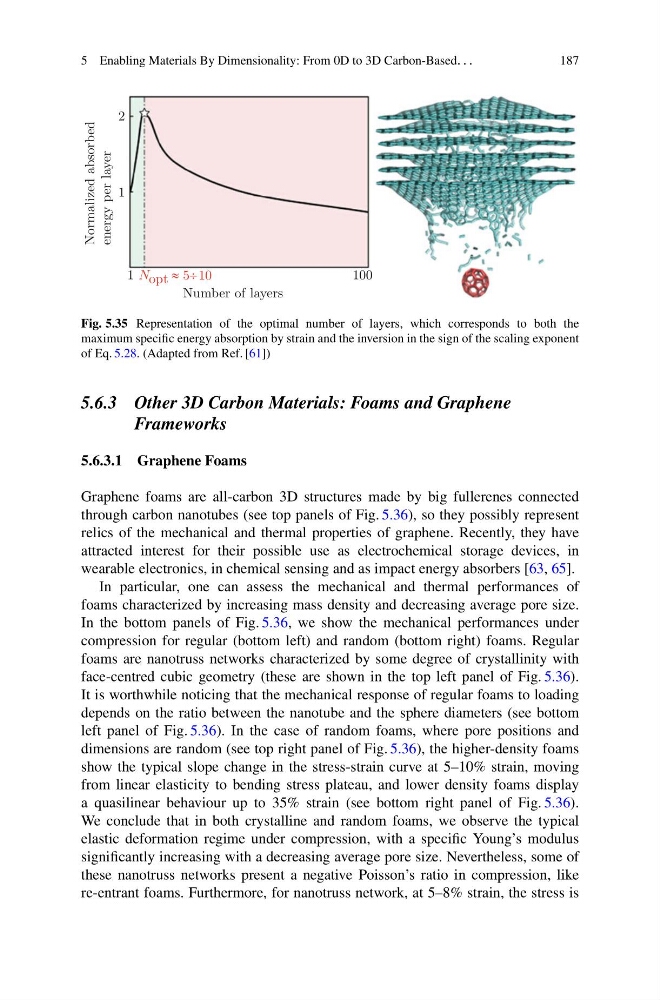
Fig. 5.35 Representation of the optimal number of layers, which corresponds to both the
maximum specific energy absorption by strain and the inversion in the sign of the scaling exponent
of Eq. 5.28. (Adapted from Ref. [61])
5.6.3 Other 3D Carbon Materials: Foams and Graphene
Frameworks
5.6.3.1 Graphene Foams
Graphene foams are all-carbon 3D structures made by big fullerenes connected
through carbon nanotubes (see top panels of Fig. 5.36), so they possibly represent
relics of the mechanical and thermal properties of graphene. Recently, they have
attracted interest for their possible use as electrochemical storage devices, in
wearable electronics, in chemical sensing and as impact energy absorbers [63, 65].
In particular, one can assess the mechanical and thermal performances of
foams characterized by increasing mass density and decreasing average pore size.
In the bottom panels of Fig. 5.36, we show the mechanical performances under
compression for regular (bottom left) and random (bottom right) foams. Regular
foams are nanotruss networks characterized by some degree of crystallinity with
face-centred cubic geometry (these are shown in the top left panel of Fig. 5.36).
It is worthwhile noticing that the mechanical response of regular foams to loading
depends on the ratio between the nanotube and the sphere diameters (see bottom
left panel of Fig. 5.36). In the case of random foams, where pore positions and
dimensions are random (see top right panel of Fig. 5.36), the higher-density foams
show the typical slope change in the stress-strain curve at 5–10% strain, moving
from linear elasticity to bending stress plateau, and lower density foams display
a quasilinear behaviour up to 35% strain (see bottom right panel of Fig. 5.36).
We conclude that in both crystalline and random foams, we observe the typical
elastic deformation regime under compression, with a specific Young’s modulus
significantly increasing with a decreasing average pore size. Nevertheless, some of
these nanotruss networks present a negative Poisson’s ratio in compression, like
re-entrant foams. Furthermore, for nanotruss network, at 5–8% strain, the stress is
187
Number of layers
N opt 5÷
≈ 10
1
1 0 0
1
2
Normalized absorbed
energy per layer
Fig. 5.35 Representation of the optimal number of layers, which corresponds to both the
maximum specific energy absorption by strain and the inversion in the sign of the scaling exponent
of Eq. 5.28. (Adapted from Ref. [61])
5.6.3 Other 3D Carbon Materials: Foams and Graphene
Frameworks
5.6.3.1 Graphene Foams
Graphene foams are all-carbon 3D structures made by big fullerenes connected
through carbon nanotubes (see top panels of Fig. 5.36), so they possibly represent
relics of the mechanical and thermal properties of graphene. Recently, they have
attracted interest for their possible use as electrochemical storage devices, in
wearable electronics, in chemical sensing and as impact energy absorbers [63, 65].
In particular, one can assess the mechanical and thermal performances of
foams characterized by increasing mass density and decreasing average pore size.
In the bottom panels of Fig. 5.36, we show the mechanical performances under
compression for regular (bottom left) and random (bottom right) foams. Regular
foams are nanotruss networks characterized by some degree of crystallinity with
face-centred cubic geometry (these are shown in the top left panel of Fig. 5.36).
It is worthwhile noticing that the mechanical response of regular foams to loading
depends on the ratio between the nanotube and the sphere diameters (see bottom
left panel of Fig. 5.36). In the case of random foams, where pore positions and
dimensions are random (see top right panel of Fig. 5.36), the higher-density foams
show the typical slope change in the stress-strain curve at 5–10% strain, moving
from linear elasticity to bending stress plateau, and lower density foams display
a quasilinear behaviour up to 35% strain (see bottom right panel of Fig. 5.36).
We conclude that in both crystalline and random foams, we observe the typical
elastic deformation regime under compression, with a specific Young’s modulus
significantly increasing with a decreasing average pore size. Nevertheless, some of
these nanotruss networks present a negative Poisson’s ratio in compression, like
re-entrant foams. Furthermore, for nanotruss network, at 5–8% strain, the stress is