

16
2 Results and Discussion
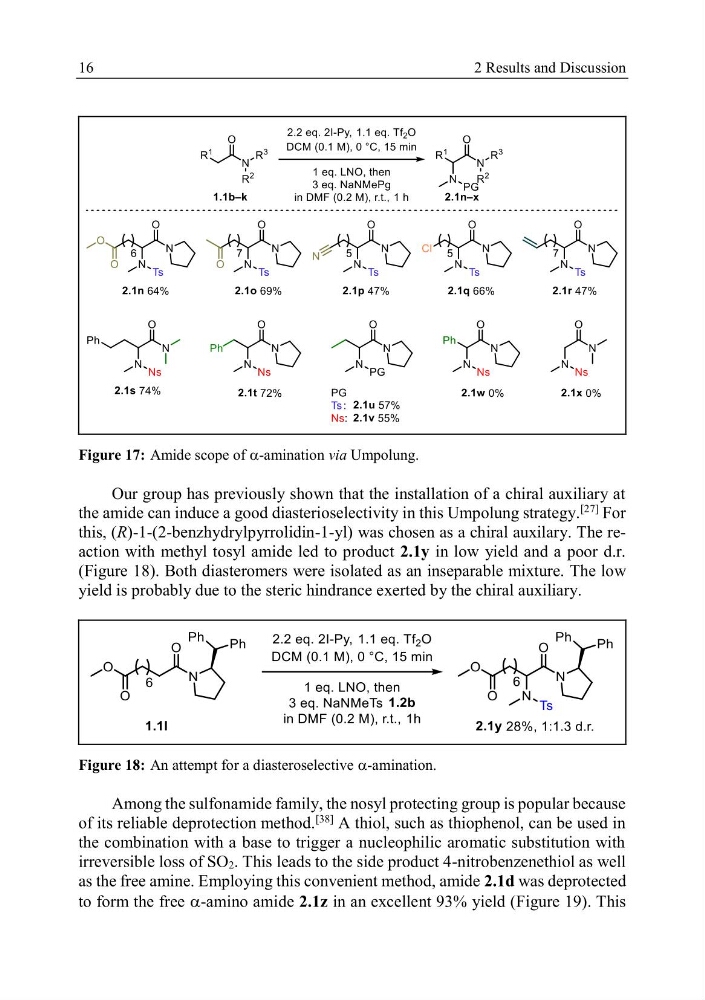
Figure 17: Amide scope of -amination via Umpolung.
Our group has previously shown that the installation of a chiral auxiliary at
the amide can induce a good diasterioselectivity in this Umpolung strategy.
[27]
For
this, (R)-1-(2-benzhydrylpyrrolidin-1-yl) was chosen as a chiral auxilary. The reaction with methyl tosyl amide led to product 2.1y in low yield and a poor d.r.
(Figure 18). Both diasteromers were isolated as an inseparable mixture. The low
yield is probably due to the steric hindrance exerted by the chiral auxiliary.
Figure 18: An attempt for a diasteroselective -amination.
Among the sulfonamide family, the nosyl protecting group is popular because
of its reliable deprotection method.
[38]
A thiol, such as thiophenol, can be used in
the combination with a base to trigger a nucleophilic aromatic substitution with
irreversible loss of SO2. This leads to the side product 4-nitrobenzenethiol as well
as the free amine. Employing this convenient method, amide 2.1d was deprotected
to form the free -amino amide 2.1z in an excellent 93% yield (Figure 19). This
2 Results and Discussion
Figure 17: Amide scope of -amination via Umpolung.
Our group has previously shown that the installation of a chiral auxiliary at
the amide can induce a good diasterioselectivity in this Umpolung strategy.
[27]
For
this, (R)-1-(2-benzhydrylpyrrolidin-1-yl) was chosen as a chiral auxilary. The reaction with methyl tosyl amide led to product 2.1y in low yield and a poor d.r.
(Figure 18). Both diasteromers were isolated as an inseparable mixture. The low
yield is probably due to the steric hindrance exerted by the chiral auxiliary.
Figure 18: An attempt for a diasteroselective -amination.
Among the sulfonamide family, the nosyl protecting group is popular because
of its reliable deprotection method.
[38]
A thiol, such as thiophenol, can be used in
the combination with a base to trigger a nucleophilic aromatic substitution with
irreversible loss of SO2. This leads to the side product 4-nitrobenzenethiol as well
as the free amine. Employing this convenient method, amide 2.1d was deprotected
to form the free -amino amide 2.1z in an excellent 93% yield (Figure 19). This