

2.1 Nucleophilic α-Functionalisation of Amides
15
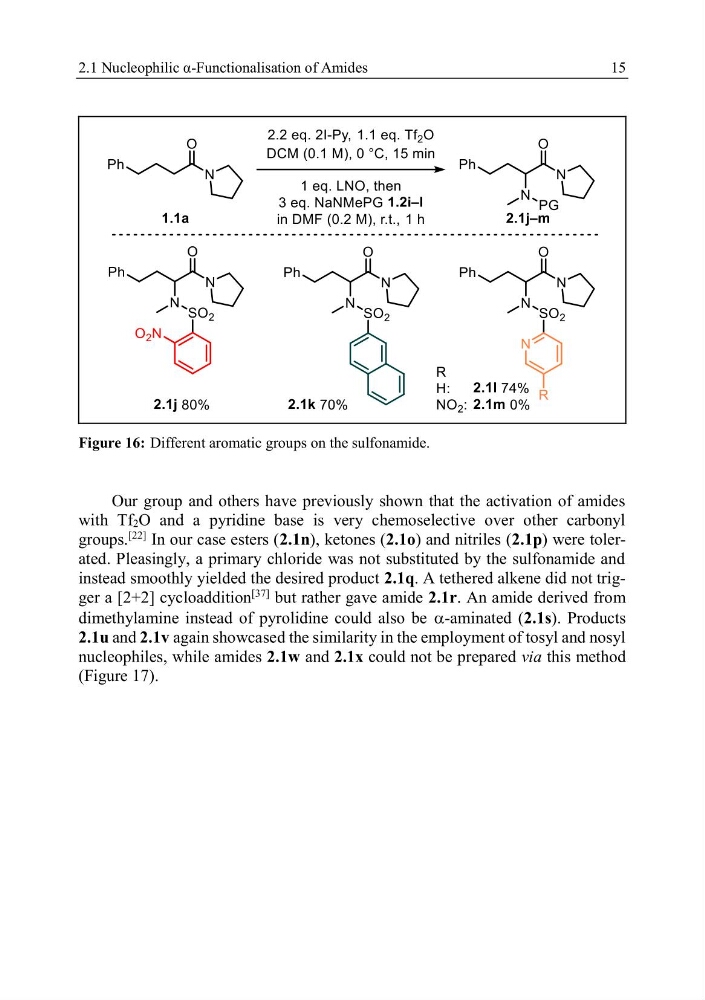
Figure 16: Different aromatic groups on the sulfonamide.
Our group and others have previously shown that the activation of amides
with Tf2O and a pyridine base is very chemoselective over other carbonyl
groups.
[22]
In our case esters (2.1n), ketones (2.1o) and nitriles (2.1p) were tolerated. Pleasingly, a primary chloride was not substituted by the sulfonamide and
instead smoothly yielded the desired product 2.1q. A tethered alkene did not trigger a [2+2] cycloaddition
[37]
but rather gave amide 2.1r. An amide derived from
dimethylamine instead of pyrolidine could also be -aminated (2.1s). Products
2.1u and 2.1v again showcased the similarity in the employment of tosyl and nosyl
nucleophiles, while amides 2.1w and 2.1x could not be prepared via this method
(Figure 17).
15
Figure 16: Different aromatic groups on the sulfonamide.
Our group and others have previously shown that the activation of amides
with Tf2O and a pyridine base is very chemoselective over other carbonyl
groups.
[22]
In our case esters (2.1n), ketones (2.1o) and nitriles (2.1p) were tolerated. Pleasingly, a primary chloride was not substituted by the sulfonamide and
instead smoothly yielded the desired product 2.1q. A tethered alkene did not trigger a [2+2] cycloaddition
[37]
but rather gave amide 2.1r. An amide derived from
dimethylamine instead of pyrolidine could also be -aminated (2.1s). Products
2.1u and 2.1v again showcased the similarity in the employment of tosyl and nosyl
nucleophiles, while amides 2.1w and 2.1x could not be prepared via this method
(Figure 17).