

Processes 2019, 7,97
propagation through nutrient competition and may help explain how healthy individuals can be
asymptomatically colonized.
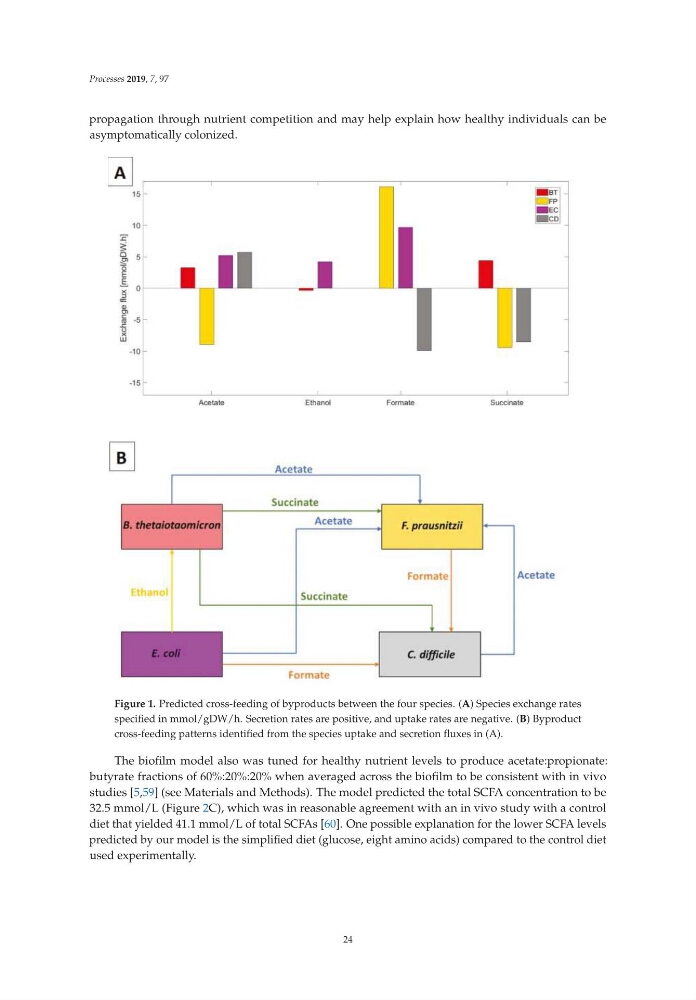
Figure 1. Predicted cross-feeding of byproducts between the four species. (A) Species exchange rates
specified in mmol/gDW/h. Secretion rates are positive, and uptake rates are negative. (B) Byproduct
cross-feeding patterns identified from the species uptake and secretion fluxes in (A).
The biofilm model also was tuned for healthy nutrient levels to produce acetate:propionate:
butyrate fractions of 60%:20%:20% when averaged across the biofilm to be consistent with in vivo
studies [5,59] (see Materials and Methods). The model predicted the total SCFA concentration to be
32.5 mmol/L (Figure 2C), which was in reasonable agreement with an in vivo study with a control
diet that yielded 41.1 mmol/L of total SCFAs [60]. One possible explanation for the lower SCFA levels
predicted by our model is the simplified diet (glucose, eight amino acids) compared to the control diet
used experimentally.
24
propagation through nutrient competition and may help explain how healthy individuals can be
asymptomatically colonized.
Figure 1. Predicted cross-feeding of byproducts between the four species. (A) Species exchange rates
specified in mmol/gDW/h. Secretion rates are positive, and uptake rates are negative. (B) Byproduct
cross-feeding patterns identified from the species uptake and secretion fluxes in (A).
The biofilm model also was tuned for healthy nutrient levels to produce acetate:propionate:
butyrate fractions of 60%:20%:20% when averaged across the biofilm to be consistent with in vivo
studies [5,59] (see Materials and Methods). The model predicted the total SCFA concentration to be
32.5 mmol/L (Figure 2C), which was in reasonable agreement with an in vivo study with a control
diet that yielded 41.1 mmol/L of total SCFAs [60]. One possible explanation for the lower SCFA levels
predicted by our model is the simplified diet (glucose, eight amino acids) compared to the control diet
used experimentally.
24