

Processes 2018, 6,56
Figure 2. Three types of Mechanism-oriented Models of Explanation. There are three broad types
of Mechanism-oriented Models of explanations of phenomena. They overlap to some extent. These
illustrations highlight features that differentiate the three types. Credibility improves by making
clear which type best characterizes a specific model of explanation. (a) A Mechanistic Explanation
has three features and is located left of center in Figure 1a. All three differentiae are part of the
model. The muted oval at top, which is repeated in Figures 3 and 4, reminds us that the actual causal
explanation is yet to be discovered. The hexagon depicts the target phenomenon and represents the
organized relevant information about the phenomenon that is being explained. Each phenomenon
can be characterized by its relative (to other phenomena) location on the Figure 1b spectrum. The
process (the workflow) of identifying and organizing information and features into a description of
how the phenomenon might be generated is represented by the blue box. Part of the workflow involves
establishing mappings and drawing analogies between features of the explanation and particular
measurements; the darker gray arrow indicates that activity. The lighter gray arrow indicates a
working hypothesis, in which those mappings and analogies will eventually extend to the actual causal
explanation. (b) This model of explanation includes a detailed description and explanation along with
the other elements in a. Information about possible generators is sufficient to conceptualize and describe
an explanation that meets the definition of mechanism under Working Definitions (Box 1) by drawing
on analogies to, for example, engineering, mechanical, chemical and electronic mechanisms. The
result is an Analogous-Mechanism Model of explanation. The red asterisks designate characteristics
that distinguish II from I.( c) Further right on both the Figure 1b,c spectra, knowledge about the
phenomenon is sufficient to conceptualize a model of explanation that includes several of the Table 1
explanatory biomimetic features. The resulting detailed description and explanation is fundamentally
different from II: it is a description of a Model Mechanism explanation. The red asterisks designate
characteristics that distinguish III from II.
II and III have two requisites: there must be a clear mapping between the representation of
entities and activities, and the target (referent) phenomenon; and the phenomenon must be specified
clearly. Phenomena are grounded to the particular experiments or clinical trials in which they were
observed and measured. In research, knowledge of a phenomenon can vary dramatically, yet there
is a direct relationship between what is known about the phenomenon and the extent to which a
mechanism-oriented model of explanation can become sufficiently accurate. The scope and depth of
knowledge about a phenomenon can be characterized by an approximate location along the spectrum
in Figure 1b. Phenomena that are the focus of more basic research tend to have central or left-of-center
locations. A mechanism-oriented or mechanism-based explanation of how a phenomenon is thought
to be—or might be—generated can be characterized by an approximate location along the spectrum in
Figure 1c. Photosynthesis provides an example where the explanation of the phenomenon is located
right of center on the Figure 1c spectrum. The depth of knowledge is such that explanatory mechanisms
described in review articles and textbooks are broadly accepted as accurate, even though they fall far
short of a complete account of what occurs in a particular plant under particular conditions. As such,
it is accurate to describe such explanations as Model Mechanisms.
186
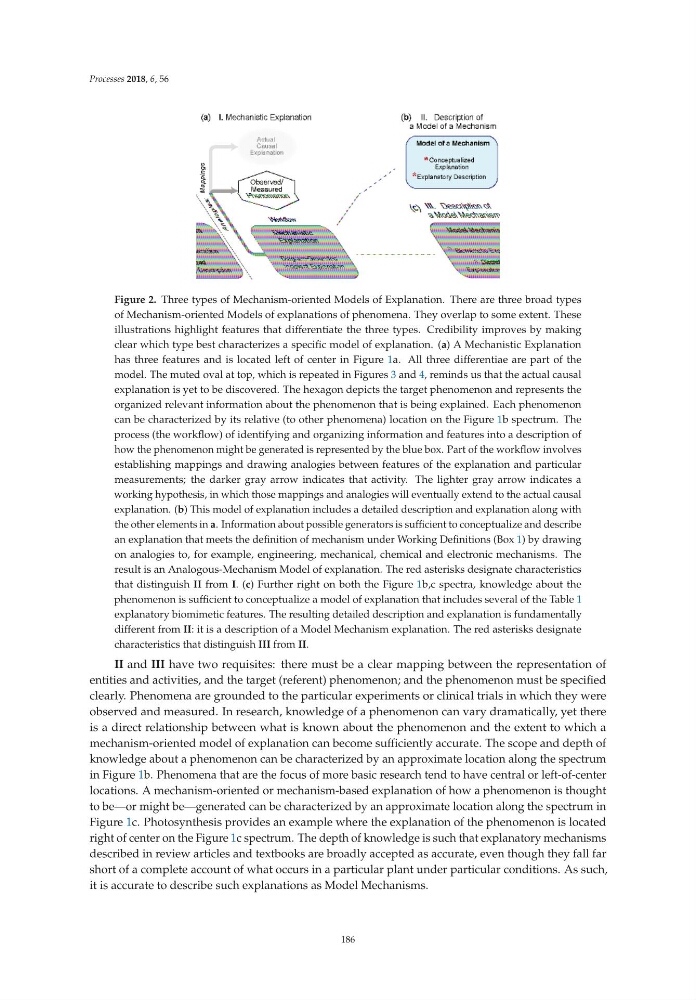
Figure 2. Three types of Mechanism-oriented Models of Explanation. There are three broad types
of Mechanism-oriented Models of explanations of phenomena. They overlap to some extent. These
illustrations highlight features that differentiate the three types. Credibility improves by making
clear which type best characterizes a specific model of explanation. (a) A Mechanistic Explanation
has three features and is located left of center in Figure 1a. All three differentiae are part of the
model. The muted oval at top, which is repeated in Figures 3 and 4, reminds us that the actual causal
explanation is yet to be discovered. The hexagon depicts the target phenomenon and represents the
organized relevant information about the phenomenon that is being explained. Each phenomenon
can be characterized by its relative (to other phenomena) location on the Figure 1b spectrum. The
process (the workflow) of identifying and organizing information and features into a description of
how the phenomenon might be generated is represented by the blue box. Part of the workflow involves
establishing mappings and drawing analogies between features of the explanation and particular
measurements; the darker gray arrow indicates that activity. The lighter gray arrow indicates a
working hypothesis, in which those mappings and analogies will eventually extend to the actual causal
explanation. (b) This model of explanation includes a detailed description and explanation along with
the other elements in a. Information about possible generators is sufficient to conceptualize and describe
an explanation that meets the definition of mechanism under Working Definitions (Box 1) by drawing
on analogies to, for example, engineering, mechanical, chemical and electronic mechanisms. The
result is an Analogous-Mechanism Model of explanation. The red asterisks designate characteristics
that distinguish II from I.( c) Further right on both the Figure 1b,c spectra, knowledge about the
phenomenon is sufficient to conceptualize a model of explanation that includes several of the Table 1
explanatory biomimetic features. The resulting detailed description and explanation is fundamentally
different from II: it is a description of a Model Mechanism explanation. The red asterisks designate
characteristics that distinguish III from II.
II and III have two requisites: there must be a clear mapping between the representation of
entities and activities, and the target (referent) phenomenon; and the phenomenon must be specified
clearly. Phenomena are grounded to the particular experiments or clinical trials in which they were
observed and measured. In research, knowledge of a phenomenon can vary dramatically, yet there
is a direct relationship between what is known about the phenomenon and the extent to which a
mechanism-oriented model of explanation can become sufficiently accurate. The scope and depth of
knowledge about a phenomenon can be characterized by an approximate location along the spectrum
in Figure 1b. Phenomena that are the focus of more basic research tend to have central or left-of-center
locations. A mechanism-oriented or mechanism-based explanation of how a phenomenon is thought
to be—or might be—generated can be characterized by an approximate location along the spectrum in
Figure 1c. Photosynthesis provides an example where the explanation of the phenomenon is located
right of center on the Figure 1c spectrum. The depth of knowledge is such that explanatory mechanisms
described in review articles and textbooks are broadly accepted as accurate, even though they fall far
short of a complete account of what occurs in a particular plant under particular conditions. As such,
it is accurate to describe such explanations as Model Mechanisms.
186