

XXII
Masse du noyau :
Mn50 =
2800
4000
= 0.7 í µí°¾í µí±
0.35 Kg < Mn50< 1.05 Kg
On prend un tous venant pour le noyau
Les règles de TERZAGHI :
í µí°· 15 (í µí±í µí±í µí±í µí±¡í µí±í µí±)
í µí°· 85 (í µí±í µí±í µí±¦í µí±í µí±¢)
= 1.9 < 5 ; validé
4 <
í µí°· 15 (í µí±í µí±í µí±í µí±¡í µí±í µí±)
í µí°· 15 (í µí±í µí±í µí±¦í µí±í µí±¢)
= 2.7 < 20 ; non validé
í µí°· 15 (í µí±í µí±í µí±í µí±¡í µí±í µí±)
í µí°· 50 (í µí±í µí±í µí±¦í µí±í µí±¢)
= 2.1 < 25 ; validé
í µí°· 15 (í µí±í µí±í µí±í µí±¡í µí±í µí±) = 0.19
í µí°· 15 (í µí±í µí±í µí±¦í µí±í µí±¢) =0.07
í µí°· 50 (í µí±í µí±í µí±¦í µí±í µí±¢) =0.09
í µí°· 85 (í µí±í µí±í µí±¦í µí±í µí±¢) =0.10
Musoir
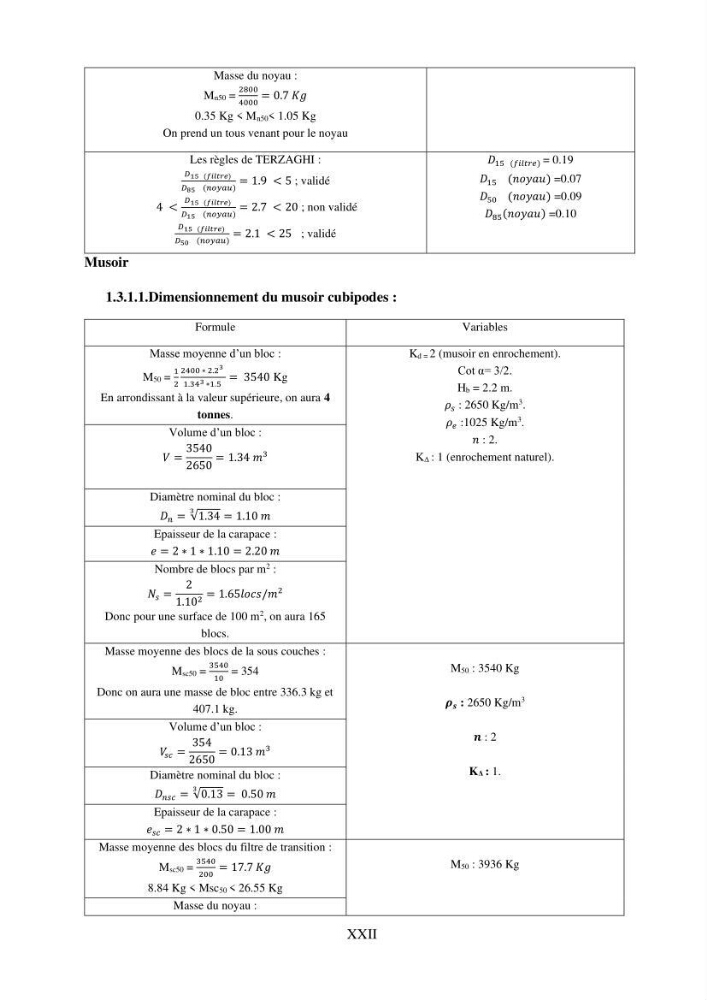
1.3.1.1.Dimensionnement du musoir cubipodes :
Formule
Variables
Masse moyenne d’un bloc :
M50 =
1
2
2400 ∗ 2.2
3
1.34 3 ∗1.5
= 3540 Kg
En arrondissant à la valeur supérieure, on aura 4
tonnes.
Kd = 2 (musoir en enrochement).
Cot α= 3/2.
Hb = 2.2 m.
í µí¼ í µí± : 2650 Kg/m
3 .
í µí¼ í µí± :1025 Kg/m
3 .
í µí± : 2.
KΔ : 1 (enrochement naturel).
Volume d’un bloc :
í µí± =
3540
2650
= 1.34 í µí±
3
Diamètre nominal du bloc :
í µí°· í µí± = √1.34
3
= 1.10 í µí±
Epaisseur de la carapace :
í µí± = 2 ∗ 1 ∗ 1.10 = 2.20 í µí±
Nombre de blocs par m
2 :
í µí± í µí± =
2
1.10 2 = 1.65í µí±í µí±í µí±í µí± /í µí±
2
Donc pour une surface de 100 m
2 , on aura 165
blocs.
Masse moyenne des blocs de la sous couches :
Msc50 =
3540
10
= 354
Donc on aura une masse de bloc entre 336.3 kg et
407.1 kg.
M50 : 3540 Kg
í µí½ í µí² : 2650 Kg/m
3
í µí² : 2
KΔ : 1.
Volume d’un bloc :
í µí± í µí± í µí± =
354
2650
= 0.13 í µí±
3
Diamètre nominal du bloc :
í µí°· í µí±í µí± í µí± = √0.13
3
= 0.50 í µí±
Epaisseur de la carapace :
í µí± í µí± í µí± = 2 ∗ 1 ∗ 0.50 = 1.00 í µí±
Masse moyenne des blocs du filtre de transition :
Msc50 =
3540
200
= 17.7 í µí°¾í µí±
8.84 Kg < Msc50 < 26.55 Kg
M50 : 3936 Kg
Masse du noyau :
Masse du noyau :
Mn50 =
2800
4000
= 0.7 í µí°¾í µí±
0.35 Kg < Mn50< 1.05 Kg
On prend un tous venant pour le noyau
Les règles de TERZAGHI :
í µí°· 15 (í µí±í µí±í µí±í µí±¡í µí±í µí±)
í µí°· 85 (í µí±í µí±í µí±¦í µí±í µí±¢)
= 1.9 < 5 ; validé
4 <
í µí°· 15 (í µí±í µí±í µí±í µí±¡í µí±í µí±)
í µí°· 15 (í µí±í µí±í µí±¦í µí±í µí±¢)
= 2.7 < 20 ; non validé
í µí°· 15 (í µí±í µí±í µí±í µí±¡í µí±í µí±)
í µí°· 50 (í µí±í µí±í µí±¦í µí±í µí±¢)
= 2.1 < 25 ; validé
í µí°· 15 (í µí±í µí±í µí±í µí±¡í µí±í µí±) = 0.19
í µí°· 15 (í µí±í µí±í µí±¦í µí±í µí±¢) =0.07
í µí°· 50 (í µí±í µí±í µí±¦í µí±í µí±¢) =0.09
í µí°· 85 (í µí±í µí±í µí±¦í µí±í µí±¢) =0.10
Musoir
1.3.1.1.Dimensionnement du musoir cubipodes :
Formule
Variables
Masse moyenne d’un bloc :
M50 =
1
2
2400 ∗ 2.2
3
1.34 3 ∗1.5
= 3540 Kg
En arrondissant à la valeur supérieure, on aura 4
tonnes.
Kd = 2 (musoir en enrochement).
Cot α= 3/2.
Hb = 2.2 m.
í µí¼ í µí± : 2650 Kg/m
3 .
í µí¼ í µí± :1025 Kg/m
3 .
í µí± : 2.
KΔ : 1 (enrochement naturel).
Volume d’un bloc :
í µí± =
3540
2650
= 1.34 í µí±
3
Diamètre nominal du bloc :
í µí°· í µí± = √1.34
3
= 1.10 í µí±
Epaisseur de la carapace :
í µí± = 2 ∗ 1 ∗ 1.10 = 2.20 í µí±
Nombre de blocs par m
2 :
í µí± í µí± =
2
1.10 2 = 1.65í µí±í µí±í µí±í µí± /í µí±
2
Donc pour une surface de 100 m
2 , on aura 165
blocs.
Masse moyenne des blocs de la sous couches :
Msc50 =
3540
10
= 354
Donc on aura une masse de bloc entre 336.3 kg et
407.1 kg.
M50 : 3540 Kg
í µí½ í µí² : 2650 Kg/m
3
í µí² : 2
KΔ : 1.
Volume d’un bloc :
í µí± í µí± í µí± =
354
2650
= 0.13 í µí±
3
Diamètre nominal du bloc :
í µí°· í µí±í µí± í µí± = √0.13
3
= 0.50 í µí±
Epaisseur de la carapace :
í µí± í µí± í µí± = 2 ∗ 1 ∗ 0.50 = 1.00 í µí±
Masse moyenne des blocs du filtre de transition :
Msc50 =
3540
200
= 17.7 í µí°¾í µí±
8.84 Kg < Msc50 < 26.55 Kg
M50 : 3936 Kg
Masse du noyau :