

Roots, relevance, aims and values
15
refuge ’ and ‘ wilderness area ’ , to name but a few. To add
further confusion, many places carry multiple names
or designations. This is has arisen because the purpose,
legal defi nition and degree of protection of a given protected area can change over time and can vary considerably between countries.
The complexity and overlapping nature of designations and terminology associated with contemporary
protected areas is built upon a smaller and simpler set
of foundational values of the modern - day conservation movement with roots in the late 18th and early
19th centuries. These core values (Table 2.1 ) arose
largely out of a seismic shift in western society ’ s view
of the relationship between humans and the natural
world. A series of discoveries, events and circumstances, culminating in the formulation of Darwin ’ s
famous theory of evolution, prompted vigorous debate
that transformed understandings of the place of
humans within nature. Some of the most infl uential of
these events were the sudden and well - publicized rash
of extinctions (e.g. the passenger pigeon, the great auk
and Steller ’ s sea cow), the rapid demise of the vast
forests in the American Great Lakes region and the
discovery of the great apes (the fi rst scientifi c description of the gorilla was published in 1847), whose
anatomy was remarkably similar to our own.
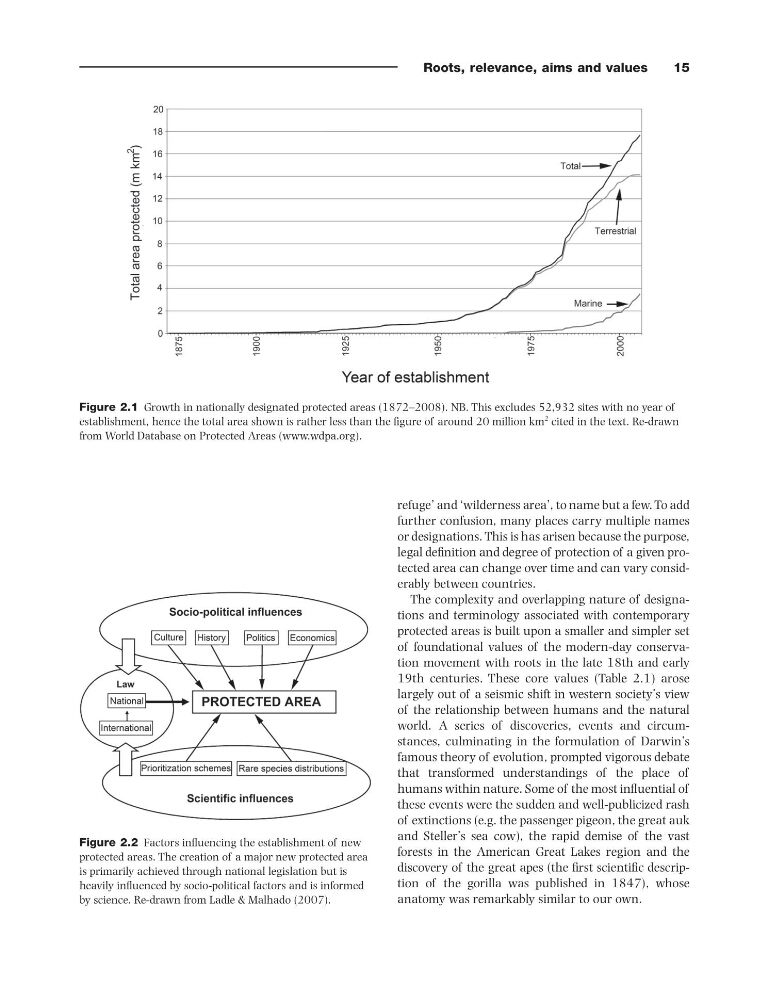
Figure 2.1 Growth in nationally designated protected areas (1872 – 2008). NB. This excludes 52,932 sites with no year of
establishment, hence the total area shown is rather less than the fi gure of around 20 million km
2 cited in the text. Re - drawn
from World Database on Protected Areas ( www.wdpa.org ).
Figure 2.2 Factors infl uencing the establishment of new
protected areas. The creation of a major new protected area
is primarily achieved through national legislation but is
heavily infl uenced by socio - political factors and is informed
by science. Re - drawn from Ladle & Malhado (2007) .
15
refuge ’ and ‘ wilderness area ’ , to name but a few. To add
further confusion, many places carry multiple names
or designations. This is has arisen because the purpose,
legal defi nition and degree of protection of a given protected area can change over time and can vary considerably between countries.
The complexity and overlapping nature of designations and terminology associated with contemporary
protected areas is built upon a smaller and simpler set
of foundational values of the modern - day conservation movement with roots in the late 18th and early
19th centuries. These core values (Table 2.1 ) arose
largely out of a seismic shift in western society ’ s view
of the relationship between humans and the natural
world. A series of discoveries, events and circumstances, culminating in the formulation of Darwin ’ s
famous theory of evolution, prompted vigorous debate
that transformed understandings of the place of
humans within nature. Some of the most infl uential of
these events were the sudden and well - publicized rash
of extinctions (e.g. the passenger pigeon, the great auk
and Steller ’ s sea cow), the rapid demise of the vast
forests in the American Great Lakes region and the
discovery of the great apes (the fi rst scientifi c description of the gorilla was published in 1847), whose
anatomy was remarkably similar to our own.
Figure 2.1 Growth in nationally designated protected areas (1872 – 2008). NB. This excludes 52,932 sites with no year of
establishment, hence the total area shown is rather less than the fi gure of around 20 million km
2 cited in the text. Re - drawn
from World Database on Protected Areas ( www.wdpa.org ).
Figure 2.2 Factors infl uencing the establishment of new
protected areas. The creation of a major new protected area
is primarily achieved through national legislation but is
heavily infl uenced by socio - political factors and is informed
by science. Re - drawn from Ladle & Malhado (2007) .