

Conservation planning in a changing world
217
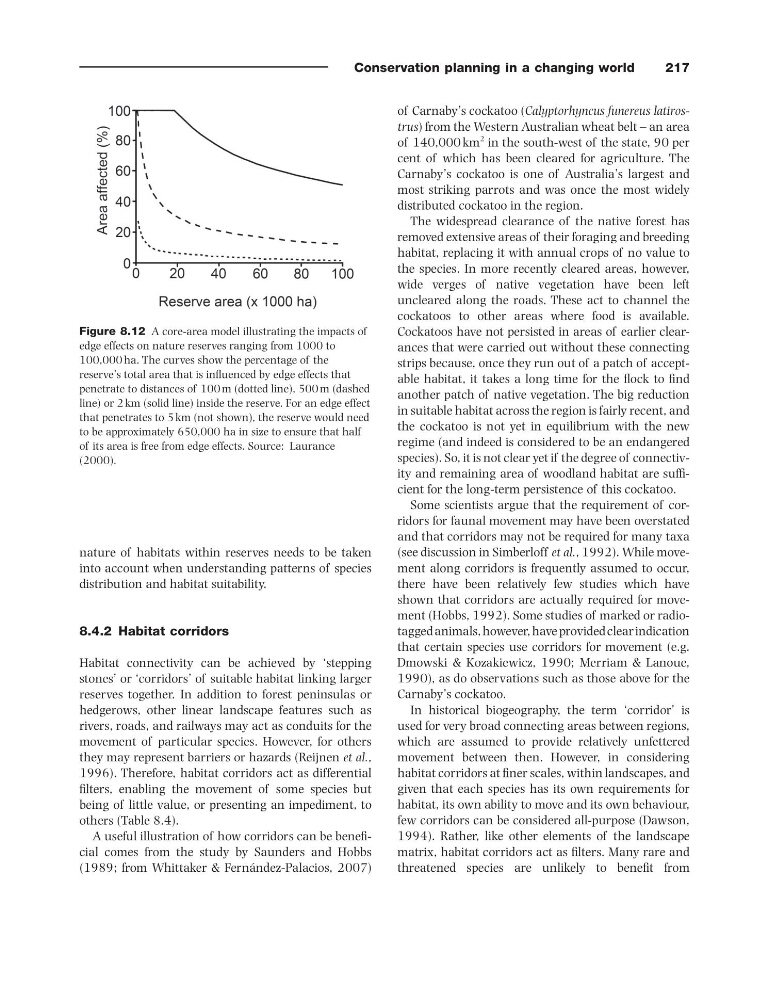
Figure 8.12 A core - area model illustrating the impacts of
edge effects on nature reserves ranging from 1000 to
100,000 ha. The curves show the percentage of the
reserve ’ s total area that is infl uenced by edge effects that
penetrate to distances of 100 m (dotted line), 500 m (dashed
line) or 2 km (solid line) inside the reserve. For an edge effect
that penetrates to 5 km (not shown), the reserve would need
to be approximately 650,000 ha in size to ensure that half
of its area is free from edge effects. Source: Laurance
(2000) .
of Carnaby ’ s cockatoo ( Calyptorhyncus funereus latirostrus ) from the Western Australian wheat belt – an area
of 140,000 km
2 in the south - west of the state, 90 per
cent of which has been cleared for agriculture. The
Carnaby ’ s cockatoo is one of Australia ’ s largest and
most striking parrots and was once the most widely
distributed cockatoo in the region.
The widespread clearance of the native forest has
removed extensive areas of their foraging and breeding
habitat, replacing it with annual crops of no value to
the species. In more recently cleared areas, however,
wide verges of native vegetation have been left
uncleared along the roads. These act to channel the
cockatoos to other areas where food is available.
Cockatoos have not persisted in areas of earlier clearances that were carried out without these connecting
strips because, once they run out of a patch of acceptable habitat, it takes a long time for the fl ock to fi nd
another patch of native vegetation. The big reduction
in suitable habitat across the region is fairly recent, and
the cockatoo is not yet in equilibrium with the new
regime (and indeed is considered to be an endangered
species). So, it is not clear yet if the degree of connectivity and remaining area of woodland habitat are suffi -
cient for the long - term persistence of this cockatoo.
Some scientists argue that the requirement of corridors for faunal movement may have been overstated
and that corridors may not be required for many taxa
(see discussion in Simberloff et al. , 1992 ). While movement along corridors is frequently assumed to occur,
there have been relatively few studies which have
shown that corridors are actually required for movement (Hobbs, 1992 ). Some studies of marked or radio -
tagged animals, however, have provided clear indication
that certain species use corridors for movement (e.g.
Dmowski & Kozakiewicz, 1990 ; Merriam & Lanoue,
1990 ), as do observations such as those above for the
Carnaby ’ s cockatoo.
In historical biogeography, the term ‘ corridor ’ is
used for very broad connecting areas between regions,
which are assumed to provide relatively unfettered
movement between then. However, in considering
habitat corridors at fi ner scales, within landscapes, and
given that each species has its own requirements for
habitat, its own ability to move and its own behaviour,
few corridors can be considered all - purpose (Dawson,
1994 ). Rather, like other elements of the landscape
matrix, habitat corridors act as fi lters. Many rare and
threatened species are unlikely to benefi t from
nature of habitats within reserves needs to be taken
into account when understanding patterns of species
distribution and habitat suitability.
8.4.2 Habitat c orridors
Habitat connectivity can be achieved by ‘ stepping
stones ’ or ‘ corridors ’ of suitable habitat linking larger
reserves together. In addition to forest peninsulas or
hedgerows, other linear landscape features such as
rivers, roads, and railways may act as conduits for the
movement of particular species. However, for others
they may represent barriers or hazards (Reijnen et al. ,
1996 ). Therefore, habitat corridors act as differential
fi lters, enabling the movement of some species but
being of little value, or presenting an impediment, to
others (Table 8.4 ).
A useful illustration of how corridors can be benefi -
cial comes from the study by Saunders and Hobbs
( 1989 ; from Whittaker & Fern á ndez - Palacios, 2007 )
217
Figure 8.12 A core - area model illustrating the impacts of
edge effects on nature reserves ranging from 1000 to
100,000 ha. The curves show the percentage of the
reserve ’ s total area that is infl uenced by edge effects that
penetrate to distances of 100 m (dotted line), 500 m (dashed
line) or 2 km (solid line) inside the reserve. For an edge effect
that penetrates to 5 km (not shown), the reserve would need
to be approximately 650,000 ha in size to ensure that half
of its area is free from edge effects. Source: Laurance
(2000) .
of Carnaby ’ s cockatoo ( Calyptorhyncus funereus latirostrus ) from the Western Australian wheat belt – an area
of 140,000 km
2 in the south - west of the state, 90 per
cent of which has been cleared for agriculture. The
Carnaby ’ s cockatoo is one of Australia ’ s largest and
most striking parrots and was once the most widely
distributed cockatoo in the region.
The widespread clearance of the native forest has
removed extensive areas of their foraging and breeding
habitat, replacing it with annual crops of no value to
the species. In more recently cleared areas, however,
wide verges of native vegetation have been left
uncleared along the roads. These act to channel the
cockatoos to other areas where food is available.
Cockatoos have not persisted in areas of earlier clearances that were carried out without these connecting
strips because, once they run out of a patch of acceptable habitat, it takes a long time for the fl ock to fi nd
another patch of native vegetation. The big reduction
in suitable habitat across the region is fairly recent, and
the cockatoo is not yet in equilibrium with the new
regime (and indeed is considered to be an endangered
species). So, it is not clear yet if the degree of connectivity and remaining area of woodland habitat are suffi -
cient for the long - term persistence of this cockatoo.
Some scientists argue that the requirement of corridors for faunal movement may have been overstated
and that corridors may not be required for many taxa
(see discussion in Simberloff et al. , 1992 ). While movement along corridors is frequently assumed to occur,
there have been relatively few studies which have
shown that corridors are actually required for movement (Hobbs, 1992 ). Some studies of marked or radio -
tagged animals, however, have provided clear indication
that certain species use corridors for movement (e.g.
Dmowski & Kozakiewicz, 1990 ; Merriam & Lanoue,
1990 ), as do observations such as those above for the
Carnaby ’ s cockatoo.
In historical biogeography, the term ‘ corridor ’ is
used for very broad connecting areas between regions,
which are assumed to provide relatively unfettered
movement between then. However, in considering
habitat corridors at fi ner scales, within landscapes, and
given that each species has its own requirements for
habitat, its own ability to move and its own behaviour,
few corridors can be considered all - purpose (Dawson,
1994 ). Rather, like other elements of the landscape
matrix, habitat corridors act as fi lters. Many rare and
threatened species are unlikely to benefi t from
nature of habitats within reserves needs to be taken
into account when understanding patterns of species
distribution and habitat suitability.
8.4.2 Habitat c orridors
Habitat connectivity can be achieved by ‘ stepping
stones ’ or ‘ corridors ’ of suitable habitat linking larger
reserves together. In addition to forest peninsulas or
hedgerows, other linear landscape features such as
rivers, roads, and railways may act as conduits for the
movement of particular species. However, for others
they may represent barriers or hazards (Reijnen et al. ,
1996 ). Therefore, habitat corridors act as differential
fi lters, enabling the movement of some species but
being of little value, or presenting an impediment, to
others (Table 8.4 ).
A useful illustration of how corridors can be benefi -
cial comes from the study by Saunders and Hobbs
( 1989 ; from Whittaker & Fern á ndez - Palacios, 2007 )