

206
Applied island biogeography
The fl ora of Easter Island currently consists of over
200 vascular plant species, of which only 46 are
native. However, the native fl ora was once rather
richer, containing several native tree and shrub species
(Diamond, 2007 ). The forests are now known to have
contained a giant palm tree and a number of other
trees, some reaching over 30 m in height. These forests
persisted for at least 33,000 years (as far back as the
fragments of inhabited land in the world. When the
fi rst Europeans arrived there on Easter Day AD 1722,
they found a fascinating enigma: how could this
impoverished, nearly treeless island, with its sparse
and impoverished population, have supported the construction of the remarkable giant statues (moai) that
could be found all over the island. How, and why, had
it all gone so terribly wrong?
and are only found in association with, the native forest. At the same time, we avoided additional
‘ noise ’ caused by generalist species that may well be able to survive in other (i.e. anthropogenic)
habitats. If this logic is correct, then the implication is that large - scale conservation efforts need to
be implemented if the high extinction debt we have identifi ed is to be deferred or avoided. Human -
induced fragmentation, land - use changes and invasive species have already been identifi ed as
important threats to Azorean biodiversity.
This paper argues that the conservation of the Azorean natural heritage, and that of many other
oceanic islands, will largely depend on establishing an integrated large - scale strategy to manage
both indigenous and non - indigenous species, while simultaneously protecting the remnants of native
habitat and, ideally, increasing their extent. However, as appreciated by the authors (and pointed
out by the journal ’ s reviewers), there are a number of key assumptions embedded in this study that
may undermine the power of the analyses and which may serve as points for class discussion.
These include:
1 the reliance on an assumption of a dynamic equilibrium, or something approximating to it, prior
to human interference;
2 that the endemic species identifi ed as forest - dependent can persist only in the native forests; and
3 that the remaining forest area, although in most cases fragmented, can be treated as if occurring
in a single block, with the degree of fragmentation being insignifi cant.
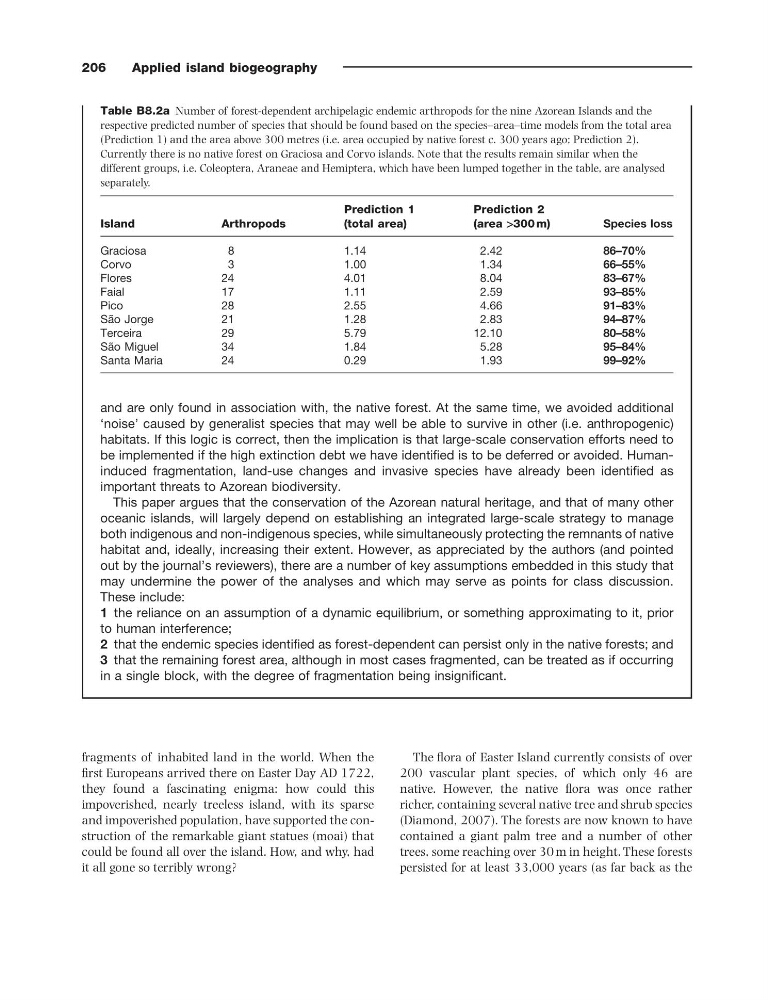
Table B8.2a Number of forest - dependent archipelagic endemic arthropods for the nine Azorean Islands and the
respective predicted number of species that should be found based on the species – area – time models from the total area
(Prediction 1) and the area above 300 metres (i.e. area occupied by native forest c. 300 years ago; Prediction 2).
Currently there is no native forest on Graciosa and Corvo islands. Note that the results remain similar when the
different groups, i.e. Coleoptera, Araneae and Hemiptera, which have been lumped together in the table, are analysed
separately.
Island
Arthropods
Prediction 1
(total area)
Prediction 2
(area > 300 m)
Species loss
Graciosa
8
1.14
2.42
86 – 70%
Corvo
3
1.00
1.34
66 – 55%
Flores
24
4.01
8.04
83 – 67%
Faial
17
1.11
2.59
93 – 85%
Pico
28
2.55
4.66
91 – 83%
S ã o Jorge
21
1.28
2.83
94 – 87%
Terceira
29
5.79
12.10
80 – 58%
S ã o Miguel
34
1.84
5.28
95 – 84%
Santa Maria
24
0.29
1.93
99 – 92%
Applied island biogeography
The fl ora of Easter Island currently consists of over
200 vascular plant species, of which only 46 are
native. However, the native fl ora was once rather
richer, containing several native tree and shrub species
(Diamond, 2007 ). The forests are now known to have
contained a giant palm tree and a number of other
trees, some reaching over 30 m in height. These forests
persisted for at least 33,000 years (as far back as the
fragments of inhabited land in the world. When the
fi rst Europeans arrived there on Easter Day AD 1722,
they found a fascinating enigma: how could this
impoverished, nearly treeless island, with its sparse
and impoverished population, have supported the construction of the remarkable giant statues (moai) that
could be found all over the island. How, and why, had
it all gone so terribly wrong?
and are only found in association with, the native forest. At the same time, we avoided additional
‘ noise ’ caused by generalist species that may well be able to survive in other (i.e. anthropogenic)
habitats. If this logic is correct, then the implication is that large - scale conservation efforts need to
be implemented if the high extinction debt we have identifi ed is to be deferred or avoided. Human -
induced fragmentation, land - use changes and invasive species have already been identifi ed as
important threats to Azorean biodiversity.
This paper argues that the conservation of the Azorean natural heritage, and that of many other
oceanic islands, will largely depend on establishing an integrated large - scale strategy to manage
both indigenous and non - indigenous species, while simultaneously protecting the remnants of native
habitat and, ideally, increasing their extent. However, as appreciated by the authors (and pointed
out by the journal ’ s reviewers), there are a number of key assumptions embedded in this study that
may undermine the power of the analyses and which may serve as points for class discussion.
These include:
1 the reliance on an assumption of a dynamic equilibrium, or something approximating to it, prior
to human interference;
2 that the endemic species identifi ed as forest - dependent can persist only in the native forests; and
3 that the remaining forest area, although in most cases fragmented, can be treated as if occurring
in a single block, with the degree of fragmentation being insignifi cant.
Table B8.2a Number of forest - dependent archipelagic endemic arthropods for the nine Azorean Islands and the
respective predicted number of species that should be found based on the species – area – time models from the total area
(Prediction 1) and the area above 300 metres (i.e. area occupied by native forest c. 300 years ago; Prediction 2).
Currently there is no native forest on Graciosa and Corvo islands. Note that the results remain similar when the
different groups, i.e. Coleoptera, Araneae and Hemiptera, which have been lumped together in the table, are analysed
separately.
Island
Arthropods
Prediction 1
(total area)
Prediction 2
(area > 300 m)
Species loss
Graciosa
8
1.14
2.42
86 – 70%
Corvo
3
1.00
1.34
66 – 55%
Flores
24
4.01
8.04
83 – 67%
Faial
17
1.11
2.59
93 – 85%
Pico
28
2.55
4.66
91 – 83%
S ã o Jorge
21
1.28
2.83
94 – 87%
Terceira
29
5.79
12.10
80 – 58%
S ã o Miguel
34
1.84
5.28
95 – 84%
Santa Maria
24
0.29
1.93
99 – 92%