

106
The shaping of the global protected area estate
with limited topographical variation and weak biogeographical barriers (e.g. within Borneo).
This framework was infl uential in countries such as
Indonesia, China, Bhutan and a number of other
countries in the Indo - Malayan realm, but was deployed
less extensively elsewhere.
5.3.2 Endemic Bird Areas
Although the International Council for Bird
Preservation was established as a network of national
committees in 1922, it was in the 1980s that it initiated steps to become an infl uential actor within international conservation. The fi rst step was a global
assessment of the extinction risk of all bird species
(Collar & Andrew, 1988 ). The project simultaneously
fl agged the vulnerability of bird species with restricted
ranges and equipped the ICBP secretariat with
advanced databases of species locality information.
This inspired a new project to map centres of bird
3 augment these large reserves with smaller reserves
to protect special or unique additional habitat types or
covering regional variations;
4 include small reserves to protect specifi c sites of
special beauty or interest (MacKinnon & Artha, 1982 ).
The IUCN subsequently commissioned similar planning exercises for the Indo - Malayan and Afrotropical
realms (MacKinnon & MacKinnon 1986a, 1986b ;
MacKinnon, 1997 ).
The Dasmann – Udvardy framework, as implemented
in MacKinnon ’ s regional planning exercises, emphasizes mammal and bird taxonomic differences for the
initial map - making. This emphasis on zoogeographical
data is balanced at the implementation level by the
above reserve selection principles, which emphasize
vegetation formations and conservation of large ecosystems. The application of taxonomic distinctiveness
is effective at broad spatial scales and in regions with
clear and meaningful biogeographical barriers, for
example across the islands of Wallacea (Indonesia).
However, decisions become rather subjective in areas
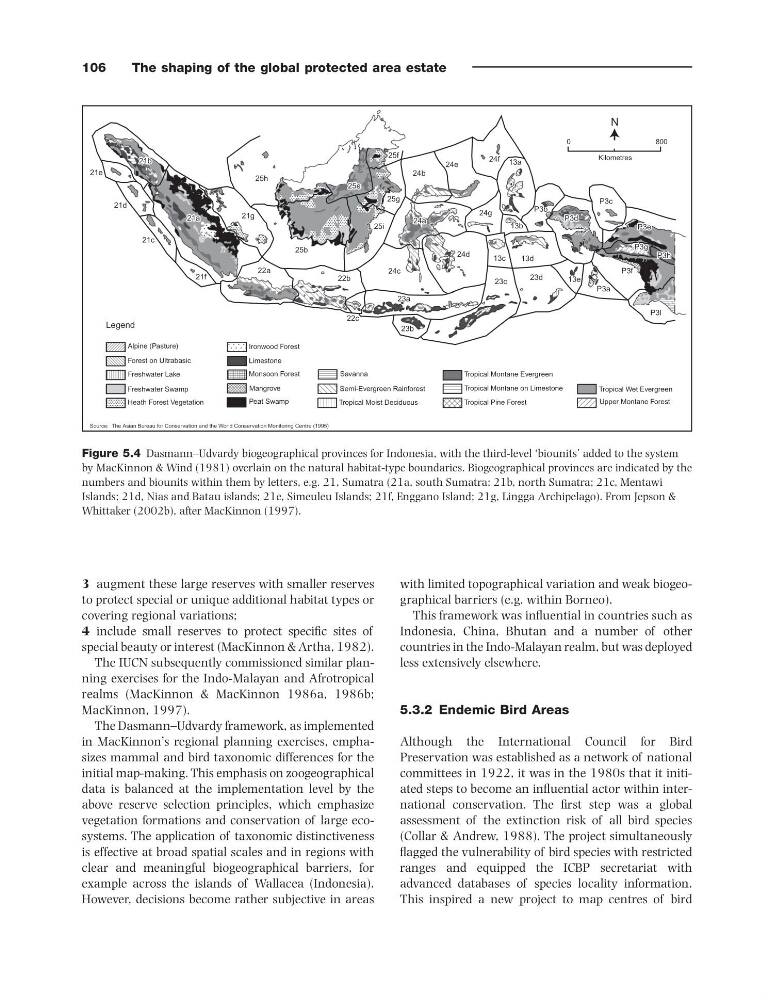
Figure 5.4 Dasmann – Udvardy biogeographical provinces for Indonesia, with the third - level ‘ biounits ’ added to the system
by MacKinnon & Wind (1981) overlain on the natural habitat - type boundaries. Biogeographical provinces are indicated by the
numbers and biounits within them by letters, e.g. 21, Sumatra (21a, south Sumatra; 21b, north Sumatra; 21c, Mentawi
Islands; 21d, Nias and Batau islands; 21e, Simeuleu Islands; 21f, Enggano Island; 21g, Lingga Archipelago). From Jepson &
Whittaker (2002b) , after MacKinnon (1997) .
Source: The Asian Bureau for Conservation and the World Conservation Monitoring Centre (1995)
21e
21d
21c
21f
21b
21b 21b
21a 21a 21a
21g
22a
25h
25b
22b
25f
25i
25g
25e
25e 25e
23b
23a
23c
23d
22c
24c
24b
24e
24d
24a
24a 24a
24f
24g
13a
13b
13c
13d
13e
P3a
P3l
P3c
P3e P3e P3e
P3g
P3g P3g
P3h P3h P3h
P3d
P3d P3d
P3b
P3f
Alpine (Pasture)
Peat Swamp
Tropical Wet Evergreen
Freshwater Swamp
Heath Forest Vegetation
Limestone
Semi-Evergreen Rainforest
Monsoon Forest
Mangrove
Savanna
Upper Montane Forest
Forest on Ultrabasic
Ironwood Forest
Freshwater Lake
Legend
Tropical Montane Evergreen
Tropical Pine Forest
Tropical Montane on Limestone
Tropical Moist Deciduous
Kilometres
0
800
N
The shaping of the global protected area estate
with limited topographical variation and weak biogeographical barriers (e.g. within Borneo).
This framework was infl uential in countries such as
Indonesia, China, Bhutan and a number of other
countries in the Indo - Malayan realm, but was deployed
less extensively elsewhere.
5.3.2 Endemic Bird Areas
Although the International Council for Bird
Preservation was established as a network of national
committees in 1922, it was in the 1980s that it initiated steps to become an infl uential actor within international conservation. The fi rst step was a global
assessment of the extinction risk of all bird species
(Collar & Andrew, 1988 ). The project simultaneously
fl agged the vulnerability of bird species with restricted
ranges and equipped the ICBP secretariat with
advanced databases of species locality information.
This inspired a new project to map centres of bird
3 augment these large reserves with smaller reserves
to protect special or unique additional habitat types or
covering regional variations;
4 include small reserves to protect specifi c sites of
special beauty or interest (MacKinnon & Artha, 1982 ).
The IUCN subsequently commissioned similar planning exercises for the Indo - Malayan and Afrotropical
realms (MacKinnon & MacKinnon 1986a, 1986b ;
MacKinnon, 1997 ).
The Dasmann – Udvardy framework, as implemented
in MacKinnon ’ s regional planning exercises, emphasizes mammal and bird taxonomic differences for the
initial map - making. This emphasis on zoogeographical
data is balanced at the implementation level by the
above reserve selection principles, which emphasize
vegetation formations and conservation of large ecosystems. The application of taxonomic distinctiveness
is effective at broad spatial scales and in regions with
clear and meaningful biogeographical barriers, for
example across the islands of Wallacea (Indonesia).
However, decisions become rather subjective in areas
Figure 5.4 Dasmann – Udvardy biogeographical provinces for Indonesia, with the third - level ‘ biounits ’ added to the system
by MacKinnon & Wind (1981) overlain on the natural habitat - type boundaries. Biogeographical provinces are indicated by the
numbers and biounits within them by letters, e.g. 21, Sumatra (21a, south Sumatra; 21b, north Sumatra; 21c, Mentawi
Islands; 21d, Nias and Batau islands; 21e, Simeuleu Islands; 21f, Enggano Island; 21g, Lingga Archipelago). From Jepson &
Whittaker (2002b) , after MacKinnon (1997) .
Source: The Asian Bureau for Conservation and the World Conservation Monitoring Centre (1995)
21e
21d
21c
21f
21b
21b 21b
21a 21a 21a
21g
22a
25h
25b
22b
25f
25i
25g
25e
25e 25e
23b
23a
23c
23d
22c
24c
24b
24e
24d
24a
24a 24a
24f
24g
13a
13b
13c
13d
13e
P3a
P3l
P3c
P3e P3e P3e
P3g
P3g P3g
P3h P3h P3h
P3d
P3d P3d
P3b
P3f
Alpine (Pasture)
Peat Swamp
Tropical Wet Evergreen
Freshwater Swamp
Heath Forest Vegetation
Limestone
Semi-Evergreen Rainforest
Monsoon Forest
Mangrove
Savanna
Upper Montane Forest
Forest on Ultrabasic
Ironwood Forest
Freshwater Lake
Legend
Tropical Montane Evergreen
Tropical Pine Forest
Tropical Montane on Limestone
Tropical Moist Deciduous
Kilometres
0
800
N