

344
John D. GAGE
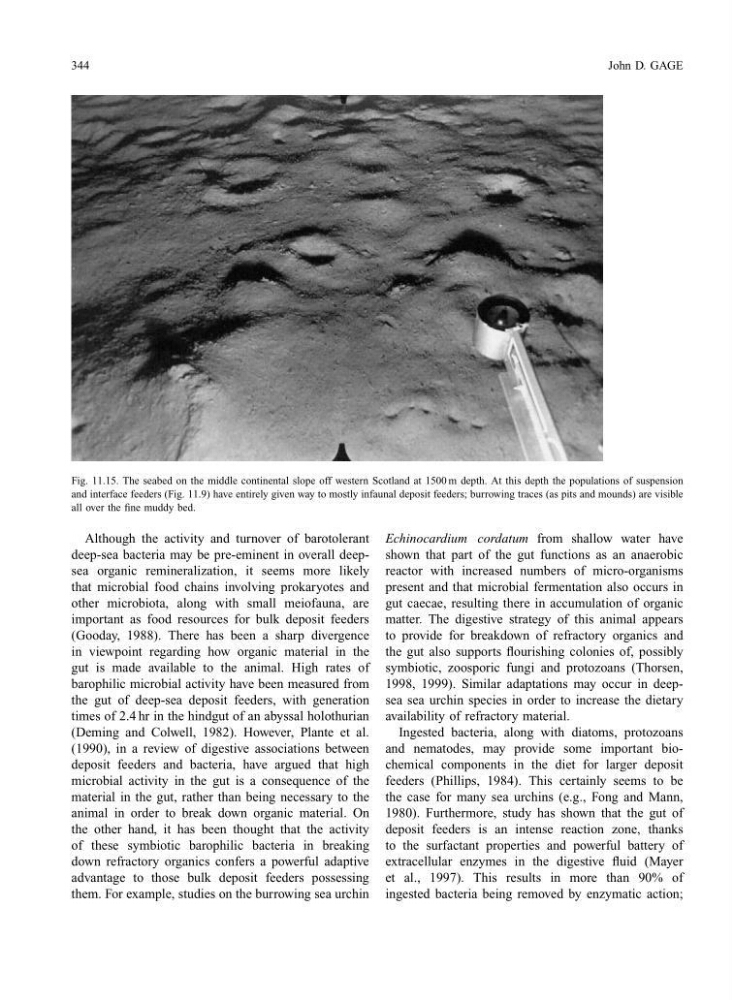
Fig. 11.15. The seabed on the middle continental slope off western Scotland at 1500 m depth. At this depth the populations of suspension
and interface feeders (Fig. 11.9) have entirely given way to mostly infaunal deposit feeders; burrowing traces (as pits and mounds) are visible
all over the fine muddy bed.
Although the activity and turnover of barotolerant
deep-sea bacteria may be pre-eminent in overall deepsea organic remineralization, it seems more likely
that microbial food chains involving prokaryotes and
other microbiota, along with small meiofauna, are
important as food resources for bulk deposit feeders
(Gooday, 1988). There has been a sharp divergence
in viewpoint regarding how organic material in the
gut is made available to the animal. High rates of
barophilic microbial activity have been measured from
the gut of deep-sea deposit feeders, with generation
times of 2.4 hr in the hindgut of an abyssal holothurian
(Deming and Colwell, 1982). However, Plante et al.
(1990), in a review of digestive associations between
deposit feeders and bacteria, have argued that high
microbial activity in the gut is a consequence of the
material in the gut, rather than being necessary to the
animal in order to break down organic material. On
the other hand, it has been thought that the activity
of these symbiotic barophilic bacteria in breaking
down refractory organics confers a powerful adaptive
advantage to those bulk deposit feeders possessing
them. For example, studies on the burrowing sea urchin
Echinocardium cordatum from shallow water have
shown that part of the gut functions as an anaerobic
reactor with increased numbers of micro-organisms
present and that microbial fermentation also occurs in
gut caecae, resulting there in accumulation of organic
matter. The digestive strategy of this animal appears
to provide for breakdown of refractory organics and
the gut also supports flourishing colonies of, possibly
symbiotic, zoosporic fungi and protozoans (Thorsen,
1998, 1999). Similar adaptations may occur in deepsea sea urchin species in order to increase the dietary
availability of refractory material.
Ingested bacteria, along with diatoms, protozoans
and nematodes, may provide some important biochemical components in the diet for larger deposit
feeders (Phillips, 1984). This certainly seems to be
the case for many sea urchins (e.g., Fong and Mann,
1980). Furthermore, study has shown that the gut of
deposit feeders is an intense reaction zone, thanks
to the surfactant properties and powerful battery of
extracellular enzymes in the digestive fluid (Mayer
et al., 1997). This results in more than 90% of
ingested bacteria being removed by enzymatic action;
John D. GAGE
Fig. 11.15. The seabed on the middle continental slope off western Scotland at 1500 m depth. At this depth the populations of suspension
and interface feeders (Fig. 11.9) have entirely given way to mostly infaunal deposit feeders; burrowing traces (as pits and mounds) are visible
all over the fine muddy bed.
Although the activity and turnover of barotolerant
deep-sea bacteria may be pre-eminent in overall deepsea organic remineralization, it seems more likely
that microbial food chains involving prokaryotes and
other microbiota, along with small meiofauna, are
important as food resources for bulk deposit feeders
(Gooday, 1988). There has been a sharp divergence
in viewpoint regarding how organic material in the
gut is made available to the animal. High rates of
barophilic microbial activity have been measured from
the gut of deep-sea deposit feeders, with generation
times of 2.4 hr in the hindgut of an abyssal holothurian
(Deming and Colwell, 1982). However, Plante et al.
(1990), in a review of digestive associations between
deposit feeders and bacteria, have argued that high
microbial activity in the gut is a consequence of the
material in the gut, rather than being necessary to the
animal in order to break down organic material. On
the other hand, it has been thought that the activity
of these symbiotic barophilic bacteria in breaking
down refractory organics confers a powerful adaptive
advantage to those bulk deposit feeders possessing
them. For example, studies on the burrowing sea urchin
Echinocardium cordatum from shallow water have
shown that part of the gut functions as an anaerobic
reactor with increased numbers of micro-organisms
present and that microbial fermentation also occurs in
gut caecae, resulting there in accumulation of organic
matter. The digestive strategy of this animal appears
to provide for breakdown of refractory organics and
the gut also supports flourishing colonies of, possibly
symbiotic, zoosporic fungi and protozoans (Thorsen,
1998, 1999). Similar adaptations may occur in deepsea sea urchin species in order to increase the dietary
availability of refractory material.
Ingested bacteria, along with diatoms, protozoans
and nematodes, may provide some important biochemical components in the diet for larger deposit
feeders (Phillips, 1984). This certainly seems to be
the case for many sea urchins (e.g., Fong and Mann,
1980). Furthermore, study has shown that the gut of
deposit feeders is an intense reaction zone, thanks
to the surfactant properties and powerful battery of
extracellular enzymes in the digestive fluid (Mayer
et al., 1997). This results in more than 90% of
ingested bacteria being removed by enzymatic action;