

330
John D. GAGE
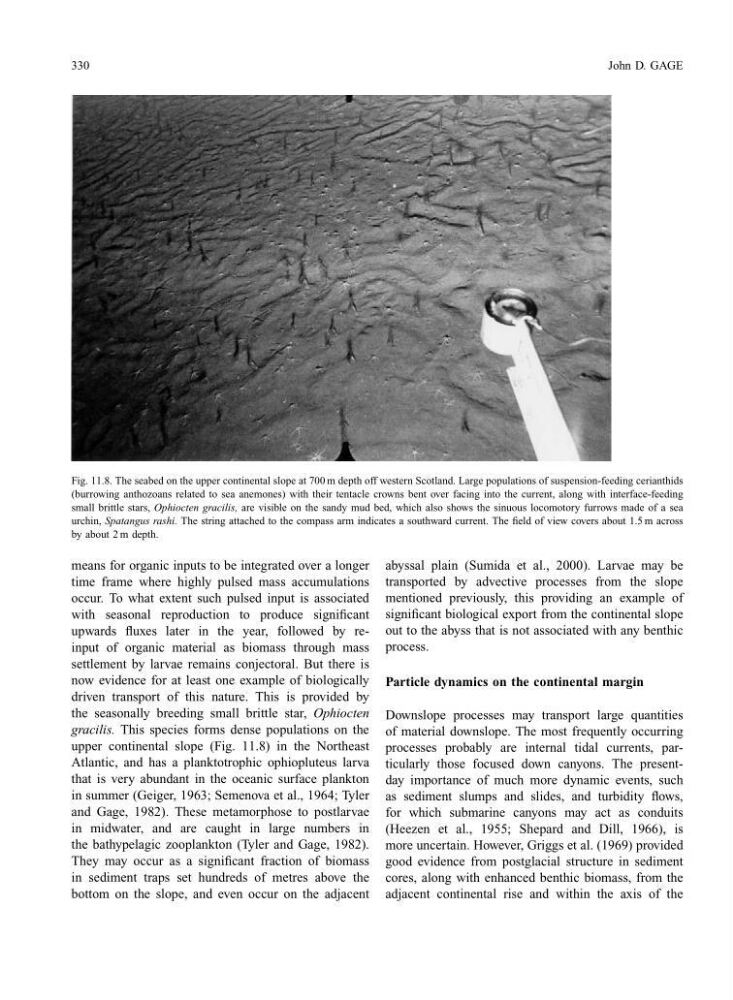
Fig. 11.8. The seabed on the upper continental slope at 700 m depth off western Scotland. Large populations of suspension-feeding cerianthids
(burrowing anthozoans related to sea anemones) with their tentacle crowns bent over facing into the current, along with interface-feeding
small brittle stars, Ophiocten gracilis, are visible on the sandy mud bed, which also shows the sinuous locomotory furrows made of a sea
urchin, Spatangus rashi. The string attached to the compass arm indicates a southward current. The field of view covers about 1.5 m across
by about 2 m depth.
means for organic inputs to be integrated over a longer
time frame where highly pulsed mass accumulations
occur. To what extent such pulsed input is associated
with seasonal reproduction to produce significant
upwards fluxes later in the year, followed by reinput of organic material as biomass through mass
settlement by larvae remains conjectoral. But there is
now evidence for at least one example of biologically
driven transport of this nature. This is provided by
the seasonally breeding small brittle star, Ophiocten
gracilis. This species forms dense populations on the
upper continental slope (Fig. 11.8) in the Northeast
Atlantic, and has a planktotrophic ophiopluteus larva
that is very abundant in the oceanic surface plankton
in summer (Geiger, 1963; Semenova et al., 1964; Tyler
and Gage, 1982). These metamorphose to postlarvae
in midwater, and are caught in large numbers in
the bathypelagic zooplankton (Tyler and Gage, 1982).
They may occur as a significant fraction of biomass
in sediment traps set hundreds of metres above the
bottom on the slope, and even occur on the adjacent
abyssal plain (Sumida et al., 2000). Larvae may be
transported by advective processes from the slope
mentioned previously, this providing an example of
significant biological export from the continental slope
out to the abyss that is not associated with any benthic
process.
Particle dynamics on the continental margin
Downslope processes may transport large quantities
of material downslope. The most frequently occurring
processes probably are internal tidal currents, particularly those focused down canyons. The presentday importance of much more dynamic events, such
as sediment slumps and slides, and turbidity flows,
for which submarine canyons may act as conduits
(Heezen et al., 1955; Shepard and Dill, 1966), is
more uncertain. However, Griggs et al. (1969) provided
good evidence from postglacial structure in sediment
cores, along with enhanced benthic biomass, from the
adjacent continental rise and within the axis of the
John D. GAGE
Fig. 11.8. The seabed on the upper continental slope at 700 m depth off western Scotland. Large populations of suspension-feeding cerianthids
(burrowing anthozoans related to sea anemones) with their tentacle crowns bent over facing into the current, along with interface-feeding
small brittle stars, Ophiocten gracilis, are visible on the sandy mud bed, which also shows the sinuous locomotory furrows made of a sea
urchin, Spatangus rashi. The string attached to the compass arm indicates a southward current. The field of view covers about 1.5 m across
by about 2 m depth.
means for organic inputs to be integrated over a longer
time frame where highly pulsed mass accumulations
occur. To what extent such pulsed input is associated
with seasonal reproduction to produce significant
upwards fluxes later in the year, followed by reinput of organic material as biomass through mass
settlement by larvae remains conjectoral. But there is
now evidence for at least one example of biologically
driven transport of this nature. This is provided by
the seasonally breeding small brittle star, Ophiocten
gracilis. This species forms dense populations on the
upper continental slope (Fig. 11.8) in the Northeast
Atlantic, and has a planktotrophic ophiopluteus larva
that is very abundant in the oceanic surface plankton
in summer (Geiger, 1963; Semenova et al., 1964; Tyler
and Gage, 1982). These metamorphose to postlarvae
in midwater, and are caught in large numbers in
the bathypelagic zooplankton (Tyler and Gage, 1982).
They may occur as a significant fraction of biomass
in sediment traps set hundreds of metres above the
bottom on the slope, and even occur on the adjacent
abyssal plain (Sumida et al., 2000). Larvae may be
transported by advective processes from the slope
mentioned previously, this providing an example of
significant biological export from the continental slope
out to the abyss that is not associated with any benthic
process.
Particle dynamics on the continental margin
Downslope processes may transport large quantities
of material downslope. The most frequently occurring
processes probably are internal tidal currents, particularly those focused down canyons. The presentday importance of much more dynamic events, such
as sediment slumps and slides, and turbidity flows,
for which submarine canyons may act as conduits
(Heezen et al., 1955; Shepard and Dill, 1966), is
more uncertain. However, Griggs et al. (1969) provided
good evidence from postglacial structure in sediment
cores, along with enhanced benthic biomass, from the
adjacent continental rise and within the axis of the