

FOOD INPUTS, UTILIZATION, CARBON FLOW AND ENERGETICS
329
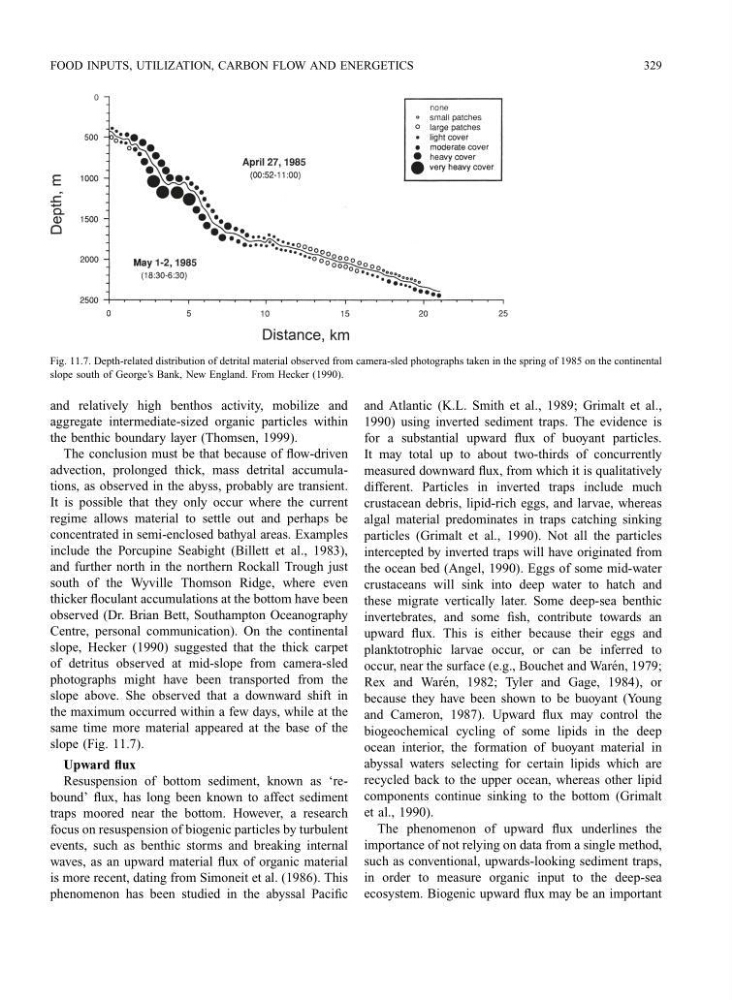
Fig. 11.7. Depth-related distribution of detrital material observed from camera-sled photographs taken in the spring of 1985 on the continental
slope south of George’s Bank, New England. From Hecker (1990).
and relatively high benthos activity, mobilize and
aggregate intermediate-sized organic particles within
the benthic boundary layer (Thomsen, 1999).
The conclusion must be that because of flow-driven
advection, prolonged thick, mass detrital accumulations, as observed in the abyss, probably are transient.
It is possible that they only occur where the current
regime allows material to settle out and perhaps be
concentrated in semi-enclosed bathyal areas. Examples
include the Porcupine Seabight (Billett et al., 1983),
and further north in the northern Rockall Trough just
south of the Wyville Thomson Ridge, where even
thicker floculant accumulations at the bottom have been
observed (Dr. Brian Bett, Southampton Oceanography
Centre, personal communication). On the continental
slope, Hecker (1990) suggested that the thick carpet
of detritus observed at mid-slope from camera-sled
photographs might have been transported from the
slope above. She observed that a downward shift in
the maximum occurred within a few days, while at the
same time more material appeared at the base of the
slope (Fig. 11.7).
Upward flux
Resuspension of bottom sediment, known as ‘rebound’ flux, has long been known to affect sediment
traps moored near the bottom. However, a research
focus on resuspension of biogenic particles by turbulent
events, such as benthic storms and breaking internal
waves, as an upward material flux of organic material
is more recent, dating from Simoneit et al. (1986). This
phenomenon has been studied in the abyssal Pacific
and Atlantic (K.L. Smith et al., 1989; Grimalt et al.,
1990) using inverted sediment traps. The evidence is
for a substantial upward flux of buoyant particles.
It may total up to about two-thirds of concurrently
measured downward flux, from which it is qualitatively
different. Particles in inverted traps include much
crustacean debris, lipid-rich eggs, and larvae, whereas
algal material predominates in traps catching sinking
particles (Grimalt et al., 1990). Not all the particles
intercepted by inverted traps will have originated from
the ocean bed (Angel, 1990). Eggs of some mid-water
crustaceans will sink into deep water to hatch and
these migrate vertically later. Some deep-sea benthic
invertebrates, and some fish, contribute towards an
upward flux. This is either because their eggs and
planktotrophic larvae occur, or can be inferred to
occur, near the surface (e.g., Bouchet and War´ en, 1979;
Rex and War´ en, 1982; Tyler and Gage, 1984), or
because they have been shown to be buoyant (Young
and Cameron, 1987). Upward flux may control the
biogeochemical cycling of some lipids in the deep
ocean interior, the formation of buoyant material in
abyssal waters selecting for certain lipids which are
recycled back to the upper ocean, whereas other lipid
components continue sinking to the bottom (Grimalt
et al., 1990).
The phenomenon of upward flux underlines the
importance of not relying on data from a single method,
such as conventional, upwards-looking sediment traps,
in order to measure organic input to the deep-sea
ecosystem. Biogenic upward flux may be an important
329
Fig. 11.7. Depth-related distribution of detrital material observed from camera-sled photographs taken in the spring of 1985 on the continental
slope south of George’s Bank, New England. From Hecker (1990).
and relatively high benthos activity, mobilize and
aggregate intermediate-sized organic particles within
the benthic boundary layer (Thomsen, 1999).
The conclusion must be that because of flow-driven
advection, prolonged thick, mass detrital accumulations, as observed in the abyss, probably are transient.
It is possible that they only occur where the current
regime allows material to settle out and perhaps be
concentrated in semi-enclosed bathyal areas. Examples
include the Porcupine Seabight (Billett et al., 1983),
and further north in the northern Rockall Trough just
south of the Wyville Thomson Ridge, where even
thicker floculant accumulations at the bottom have been
observed (Dr. Brian Bett, Southampton Oceanography
Centre, personal communication). On the continental
slope, Hecker (1990) suggested that the thick carpet
of detritus observed at mid-slope from camera-sled
photographs might have been transported from the
slope above. She observed that a downward shift in
the maximum occurred within a few days, while at the
same time more material appeared at the base of the
slope (Fig. 11.7).
Upward flux
Resuspension of bottom sediment, known as ‘rebound’ flux, has long been known to affect sediment
traps moored near the bottom. However, a research
focus on resuspension of biogenic particles by turbulent
events, such as benthic storms and breaking internal
waves, as an upward material flux of organic material
is more recent, dating from Simoneit et al. (1986). This
phenomenon has been studied in the abyssal Pacific
and Atlantic (K.L. Smith et al., 1989; Grimalt et al.,
1990) using inverted sediment traps. The evidence is
for a substantial upward flux of buoyant particles.
It may total up to about two-thirds of concurrently
measured downward flux, from which it is qualitatively
different. Particles in inverted traps include much
crustacean debris, lipid-rich eggs, and larvae, whereas
algal material predominates in traps catching sinking
particles (Grimalt et al., 1990). Not all the particles
intercepted by inverted traps will have originated from
the ocean bed (Angel, 1990). Eggs of some mid-water
crustaceans will sink into deep water to hatch and
these migrate vertically later. Some deep-sea benthic
invertebrates, and some fish, contribute towards an
upward flux. This is either because their eggs and
planktotrophic larvae occur, or can be inferred to
occur, near the surface (e.g., Bouchet and War´ en, 1979;
Rex and War´ en, 1982; Tyler and Gage, 1984), or
because they have been shown to be buoyant (Young
and Cameron, 1987). Upward flux may control the
biogeochemical cycling of some lipids in the deep
ocean interior, the formation of buoyant material in
abyssal waters selecting for certain lipids which are
recycled back to the upper ocean, whereas other lipid
components continue sinking to the bottom (Grimalt
et al., 1990).
The phenomenon of upward flux underlines the
importance of not relying on data from a single method,
such as conventional, upwards-looking sediment traps,
in order to measure organic input to the deep-sea
ecosystem. Biogenic upward flux may be an important