

FOOD INPUTS, UTILIZATION, CARBON FLOW AND ENERGETICS
323
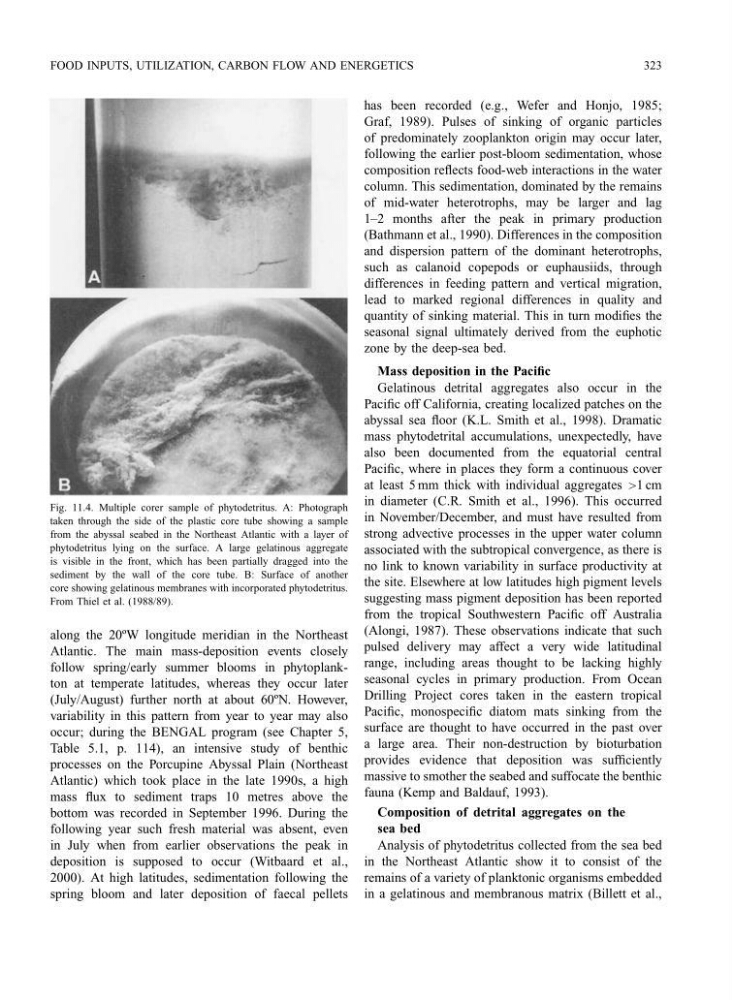
Fig. 11.4. Multiple corer sample of phytodetritus. A: Photograph
taken through the side of the plastic core tube showing a sample
from the abyssal seabed in the Northeast Atlantic with a layer of
phytodetritus lying on the surface. A large gelatinous aggregate
is visible in the front, which has been partially dragged into the
sediment by the wall of the core tube. B: Surface of another
core showing gelatinous membranes with incorporated phytodetritus.
From Thiel et al. (1988/89).
along the 20ºW longitude meridian in the Northeast
Atlantic. The main mass-deposition events closely
follow spring/early summer blooms in phytoplankton at temperate latitudes, whereas they occur later
(July/August) further north at about 60ºN. However,
variability in this pattern from year to year may also
occur; during the BENGAL program (see Chapter 5,
Table 5.1, p. 114), an intensive study of benthic
processes on the Porcupine Abyssal Plain (Northeast
Atlantic) which took place in the late 1990s, a high
mass flux to sediment traps 10 metres above the
bottom was recorded in September 1996. During the
following year such fresh material was absent, even
in July when from earlier observations the peak in
deposition is supposed to occur (Witbaard et al.,
2000). At high latitudes, sedimentation following the
spring bloom and later deposition of faecal pellets
has been recorded (e.g., Wefer and Honjo, 1985;
Graf, 1989). Pulses of sinking of organic particles
of predominately zooplankton origin may occur later,
following the earlier post-bloom sedimentation, whose
composition reflects food-web interactions in the water
column. This sedimentation, dominated by the remains
of mid-water heterotrophs, may be larger and lag
1–2 months after the peak in primary production
(Bathmann et al., 1990). Differences in the composition
and dispersion pattern of the dominant heterotrophs,
such as calanoid copepods or euphausiids, through
differences in feeding pattern and vertical migration,
lead to marked regional differences in quality and
quantity of sinking material. This in turn modifies the
seasonal signal ultimately derived from the euphotic
zone by the deep-sea bed.
Mass deposition in the Pacific
Gelatinous detrital aggregates also occur in the
Pacific off California, creating localized patches on the
abyssal sea floor (K.L. Smith et al., 1998). Dramatic
mass phytodetrital accumulations, unexpectedly, have
also been documented from the equatorial central
Pacific, where in places they form a continuous cover
at least 5 mm thick with individual aggregates >1 cm
in diameter (C.R. Smith et al., 1996). This occurred
in November/December, and must have resulted from
strong advective processes in the upper water column
associated with the subtropical convergence, as there is
no link to known variability in surface productivity at
the site. Elsewhere at low latitudes high pigment levels
suggesting mass pigment deposition has been reported
from the tropical Southwestern Pacific off Australia
(Alongi, 1987). These observations indicate that such
pulsed delivery may affect a very wide latitudinal
range, including areas thought to be lacking highly
seasonal cycles in primary production. From Ocean
Drilling Project cores taken in the eastern tropical
Pacific, monospecific diatom mats sinking from the
surface are thought to have occurred in the past over
a large area. Their non-destruction by bioturbation
provides evidence that deposition was sufficiently
massive to smother the seabed and suffocate the benthic
fauna (Kemp and Baldauf, 1993).
Composition of detrital aggregates on the
sea bed
Analysis of phytodetritus collected from the sea bed
in the Northeast Atlantic show it to consist of the
remains of a variety of planktonic organisms embedded
in a gelatinous and membranous matrix (Billett et al.,
323
Fig. 11.4. Multiple corer sample of phytodetritus. A: Photograph
taken through the side of the plastic core tube showing a sample
from the abyssal seabed in the Northeast Atlantic with a layer of
phytodetritus lying on the surface. A large gelatinous aggregate
is visible in the front, which has been partially dragged into the
sediment by the wall of the core tube. B: Surface of another
core showing gelatinous membranes with incorporated phytodetritus.
From Thiel et al. (1988/89).
along the 20ºW longitude meridian in the Northeast
Atlantic. The main mass-deposition events closely
follow spring/early summer blooms in phytoplankton at temperate latitudes, whereas they occur later
(July/August) further north at about 60ºN. However,
variability in this pattern from year to year may also
occur; during the BENGAL program (see Chapter 5,
Table 5.1, p. 114), an intensive study of benthic
processes on the Porcupine Abyssal Plain (Northeast
Atlantic) which took place in the late 1990s, a high
mass flux to sediment traps 10 metres above the
bottom was recorded in September 1996. During the
following year such fresh material was absent, even
in July when from earlier observations the peak in
deposition is supposed to occur (Witbaard et al.,
2000). At high latitudes, sedimentation following the
spring bloom and later deposition of faecal pellets
has been recorded (e.g., Wefer and Honjo, 1985;
Graf, 1989). Pulses of sinking of organic particles
of predominately zooplankton origin may occur later,
following the earlier post-bloom sedimentation, whose
composition reflects food-web interactions in the water
column. This sedimentation, dominated by the remains
of mid-water heterotrophs, may be larger and lag
1–2 months after the peak in primary production
(Bathmann et al., 1990). Differences in the composition
and dispersion pattern of the dominant heterotrophs,
such as calanoid copepods or euphausiids, through
differences in feeding pattern and vertical migration,
lead to marked regional differences in quality and
quantity of sinking material. This in turn modifies the
seasonal signal ultimately derived from the euphotic
zone by the deep-sea bed.
Mass deposition in the Pacific
Gelatinous detrital aggregates also occur in the
Pacific off California, creating localized patches on the
abyssal sea floor (K.L. Smith et al., 1998). Dramatic
mass phytodetrital accumulations, unexpectedly, have
also been documented from the equatorial central
Pacific, where in places they form a continuous cover
at least 5 mm thick with individual aggregates >1 cm
in diameter (C.R. Smith et al., 1996). This occurred
in November/December, and must have resulted from
strong advective processes in the upper water column
associated with the subtropical convergence, as there is
no link to known variability in surface productivity at
the site. Elsewhere at low latitudes high pigment levels
suggesting mass pigment deposition has been reported
from the tropical Southwestern Pacific off Australia
(Alongi, 1987). These observations indicate that such
pulsed delivery may affect a very wide latitudinal
range, including areas thought to be lacking highly
seasonal cycles in primary production. From Ocean
Drilling Project cores taken in the eastern tropical
Pacific, monospecific diatom mats sinking from the
surface are thought to have occurred in the past over
a large area. Their non-destruction by bioturbation
provides evidence that deposition was sufficiently
massive to smother the seabed and suffocate the benthic
fauna (Kemp and Baldauf, 1993).
Composition of detrital aggregates on the
sea bed
Analysis of phytodetritus collected from the sea bed
in the Northeast Atlantic show it to consist of the
remains of a variety of planktonic organisms embedded
in a gelatinous and membranous matrix (Billett et al.,