

324
John D. GAGE
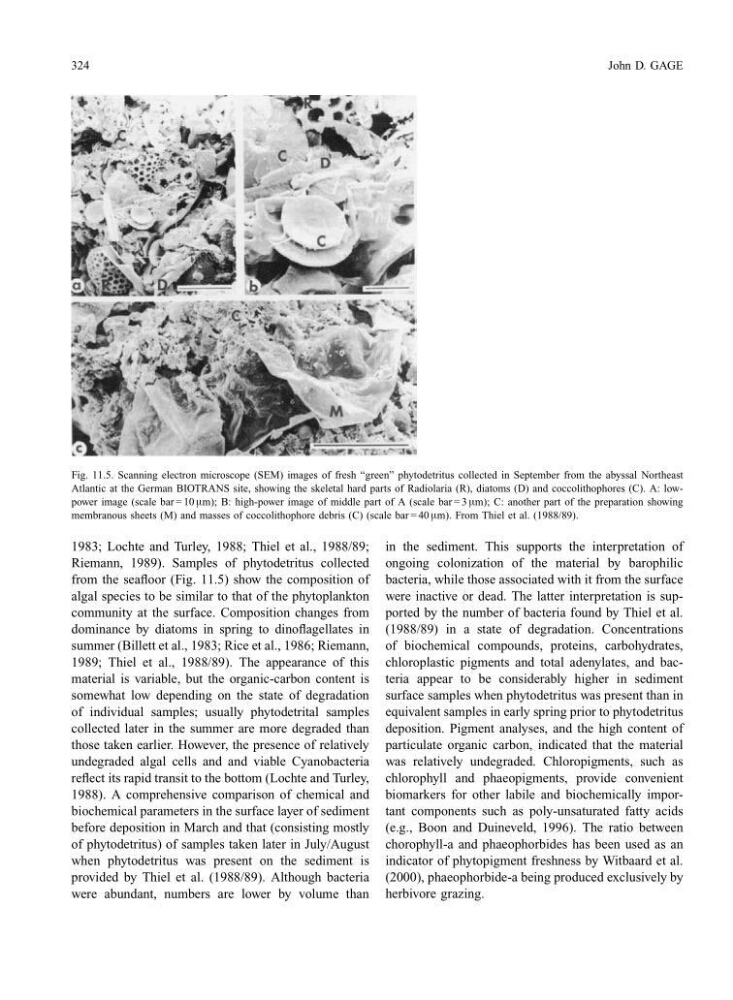
Fig. 11.5. Scanning electron microscope (SEM) images of fresh “green” phytodetritus collected in September from the abyssal Northeast
Atlantic at the German BIOTRANS site, showing the skeletal hard parts of Radiolaria (R), diatoms (D) and coccolithophores (C). A: lowpower image (scale bar = 10 mm); B: high-power image of middle part of A (scale bar = 3 mm); C: another part of the preparation showing
membranous sheets (M) and masses of coccolithophore debris (C) (scale bar = 40 mm). From Thiel et al. (1988/89).
1983; Lochte and Turley, 1988; Thiel et al., 1988/89;
Riemann, 1989). Samples of phytodetritus collected
from the seafloor (Fig. 11.5) show the composition of
algal species to be similar to that of the phytoplankton
community at the surface. Composition changes from
dominance by diatoms in spring to dinoflagellates in
summer (Billett et al., 1983; Rice et al., 1986; Riemann,
1989; Thiel et al., 1988/89). The appearance of this
material is variable, but the organic-carbon content is
somewhat low depending on the state of degradation
of individual samples; usually phytodetrital samples
collected later in the summer are more degraded than
those taken earlier. However, the presence of relatively
undegraded algal cells and and viable Cyanobacteria
reflect its rapid transit to the bottom (Lochte and Turley,
1988). A comprehensive comparison of chemical and
biochemical parameters in the surface layer of sediment
before deposition in March and that (consisting mostly
of phytodetritus) of samples taken later in July/August
when phytodetritus was present on the sediment is
provided by Thiel et al. (1988/89). Although bacteria
were abundant, numbers are lower by volume than
in the sediment. This supports the interpretation of
ongoing colonization of the material by barophilic
bacteria, while those associated with it from the surface
were inactive or dead. The latter interpretation is supported by the number of bacteria found by Thiel et al.
(1988/89) in a state of degradation. Concentrations
of biochemical compounds, proteins, carbohydrates,
chloroplastic pigments and total adenylates, and bacteria appear to be considerably higher in sediment
surface samples when phytodetritus was present than in
equivalent samples in early spring prior to phytodetritus
deposition. Pigment analyses, and the high content of
particulate organic carbon, indicated that the material
was relatively undegraded. Chloropigments, such as
chlorophyll and phaeopigments, provide convenient
biomarkers for other labile and biochemically important components such as poly-unsaturated fatty acids
(e.g., Boon and Duineveld, 1996). The ratio between
chorophyll-a and phaeophorbides has been used as an
indicator of phytopigment freshness by Witbaard et al.
(2000), phaeophorbide-a being produced exclusively by
herbivore grazing.
John D. GAGE
Fig. 11.5. Scanning electron microscope (SEM) images of fresh “green” phytodetritus collected in September from the abyssal Northeast
Atlantic at the German BIOTRANS site, showing the skeletal hard parts of Radiolaria (R), diatoms (D) and coccolithophores (C). A: lowpower image (scale bar = 10 mm); B: high-power image of middle part of A (scale bar = 3 mm); C: another part of the preparation showing
membranous sheets (M) and masses of coccolithophore debris (C) (scale bar = 40 mm). From Thiel et al. (1988/89).
1983; Lochte and Turley, 1988; Thiel et al., 1988/89;
Riemann, 1989). Samples of phytodetritus collected
from the seafloor (Fig. 11.5) show the composition of
algal species to be similar to that of the phytoplankton
community at the surface. Composition changes from
dominance by diatoms in spring to dinoflagellates in
summer (Billett et al., 1983; Rice et al., 1986; Riemann,
1989; Thiel et al., 1988/89). The appearance of this
material is variable, but the organic-carbon content is
somewhat low depending on the state of degradation
of individual samples; usually phytodetrital samples
collected later in the summer are more degraded than
those taken earlier. However, the presence of relatively
undegraded algal cells and and viable Cyanobacteria
reflect its rapid transit to the bottom (Lochte and Turley,
1988). A comprehensive comparison of chemical and
biochemical parameters in the surface layer of sediment
before deposition in March and that (consisting mostly
of phytodetritus) of samples taken later in July/August
when phytodetritus was present on the sediment is
provided by Thiel et al. (1988/89). Although bacteria
were abundant, numbers are lower by volume than
in the sediment. This supports the interpretation of
ongoing colonization of the material by barophilic
bacteria, while those associated with it from the surface
were inactive or dead. The latter interpretation is supported by the number of bacteria found by Thiel et al.
(1988/89) in a state of degradation. Concentrations
of biochemical compounds, proteins, carbohydrates,
chloroplastic pigments and total adenylates, and bacteria appear to be considerably higher in sediment
surface samples when phytodetritus was present than in
equivalent samples in early spring prior to phytodetritus
deposition. Pigment analyses, and the high content of
particulate organic carbon, indicated that the material
was relatively undegraded. Chloropigments, such as
chlorophyll and phaeopigments, provide convenient
biomarkers for other labile and biochemically important components such as poly-unsaturated fatty acids
(e.g., Boon and Duineveld, 1996). The ratio between
chorophyll-a and phaeophorbides has been used as an
indicator of phytopigment freshness by Witbaard et al.
(2000), phaeophorbide-a being produced exclusively by
herbivore grazing.