

THE PERIPHERAL DEEP SEAS
277
140º
145º
150º
155º
160º
165º
40º
45º
50º
55º
60º
5 0 0
1 0 0 0
1 0 0 0
10 00
2 0 0 0
300 0
5 0 0 0
7 0 0 0
6 0 0 0
5 5 0 0
3 5 0 0
3 0 0 0
5 5 0 0
5 5 0 0
5 0 0 0
1000
5 0 0
1 0 0 0
SEA OF
OKHOTSK
SIBERIA
Deryugin
Basin
P ACIFIC
OCEAN
K u r i l e B a s i n
K u r i l e T r e n c h
Soya
Strait
Tatarskiy Strait
140º
145º
150º
155º
160º
165º
40º
45º
50º
55º
60º
N
E
1 5 0 0
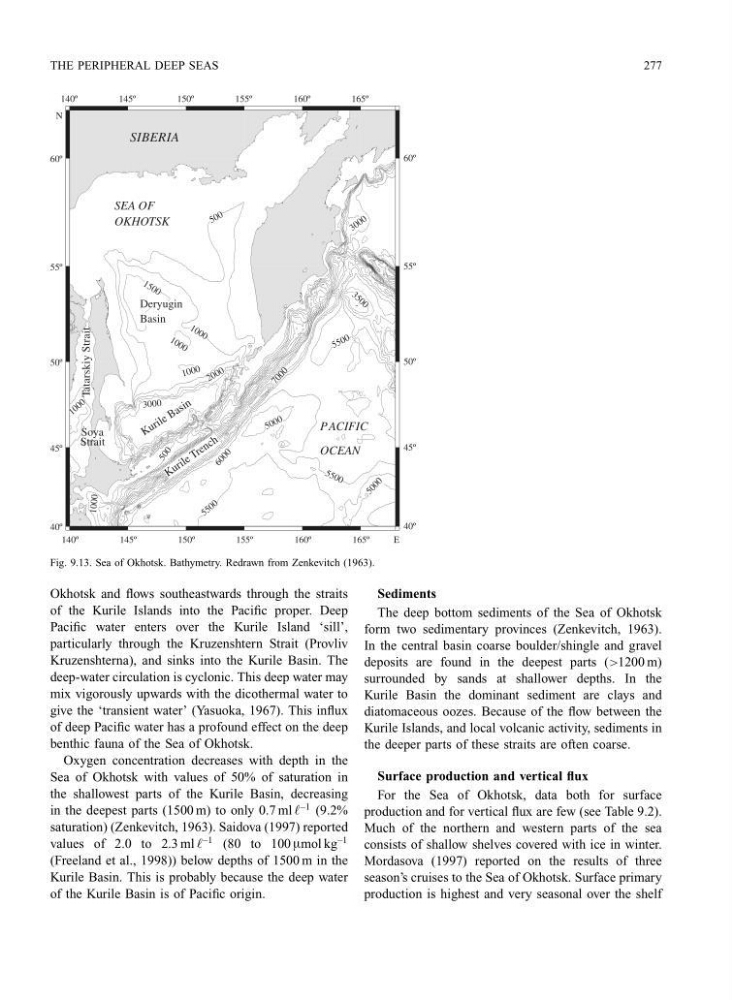
Fig. 9.13. Sea of Okhotsk. Bathymetry. Redrawn from Zenkevitch (1963).
Okhotsk and flows southeastwards through the straits
of the Kurile Islands into the Pacific proper. Deep
Pacific water enters over the Kurile Island ‘sill’,
particularly through the Kruzenshtern Strait (Provliv
Kruzenshterna), and sinks into the Kurile Basin. The
deep-water circulation is cyclonic. This deep water may
mix vigorously upwards with the dicothermal water to
give the ‘transient water’ (Yasuoka, 1967). This influx
of deep Pacific water has a profound effect on the deep
benthic fauna of the Sea of Okhotsk.
Oxygen concentration decreases with depth in the
Sea of Okhotsk with values of 50% of saturation in
the shallowest parts of the Kurile Basin, decreasing
in the deepest parts (1500 m) to only 0.7 ml °
−1 (9.2%
saturation) (Zenkevitch, 1963). Saidova (1997) reported
values of 2.0 to 2.3 ml °
−1 (80 to 100 mmol kg
−1
(Freeland et al., 1998)) below depths of 1500 m in the
Kurile Basin. This is probably because the deep water
of the Kurile Basin is of Pacific origin.
Sediments
The deep bottom sediments of the Sea of Okhotsk
form two sedimentary provinces (Zenkevitch, 1963).
In the central basin coarse boulder/shingle and gravel
deposits are found in the deepest parts (>1200 m)
surrounded by sands at shallower depths. In the
Kurile Basin the dominant sediment are clays and
diatomaceous oozes. Because of the flow between the
Kurile Islands, and local volcanic activity, sediments in
the deeper parts of these straits are often coarse.
Surface production and vertical flux
For the Sea of Okhotsk, data both for surface
production and for vertical flux are few (see Table 9.2).
Much of the northern and western parts of the sea
consists of shallow shelves covered with ice in winter.
Mordasova (1997) reported on the results of three
season’s cruises to the Sea of Okhotsk. Surface primary
production is highest and very seasonal over the shelf
277
140º
145º
150º
155º
160º
165º
40º
45º
50º
55º
60º
5 0 0
1 0 0 0
1 0 0 0
10 00
2 0 0 0
300 0
5 0 0 0
7 0 0 0
6 0 0 0
5 5 0 0
3 5 0 0
3 0 0 0
5 5 0 0
5 5 0 0
5 0 0 0
1000
5 0 0
1 0 0 0
SEA OF
OKHOTSK
SIBERIA
Deryugin
Basin
P ACIFIC
OCEAN
K u r i l e B a s i n
K u r i l e T r e n c h
Soya
Strait
Tatarskiy Strait
140º
145º
150º
155º
160º
165º
40º
45º
50º
55º
60º
N
E
1 5 0 0
Fig. 9.13. Sea of Okhotsk. Bathymetry. Redrawn from Zenkevitch (1963).
Okhotsk and flows southeastwards through the straits
of the Kurile Islands into the Pacific proper. Deep
Pacific water enters over the Kurile Island ‘sill’,
particularly through the Kruzenshtern Strait (Provliv
Kruzenshterna), and sinks into the Kurile Basin. The
deep-water circulation is cyclonic. This deep water may
mix vigorously upwards with the dicothermal water to
give the ‘transient water’ (Yasuoka, 1967). This influx
of deep Pacific water has a profound effect on the deep
benthic fauna of the Sea of Okhotsk.
Oxygen concentration decreases with depth in the
Sea of Okhotsk with values of 50% of saturation in
the shallowest parts of the Kurile Basin, decreasing
in the deepest parts (1500 m) to only 0.7 ml °
−1 (9.2%
saturation) (Zenkevitch, 1963). Saidova (1997) reported
values of 2.0 to 2.3 ml °
−1 (80 to 100 mmol kg
−1
(Freeland et al., 1998)) below depths of 1500 m in the
Kurile Basin. This is probably because the deep water
of the Kurile Basin is of Pacific origin.
Sediments
The deep bottom sediments of the Sea of Okhotsk
form two sedimentary provinces (Zenkevitch, 1963).
In the central basin coarse boulder/shingle and gravel
deposits are found in the deepest parts (>1200 m)
surrounded by sands at shallower depths. In the
Kurile Basin the dominant sediment are clays and
diatomaceous oozes. Because of the flow between the
Kurile Islands, and local volcanic activity, sediments in
the deeper parts of these straits are often coarse.
Surface production and vertical flux
For the Sea of Okhotsk, data both for surface
production and for vertical flux are few (see Table 9.2).
Much of the northern and western parts of the sea
consists of shallow shelves covered with ice in winter.
Mordasova (1997) reported on the results of three
season’s cruises to the Sea of Okhotsk. Surface primary
production is highest and very seasonal over the shelf