

THE PERIPHERAL DEEP SEAS
271
F l o r i d a E s c a r p m e n t
95º
90º
85º
80º
20º
25º
30º
Strait of
Florida
Texas
MEXICO
Caribbean
Sea
Louisiana
Slope
Mississippi
Delta
Cuba
F l o r i d a
C a m p e c h e B a n k
Abyssal
Plain
C a m p e c h e E s c a r p m e n t
2 5 0 0 m
3 0 0 0 m
3 5 0 0 m
35 00 m
20 00 m
1 5 0 0 m
15 00 m
Yucatan
Channel
20º
25º
30º
N
95º
90º
85º
80ºW
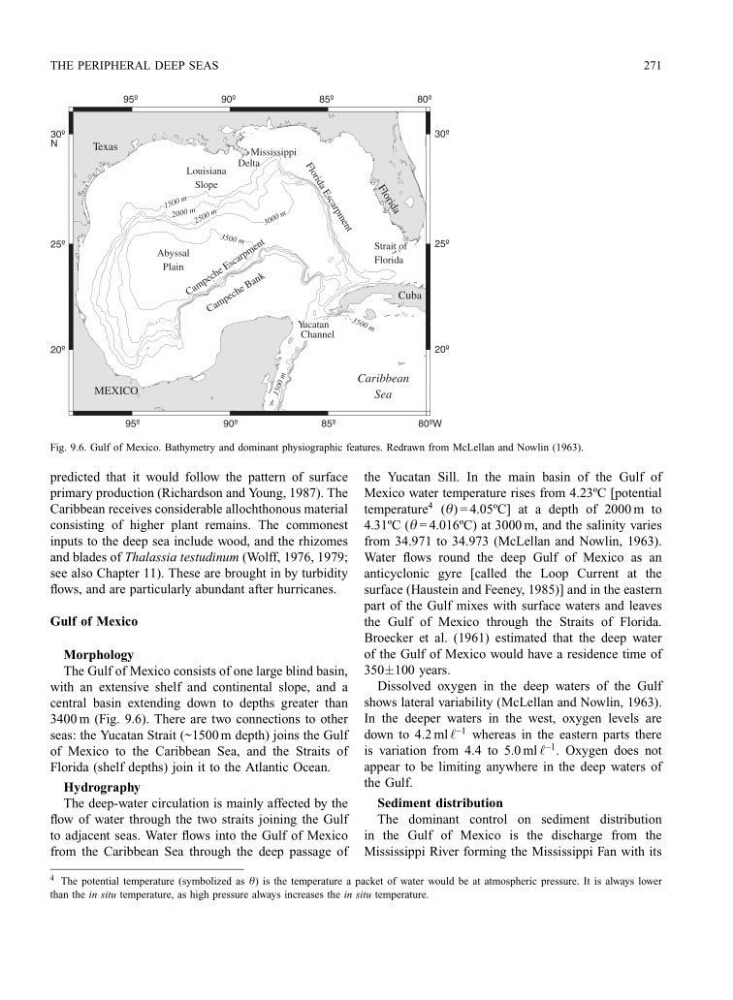
Fig. 9.6. Gulf of Mexico. Bathymetry and dominant physiographic features. Redrawn from McLellan and Nowlin (1963).
predicted that it would follow the pattern of surface
primary production (Richardson and Young, 1987). The
Caribbean receives considerable allochthonous material
consisting of higher plant remains. The commonest
inputs to the deep sea include wood, and the rhizomes
and blades of Thalassia testudinum (Wolff, 1976, 1979;
see also Chapter 11). These are brought in by turbidity
flows, and are particularly abundant after hurricanes.
Gulf of Mexico
Morphology
The Gulf of Mexico consists of one large blind basin,
with an extensive shelf and continental slope, and a
central basin extending down to depths greater than
3400 m (Fig. 9.6). There are two connections to other
seas: the Yucatan Strait (~1500 m depth) joins the Gulf
of Mexico to the Caribbean Sea, and the Straits of
Florida (shelf depths) join it to the Atlantic Ocean.
Hydrography
The deep-water circulation is mainly affected by the
flow of water through the two straits joining the Gulf
to adjacent seas. Water flows into the Gulf of Mexico
from the Caribbean Sea through the deep passage of
the Yucatan Sill. In the main basin of the Gulf of
Mexico water temperature rises from 4.23ºC [potential
temperature
4 (q) = 4.05ºC] at a depth of 2000 m to
4.31ºC (q = 4.016ºC) at 3000 m, and the salinity varies
from 34.971 to 34.973 (McLellan and Nowlin, 1963).
Water flows round the deep Gulf of Mexico as an
anticyclonic gyre [called the Loop Current at the
surface (Haustein and Feeney, 1985)] and in the eastern
part of the Gulf mixes with surface waters and leaves
the Gulf of Mexico through the Straits of Florida.
Broecker et al. (1961) estimated that the deep water
of the Gulf of Mexico would have a residence time of
350±100 years.
Dissolved oxygen in the deep waters of the Gulf
shows lateral variability (McLellan and Nowlin, 1963).
In the deeper waters in the west, oxygen levels are
down to 4.2 ml °
−1 whereas in the eastern parts there
is variation from 4.4 to 5.0 ml °
−1 . Oxygen does not
appear to be limiting anywhere in the deep waters of
the Gulf.
Sediment distribution
The dominant control on sediment distribution
in the Gulf of Mexico is the discharge from the
Mississippi River forming the Mississippi Fan with its
4 The potential temperature (symbolized as q) is the temperature a packet of water would be at atmospheric pressure. It is always lower
than the in situ temperature, as high pressure always increases the in situ temperature.
271
F l o r i d a E s c a r p m e n t
95º
90º
85º
80º
20º
25º
30º
Strait of
Florida
Texas
MEXICO
Caribbean
Sea
Louisiana
Slope
Mississippi
Delta
Cuba
F l o r i d a
C a m p e c h e B a n k
Abyssal
Plain
C a m p e c h e E s c a r p m e n t
2 5 0 0 m
3 0 0 0 m
3 5 0 0 m
35 00 m
20 00 m
1 5 0 0 m
15 00 m
Yucatan
Channel
20º
25º
30º
N
95º
90º
85º
80ºW
Fig. 9.6. Gulf of Mexico. Bathymetry and dominant physiographic features. Redrawn from McLellan and Nowlin (1963).
predicted that it would follow the pattern of surface
primary production (Richardson and Young, 1987). The
Caribbean receives considerable allochthonous material
consisting of higher plant remains. The commonest
inputs to the deep sea include wood, and the rhizomes
and blades of Thalassia testudinum (Wolff, 1976, 1979;
see also Chapter 11). These are brought in by turbidity
flows, and are particularly abundant after hurricanes.
Gulf of Mexico
Morphology
The Gulf of Mexico consists of one large blind basin,
with an extensive shelf and continental slope, and a
central basin extending down to depths greater than
3400 m (Fig. 9.6). There are two connections to other
seas: the Yucatan Strait (~1500 m depth) joins the Gulf
of Mexico to the Caribbean Sea, and the Straits of
Florida (shelf depths) join it to the Atlantic Ocean.
Hydrography
The deep-water circulation is mainly affected by the
flow of water through the two straits joining the Gulf
to adjacent seas. Water flows into the Gulf of Mexico
from the Caribbean Sea through the deep passage of
the Yucatan Sill. In the main basin of the Gulf of
Mexico water temperature rises from 4.23ºC [potential
temperature
4 (q) = 4.05ºC] at a depth of 2000 m to
4.31ºC (q = 4.016ºC) at 3000 m, and the salinity varies
from 34.971 to 34.973 (McLellan and Nowlin, 1963).
Water flows round the deep Gulf of Mexico as an
anticyclonic gyre [called the Loop Current at the
surface (Haustein and Feeney, 1985)] and in the eastern
part of the Gulf mixes with surface waters and leaves
the Gulf of Mexico through the Straits of Florida.
Broecker et al. (1961) estimated that the deep water
of the Gulf of Mexico would have a residence time of
350±100 years.
Dissolved oxygen in the deep waters of the Gulf
shows lateral variability (McLellan and Nowlin, 1963).
In the deeper waters in the west, oxygen levels are
down to 4.2 ml °
−1 whereas in the eastern parts there
is variation from 4.4 to 5.0 ml °
−1 . Oxygen does not
appear to be limiting anywhere in the deep waters of
the Gulf.
Sediment distribution
The dominant control on sediment distribution
in the Gulf of Mexico is the discharge from the
Mississippi River forming the Mississippi Fan with its
4 The potential temperature (symbolized as q) is the temperature a packet of water would be at atmospheric pressure. It is always lower
than the in situ temperature, as high pressure always increases the in situ temperature.