

92
Verena TUNNICLIFFE et al.
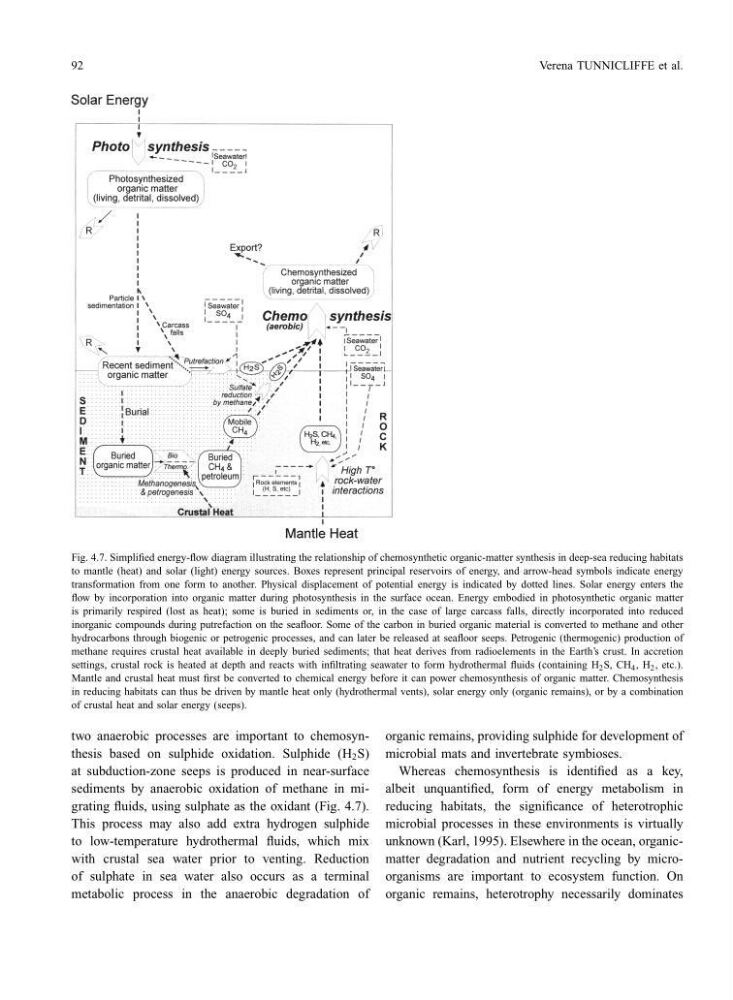
Fig. 4.7. Simplified energy-flow diagram illustrating the relationship of chemosynthetic organic-matter synthesis in deep-sea reducing habitats
to mantle (heat) and solar (light) energy sources. Boxes represent principal reservoirs of energy, and arrow-head symbols indicate energy
transformation from one form to another. Physical displacement of potential energy is indicated by dotted lines. Solar energy enters the
flow by incorporation into organic matter during photosynthesis in the surface ocean. Energy embodied in photosynthetic organic matter
is primarily respired (lost as heat); some is buried in sediments or, in the case of large carcass falls, directly incorporated into reduced
inorganic compounds during putrefaction on the seafloor. Some of the carbon in buried organic material is converted to methane and other
hydrocarbons through biogenic or petrogenic processes, and can later be released at seafloor seeps. Petrogenic (thermogenic) production of
methane requires crustal heat available in deeply buried sediments; that heat derives from radioelements in the Earth’s crust. In accretion
settings, crustal rock is heated at depth and reacts with infiltrating seawater to form hydrothermal fluids (containing H 2 S, CH 4 , H 2 , etc.).
Mantle and crustal heat must first be converted to chemical energy before it can power chemosynthesis of organic matter. Chemosynthesis
in reducing habitats can thus be driven by mantle heat only (hydrothermal vents), solar energy only (organic remains), or by a combination
of crustal heat and solar energy (seeps).
two anaerobic processes are important to chemosynthesis based on sulphide oxidation. Sulphide (H 2 S)
at subduction-zone seeps is produced in near-surface
sediments by anaerobic oxidation of methane in migrating fluids, using sulphate as the oxidant (Fig. 4.7).
This process may also add extra hydrogen sulphide
to low-temperature hydrothermal fluids, which mix
with crustal sea water prior to venting. Reduction
of sulphate in sea water also occurs as a terminal
metabolic process in the anaerobic degradation of
organic remains, providing sulphide for development of
microbial mats and invertebrate symbioses.
Whereas chemosynthesis is identified as a key,
albeit unquantified, form of energy metabolism in
reducing habitats, the significance of heterotrophic
microbial processes in these environments is virtually
unknown (Karl, 1995). Elsewhere in the ocean, organicmatter degradation and nutrient recycling by microorganisms are important to ecosystem function. On
organic remains, heterotrophy necessarily dominates
Verena TUNNICLIFFE et al.
Fig. 4.7. Simplified energy-flow diagram illustrating the relationship of chemosynthetic organic-matter synthesis in deep-sea reducing habitats
to mantle (heat) and solar (light) energy sources. Boxes represent principal reservoirs of energy, and arrow-head symbols indicate energy
transformation from one form to another. Physical displacement of potential energy is indicated by dotted lines. Solar energy enters the
flow by incorporation into organic matter during photosynthesis in the surface ocean. Energy embodied in photosynthetic organic matter
is primarily respired (lost as heat); some is buried in sediments or, in the case of large carcass falls, directly incorporated into reduced
inorganic compounds during putrefaction on the seafloor. Some of the carbon in buried organic material is converted to methane and other
hydrocarbons through biogenic or petrogenic processes, and can later be released at seafloor seeps. Petrogenic (thermogenic) production of
methane requires crustal heat available in deeply buried sediments; that heat derives from radioelements in the Earth’s crust. In accretion
settings, crustal rock is heated at depth and reacts with infiltrating seawater to form hydrothermal fluids (containing H 2 S, CH 4 , H 2 , etc.).
Mantle and crustal heat must first be converted to chemical energy before it can power chemosynthesis of organic matter. Chemosynthesis
in reducing habitats can thus be driven by mantle heat only (hydrothermal vents), solar energy only (organic remains), or by a combination
of crustal heat and solar energy (seeps).
two anaerobic processes are important to chemosynthesis based on sulphide oxidation. Sulphide (H 2 S)
at subduction-zone seeps is produced in near-surface
sediments by anaerobic oxidation of methane in migrating fluids, using sulphate as the oxidant (Fig. 4.7).
This process may also add extra hydrogen sulphide
to low-temperature hydrothermal fluids, which mix
with crustal sea water prior to venting. Reduction
of sulphate in sea water also occurs as a terminal
metabolic process in the anaerobic degradation of
organic remains, providing sulphide for development of
microbial mats and invertebrate symbioses.
Whereas chemosynthesis is identified as a key,
albeit unquantified, form of energy metabolism in
reducing habitats, the significance of heterotrophic
microbial processes in these environments is virtually
unknown (Karl, 1995). Elsewhere in the ocean, organicmatter degradation and nutrient recycling by microorganisms are important to ecosystem function. On
organic remains, heterotrophy necessarily dominates