

REDUCING ENVIRONMENTS OF THE DEEP-SEA FLOOR
93
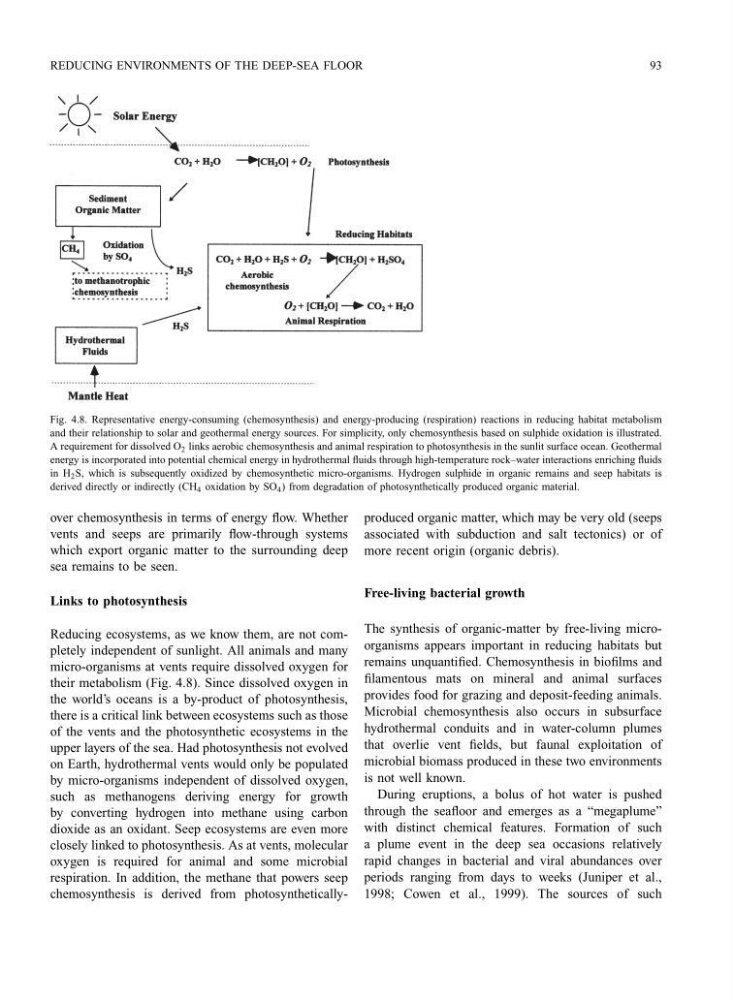
Fig. 4.8. Representative energy-consuming (chemosynthesis) and energy-producing (respiration) reactions in reducing habitat metabolism
and their relationship to solar and geothermal energy sources. For simplicity, only chemosynthesis based on sulphide oxidation is illustrated.
A requirement for dissolved O 2 links aerobic chemosynthesis and animal respiration to photosynthesis in the sunlit surface ocean. Geothermal
energy is incorporated into potential chemical energy in hydrothermal fluids through high-temperature rock–water interactions enriching fluids
in H 2 S, which is subsequently oxidized by chemosynthetic micro-organisms. Hydrogen sulphide in organic remains and seep habitats is
derived directly or indirectly (CH 4 oxidation by SO 4 ) from degradation of photosynthetically produced organic material.
over chemosynthesis in terms of energy flow. Whether
vents and seeps are primarily flow-through systems
which export organic matter to the surrounding deep
sea remains to be seen.
Links to photosynthesis
Reducing ecosystems, as we know them, are not completely independent of sunlight. All animals and many
micro-organisms at vents require dissolved oxygen for
their metabolism (Fig. 4.8). Since dissolved oxygen in
the world’s oceans is a by-product of photosynthesis,
there is a critical link between ecosystems such as those
of the vents and the photosynthetic ecosystems in the
upper layers of the sea. Had photosynthesis not evolved
on Earth, hydrothermal vents would only be populated
by micro-organisms independent of dissolved oxygen,
such as methanogens deriving energy for growth
by converting hydrogen into methane using carbon
dioxide as an oxidant. Seep ecosystems are even more
closely linked to photosynthesis. As at vents, molecular
oxygen is required for animal and some microbial
respiration. In addition, the methane that powers seep
chemosynthesis is derived from photosyntheticallyproduced organic matter, which may be very old (seeps
associated with subduction and salt tectonics) or of
more recent origin (organic debris).
Free-living bacterial growth
The synthesis of organic-matter by free-living microorganisms appears important in reducing habitats but
remains unquantified. Chemosynthesis in biofilms and
filamentous mats on mineral and animal surfaces
provides food for grazing and deposit-feeding animals.
Microbial chemosynthesis also occurs in subsurface
hydrothermal conduits and in water-column plumes
that overlie vent fields, but faunal exploitation of
microbial biomass produced in these two environments
is not well known.
During eruptions, a bolus of hot water is pushed
through the seafloor and emerges as a “megaplume”
with distinct chemical features. Formation of such
a plume event in the deep sea occasions relatively
rapid changes in bacterial and viral abundances over
periods ranging from days to weeks (Juniper et al.,
1998; Cowen et al., 1999). The sources of such
93
Fig. 4.8. Representative energy-consuming (chemosynthesis) and energy-producing (respiration) reactions in reducing habitat metabolism
and their relationship to solar and geothermal energy sources. For simplicity, only chemosynthesis based on sulphide oxidation is illustrated.
A requirement for dissolved O 2 links aerobic chemosynthesis and animal respiration to photosynthesis in the sunlit surface ocean. Geothermal
energy is incorporated into potential chemical energy in hydrothermal fluids through high-temperature rock–water interactions enriching fluids
in H 2 S, which is subsequently oxidized by chemosynthetic micro-organisms. Hydrogen sulphide in organic remains and seep habitats is
derived directly or indirectly (CH 4 oxidation by SO 4 ) from degradation of photosynthetically produced organic material.
over chemosynthesis in terms of energy flow. Whether
vents and seeps are primarily flow-through systems
which export organic matter to the surrounding deep
sea remains to be seen.
Links to photosynthesis
Reducing ecosystems, as we know them, are not completely independent of sunlight. All animals and many
micro-organisms at vents require dissolved oxygen for
their metabolism (Fig. 4.8). Since dissolved oxygen in
the world’s oceans is a by-product of photosynthesis,
there is a critical link between ecosystems such as those
of the vents and the photosynthetic ecosystems in the
upper layers of the sea. Had photosynthesis not evolved
on Earth, hydrothermal vents would only be populated
by micro-organisms independent of dissolved oxygen,
such as methanogens deriving energy for growth
by converting hydrogen into methane using carbon
dioxide as an oxidant. Seep ecosystems are even more
closely linked to photosynthesis. As at vents, molecular
oxygen is required for animal and some microbial
respiration. In addition, the methane that powers seep
chemosynthesis is derived from photosyntheticallyproduced organic matter, which may be very old (seeps
associated with subduction and salt tectonics) or of
more recent origin (organic debris).
Free-living bacterial growth
The synthesis of organic-matter by free-living microorganisms appears important in reducing habitats but
remains unquantified. Chemosynthesis in biofilms and
filamentous mats on mineral and animal surfaces
provides food for grazing and deposit-feeding animals.
Microbial chemosynthesis also occurs in subsurface
hydrothermal conduits and in water-column plumes
that overlie vent fields, but faunal exploitation of
microbial biomass produced in these two environments
is not well known.
During eruptions, a bolus of hot water is pushed
through the seafloor and emerges as a “megaplume”
with distinct chemical features. Formation of such
a plume event in the deep sea occasions relatively
rapid changes in bacterial and viral abundances over
periods ranging from days to weeks (Juniper et al.,
1998; Cowen et al., 1999). The sources of such