

668
Climatic Geomorphology
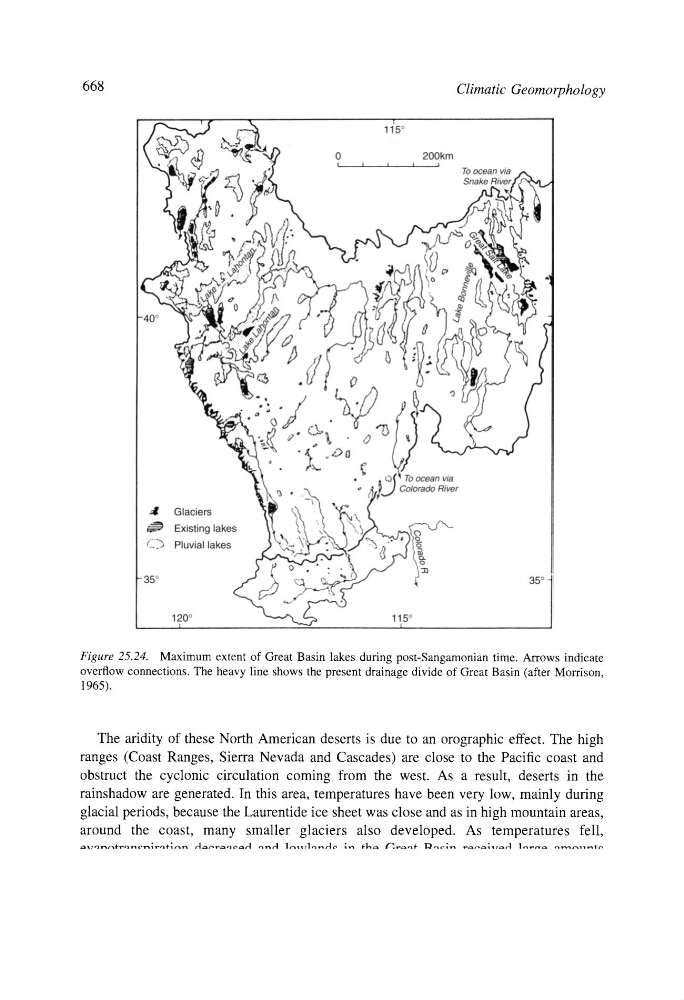
Figure 25.24. Maximum extent of Great Basin lakes during post-Sangamonian time. Arrows indicate
overflow connections. The heavy line shows the present drainage divide of Great Basin (after Morrison,
1965).
The aridity of these North American deserts is due to an orographic effect. The high
ranges (Coast Ranges, Sierra Nevada and Cascades) are close to the Pacific coast and
obstruct the cyclonic circulation coming from the west. As a result, deserts in the
rainshadow are generated. In this area, temperatures have been very low, mainly during
glacial periods, because the Laurentide ice sheet was close and as in high mountain areas,
around the coast, many smaller glaciers also developed. As temperatures fell,
evapotranspiration decreased and lowlands in the Great Basin received large amounts
of water from glacier melting. Therefore, large lakes were formed within endorheic zones,
which nowadays show spectacular lacustrine terraces. This area is an ideal region to
recognize the relationships between the mountain glaciations and lake phases. The work of
Smith and Street-Perrott (1983) analysed many of these basins and discussed the