

648
Climatic Geomorphology
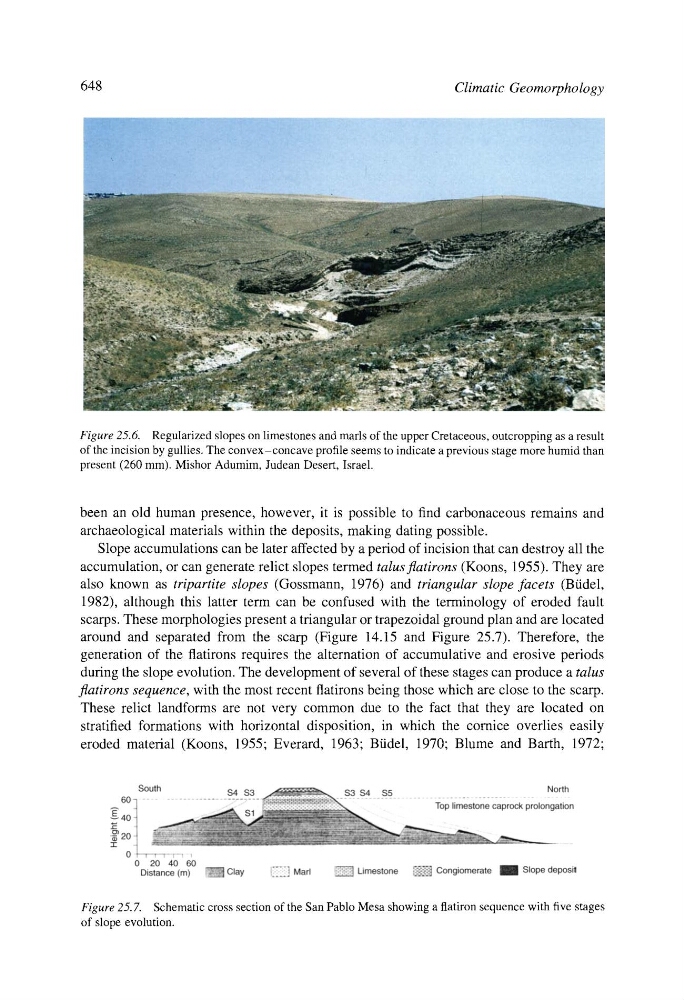
Figure 25.6. Regularized slopes on limestones and marls of the upper Cretaceous, outcropping as a result
of the incision by gullies. The convex-concave profile seems to indicate a previous stage more humid than
present (260 mm). Mishor Adumim, Judean Desert, Israel.
been an old human presence, however, it is possible to find carbonaceous remains and
archaeological materials within the deposits, making dating possible.
Slope accumulations can be later affected by a period of incision that can destroy all the
accumulation, or can generate relict slopes termed talus flatirons (Koons, 1955). They are
also known as tripartite slopes (Gossmann, 1976) and triangular slope facets (Btidel,
1982), although this latter term can be confused with the terminology of eroded fault
scarps. These morphologies present a triangular or trapezoidal ground plan and are located
around and separated from the scarp (Figure 14.15 and Figure 25.7). Therefore, the
generation of the flatirons requires the alternation of accumulative and erosive periods
during the slope evolution. The development of several of these stages can produce a talus
flatirons sequence, with the most recent flatirons being those which are close to the scarp.
These relict landforms are not very common due to the fact that they are located on
stratified formations with horizontal disposition, in which the cornice overlies easily
eroded material (Koons, 1955; Everard, 1963; Btidel, 1970; Blume and Barth, 1972;
Figure 25.7. Schematic cross section of the San Pablo Mesa showing a flatiron sequence with five stages
of slope evolution.