

Tropical landforms
551
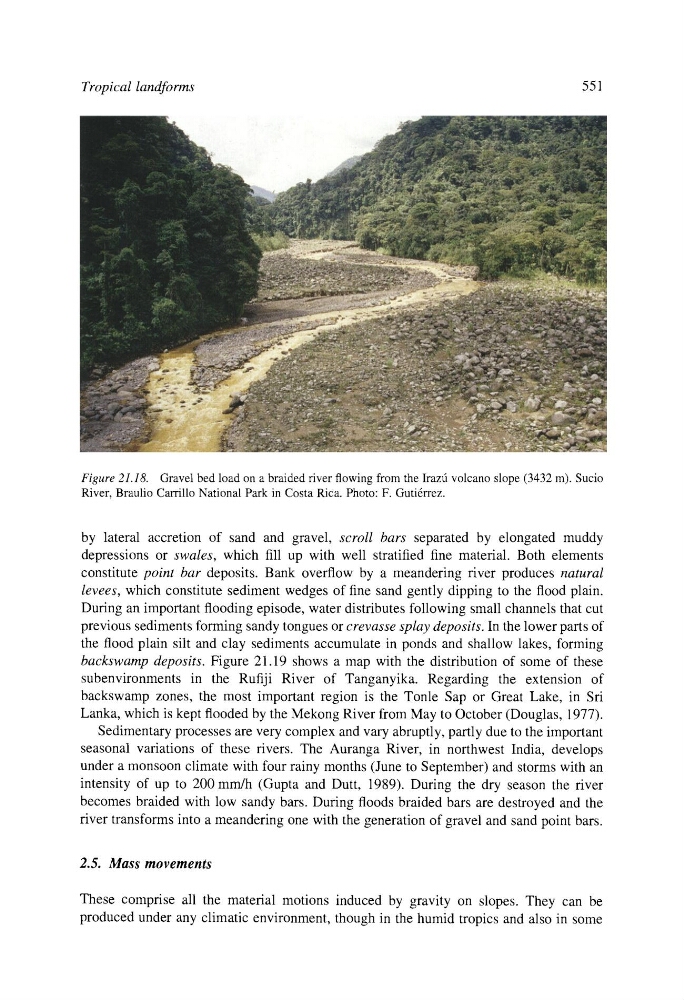
Figure 21.18. Gravel bed load on a braided fiver flowing from the Iraz6 volcano slope (3432 m). Sucio
River, Braulio Carrillo National Park in Costa Rica. Photo: F. Guti6rrez.
by lateral accretion of sand and gravel, scroll bars separated by elongated muddy
depressions or swales, which fill up with well stratified fine material. Both elements
constitute point bar deposits. Bank overflow by a meandering river produces natural
levees, which constitute sediment wedges of fine sand gently dipping to the flood plain.
During an important flooding episode, water distributes following small channels that cut
previous sediments forming sandy tongues or crevasse splay deposits. In the lower parts of
the flood plain silt and clay sediments accumulate in ponds and shallow lakes, forming
backswamp deposits. Figure 21.19 shows a map with the distribution of some of these
subenvironments in the Rufiji River of Tanganyika. Regarding the extension of
backswamp zones, the most important region is the Tonle Sap or Great Lake, in Sri
Lanka, which is kept flooded by the Mekong River from May to October (Douglas, 1977).
Sedimentary processes are very complex and vary abruptly, partly due to the important
seasonal variations of these rivers. The Auranga River, in northwest India, develops
under a monsoon climate with four rainy months (June to September) and storms with an
intensity of up to 200 mm/h (Gupta and Dutt, 1989). During the dry season the river
becomes braided with low sandy bars. During floods braided bars are destroyed and the
river transforms into a meandering one with the generation of gravel and sand point bars.
2.5. Mass movements
These comprise all the material motions induced by gravity on slopes. They can be
produced under any climatic environment, though in the humid tropics and also in some
551
Figure 21.18. Gravel bed load on a braided fiver flowing from the Iraz6 volcano slope (3432 m). Sucio
River, Braulio Carrillo National Park in Costa Rica. Photo: F. Guti6rrez.
by lateral accretion of sand and gravel, scroll bars separated by elongated muddy
depressions or swales, which fill up with well stratified fine material. Both elements
constitute point bar deposits. Bank overflow by a meandering river produces natural
levees, which constitute sediment wedges of fine sand gently dipping to the flood plain.
During an important flooding episode, water distributes following small channels that cut
previous sediments forming sandy tongues or crevasse splay deposits. In the lower parts of
the flood plain silt and clay sediments accumulate in ponds and shallow lakes, forming
backswamp deposits. Figure 21.19 shows a map with the distribution of some of these
subenvironments in the Rufiji River of Tanganyika. Regarding the extension of
backswamp zones, the most important region is the Tonle Sap or Great Lake, in Sri
Lanka, which is kept flooded by the Mekong River from May to October (Douglas, 1977).
Sedimentary processes are very complex and vary abruptly, partly due to the important
seasonal variations of these rivers. The Auranga River, in northwest India, develops
under a monsoon climate with four rainy months (June to September) and storms with an
intensity of up to 200 mm/h (Gupta and Dutt, 1989). During the dry season the river
becomes braided with low sandy bars. During floods braided bars are destroyed and the
river transforms into a meandering one with the generation of gravel and sand point bars.
2.5. Mass movements
These comprise all the material motions induced by gravity on slopes. They can be
produced under any climatic environment, though in the humid tropics and also in some