

550
Climatic Geomorphology
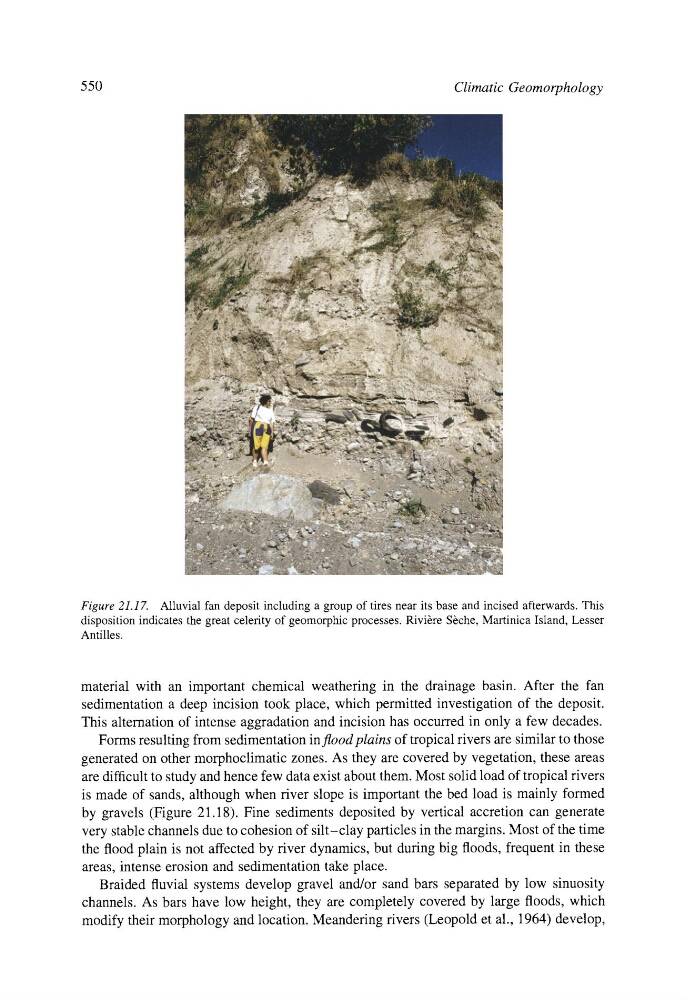
Figure 21.17. Alluvial fan deposit including a group of tires near its base and incised afterwards. This
disposition indicates the great celerity of geomorphic processes. Rivibre Sbche, Martinica Island, Lesser
Antilles.
material with an important chemical weathering in the drainage basin. After the fan
sedimentation a deep incision took place, which permitted investigation of the deposit.
This alternation of intense aggradation and incision has occurred in only a few decades.
Forms resulting from sedimentation in flood plains of tropical rivers are similar to those
generated on other morphoclimatic zones. As they are covered by vegetation, these areas
are difficult to study and hence few data exist about them. Most solid load of tropical rivers
is made of sands, although when river slope is important the bed load is mainly formed
by gravels (Figure 21.18). Fine sediments deposited by vertical accretion can generate
very stable channels due to cohesion of silt-clay particles in the margins. Most of the time
the flood plain is not affected by fiver dynamics, but during big floods, frequent in these
areas, intense erosion and sedimentation take place.
Braided fluvial systems develop gravel and/or sand bars separated by low sinuosity
channels. As bars have low height, they are completely covered by large floods, which
modify their morphology and location. Meandering rivers (Leopold et al., 1964) develop,
Climatic Geomorphology
Figure 21.17. Alluvial fan deposit including a group of tires near its base and incised afterwards. This
disposition indicates the great celerity of geomorphic processes. Rivibre Sbche, Martinica Island, Lesser
Antilles.
material with an important chemical weathering in the drainage basin. After the fan
sedimentation a deep incision took place, which permitted investigation of the deposit.
This alternation of intense aggradation and incision has occurred in only a few decades.
Forms resulting from sedimentation in flood plains of tropical rivers are similar to those
generated on other morphoclimatic zones. As they are covered by vegetation, these areas
are difficult to study and hence few data exist about them. Most solid load of tropical rivers
is made of sands, although when river slope is important the bed load is mainly formed
by gravels (Figure 21.18). Fine sediments deposited by vertical accretion can generate
very stable channels due to cohesion of silt-clay particles in the margins. Most of the time
the flood plain is not affected by fiver dynamics, but during big floods, frequent in these
areas, intense erosion and sedimentation take place.
Braided fluvial systems develop gravel and/or sand bars separated by low sinuosity
channels. As bars have low height, they are completely covered by large floods, which
modify their morphology and location. Meandering rivers (Leopold et al., 1964) develop,