

546
Climatic Geomorphology
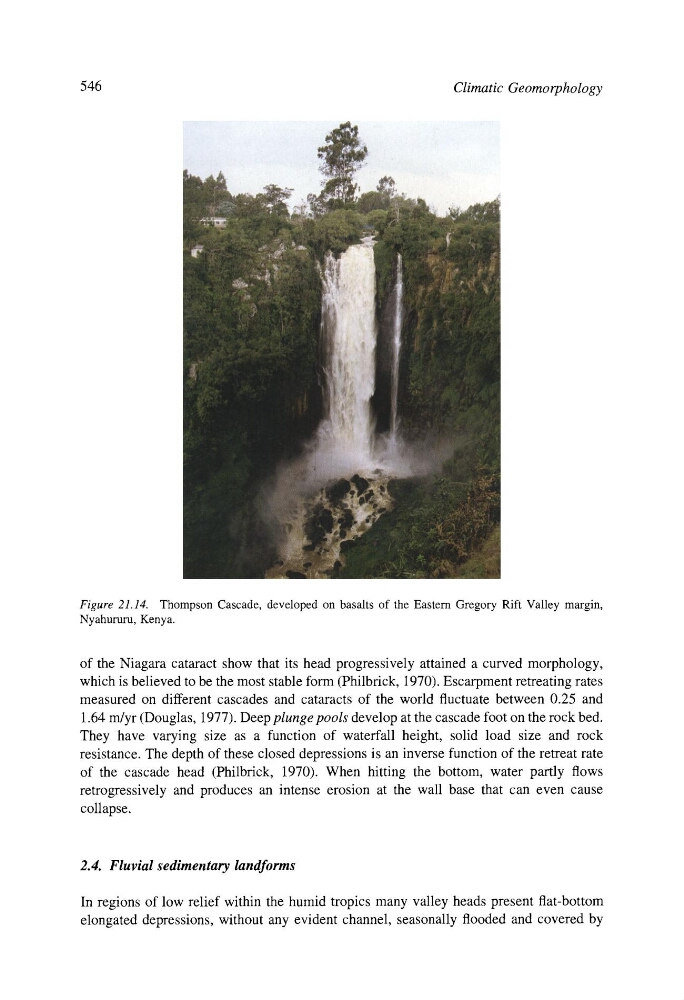
Figure 21.14. Thompson Cascade, developed on basalts of the Eastern Gregory Rift Valley margin,
Nyahururu, Kenya.
of the Niagara cataract show that its head progressively attained a curved morphology,
which is believed to be the most stable form (Philbrick, 1970). Escarpment retreating rates
measured on different cascades and cataracts of the world fluctuate between 0.25 and
1.64 m/yr (Douglas, 1977). Deep plunge pools develop at the cascade foot on the rock bed.
They have varying size as a function of waterfall height, solid load size and rock
resistance. The depth of these closed depressions is an inverse function of the retreat rate
of the cascade head (Philbrick, 1970). When hitting the bottom, water partly flows
retrogressively and produces an intense erosion at the wall base that can even cause
collapse.
2.4. Fluvial sedimentary landforms
In regions of low relief within the humid tropics many valley heads present flat-bottom
elongated depressions, without any evident channel, seasonally flooded and covered by
Climatic Geomorphology
Figure 21.14. Thompson Cascade, developed on basalts of the Eastern Gregory Rift Valley margin,
Nyahururu, Kenya.
of the Niagara cataract show that its head progressively attained a curved morphology,
which is believed to be the most stable form (Philbrick, 1970). Escarpment retreating rates
measured on different cascades and cataracts of the world fluctuate between 0.25 and
1.64 m/yr (Douglas, 1977). Deep plunge pools develop at the cascade foot on the rock bed.
They have varying size as a function of waterfall height, solid load size and rock
resistance. The depth of these closed depressions is an inverse function of the retreat rate
of the cascade head (Philbrick, 1970). When hitting the bottom, water partly flows
retrogressively and produces an intense erosion at the wall base that can even cause
collapse.
2.4. Fluvial sedimentary landforms
In regions of low relief within the humid tropics many valley heads present flat-bottom
elongated depressions, without any evident channel, seasonally flooded and covered by