

Tropical landforms
541
3m
2
0
1
o
~
active needle
~,...t.~i'...iiii.:iii:i.iT:i~~ ~
termite tumulus
zooe
+
~ :..:.: ~:i:i". ::?i:;. :::i:. :::/. . ::i:!:. i:!
i. . :i. ::
~: :
i:;"::: :i:.i:i.i. i: ::i:~:i!: ~i !!
i. i. , . ::
~::i:~
~: i:. ~:":. :
9 i: i.::::~ sapro,~t~o ~ a,e r~a,
..::....::..::..::.;:.:.:.: ...;.".;,..~.~'.-'-..-..y.7.-.~:~.~=.. ... ~,:.=.~". :~~
organic matter
.. ...............g.,..,,,..........
........m...~,...
.~.........
: ..........,~
... . .....: ..........
9 ;-4,,~
-,-:" ,~ ' :" " .-.'",.:.-.:.-.-'. ~ ~.~,, -"; ~ ......
,.
.~s~ir|~'.;.&_ '
' ". ,:, 9 .!.. ! i:~,;:.~~,
stone layer
9 ~...~.~:~
~,: :~...:. :
.. 9
fragmented sandstone bed
IIIIIIIIIIIIIII
Ill!',',',',',',', I', i i i i
i I 11 i ! i i', I I 11 l--sha,e "te
I!!!!!!!!lmiiiill!miill!!!lmiiiiiii!!!llli!lli!l[iiiiiiiii
I',llllll!!!mliiill!miii',l!!!mlllml!!!lliil!lim!llimlml~ll~
l~,.lllllllllllllll!,~ll',il~.,~lllllll
I
I
!
I
!
I
i
1
2
3
4
5
6
7m
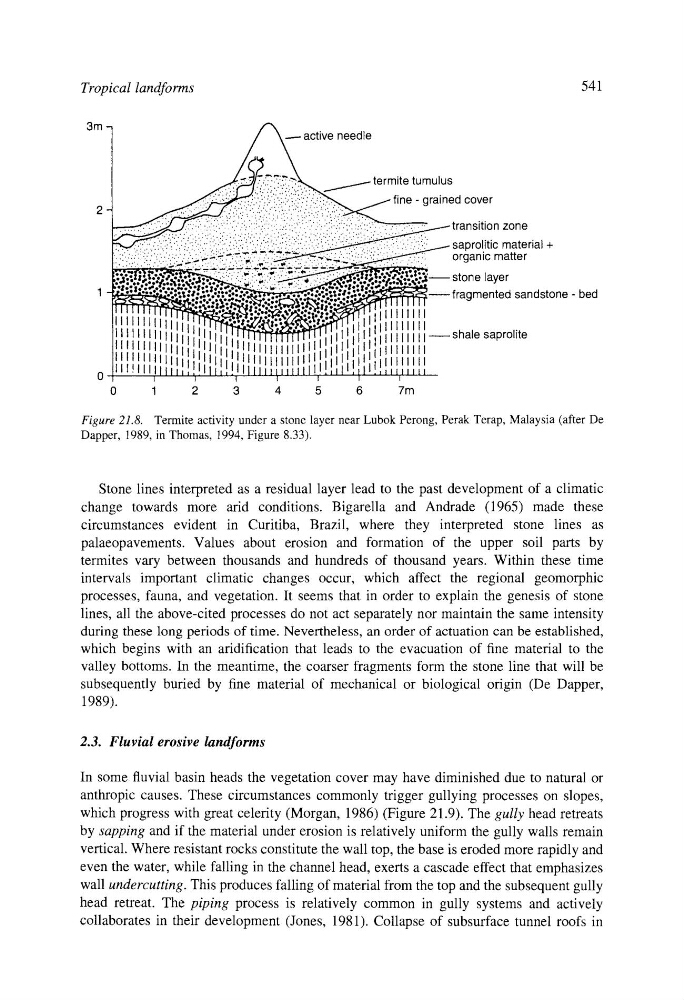
Figure 21.8. Termite activity under a stone layer near Lubok Perong, Perak Terap, Malaysia (after De
Dapper, 1989, in Thomas, 1994, Figure 8.33).
Stone lines interpreted as a residual layer lead to the past development of a climatic
change towards more arid conditions. Bigarella and Andrade (1965) made these
circumstances evident in Curitiba, Brazil, where they interpreted stone lines as
palaeopavements. Values about erosion and formation of the upper soil parts by
termites vary between thousands and hundreds of thousand years. Within these time
intervals important climatic changes occur, which affect the regional geomorphic
processes, fauna, and vegetation. It seems that in order to explain the genesis of stone
lines, all the above-cited processes do not act separately nor maintain the same intensity
during these long periods of time. Nevertheless, an order of actuation can be established,
which begins with an aridification that leads to the evacuation of fine material to the
valley bottoms. In the meantime, the coarser fragments form the stone line that will be
subsequently buried by fine material of mechanical or biological origin (De Dapper,
1989).
2.3. Fluvial erosive landforms
In some fluvial basin heads the vegetation cover may have diminished due to natural or
anthropic causes. These circumstances commonly trigger gullying processes on slopes,
which progress with great celerity (Morgan, 1986) (Figure 21.9). The gully head retreats
by sapping and if the material under erosion is relatively uniform the gully walls remain
vertical. Where resistant rocks constitute the wall top, the base is eroded more rapidly and
even the water, while falling in the channel head, exerts a cascade effect that emphasizes
wall undercutting. This produces falling of material from the top and the subsequent gully
head retreat. The piping process is relatively common in gully systems and actively
collaborates in their development (Jones, 1981). Collapse of subsurface tunnel roofs in
541
3m
2
0
1
o
~
active needle
~,...t.~i'...iiii.:iii:i.iT:i~~ ~
termite tumulus
zooe
+
~ :..:.: ~:i:i". ::?i:;. :::i:. :::/. . ::i:!:. i:!
i. . :i. ::
~: :
i:;"::: :i:.i:i.i. i: ::i:~:i!: ~i !!
i. i. , . ::
~::i:~
~: i:. ~:":. :
9 i: i.::::~ sapro,~t~o ~ a,e r~a,
..::....::..::..::.;:.:.:.: ...;.".;,..~.~'.-'-..-..y.7.-.~:~.~=.. ... ~,:.=.~". :~~
organic matter
.. ...............g.,..,,,..........
........m...~,...
.~.........
: ..........,~
... . .....: ..........
9 ;-4,,~
-,-:" ,~ ' :" " .-.'",.:.-.:.-.-'. ~ ~.~,, -"; ~ ......
,.
.~s~ir|~'.;.&_ '
' ". ,:, 9 .!.. ! i:~,;:.~~,
stone layer
9 ~...~.~:~
~,: :~...:. :
.. 9
fragmented sandstone bed
IIIIIIIIIIIIIII
Ill!',',',',',',', I', i i i i
i I 11 i ! i i', I I 11 l--sha,e "te
I!!!!!!!!lmiiiill!miill!!!lmiiiiiii!!!llli!lli!l[iiiiiiiii
I',llllll!!!mliiill!miii',l!!!mlllml!!!lliil!lim!llimlml~ll~
l~,.lllllllllllllll!,~ll',il~.,~lllllll
I
I
!
I
!
I
i
1
2
3
4
5
6
7m
Figure 21.8. Termite activity under a stone layer near Lubok Perong, Perak Terap, Malaysia (after De
Dapper, 1989, in Thomas, 1994, Figure 8.33).
Stone lines interpreted as a residual layer lead to the past development of a climatic
change towards more arid conditions. Bigarella and Andrade (1965) made these
circumstances evident in Curitiba, Brazil, where they interpreted stone lines as
palaeopavements. Values about erosion and formation of the upper soil parts by
termites vary between thousands and hundreds of thousand years. Within these time
intervals important climatic changes occur, which affect the regional geomorphic
processes, fauna, and vegetation. It seems that in order to explain the genesis of stone
lines, all the above-cited processes do not act separately nor maintain the same intensity
during these long periods of time. Nevertheless, an order of actuation can be established,
which begins with an aridification that leads to the evacuation of fine material to the
valley bottoms. In the meantime, the coarser fragments form the stone line that will be
subsequently buried by fine material of mechanical or biological origin (De Dapper,
1989).
2.3. Fluvial erosive landforms
In some fluvial basin heads the vegetation cover may have diminished due to natural or
anthropic causes. These circumstances commonly trigger gullying processes on slopes,
which progress with great celerity (Morgan, 1986) (Figure 21.9). The gully head retreats
by sapping and if the material under erosion is relatively uniform the gully walls remain
vertical. Where resistant rocks constitute the wall top, the base is eroded more rapidly and
even the water, while falling in the channel head, exerts a cascade effect that emphasizes
wall undercutting. This produces falling of material from the top and the subsequent gully
head retreat. The piping process is relatively common in gully systems and actively
collaborates in their development (Jones, 1981). Collapse of subsurface tunnel roofs in