

Applied geomorphology and arid regions
493
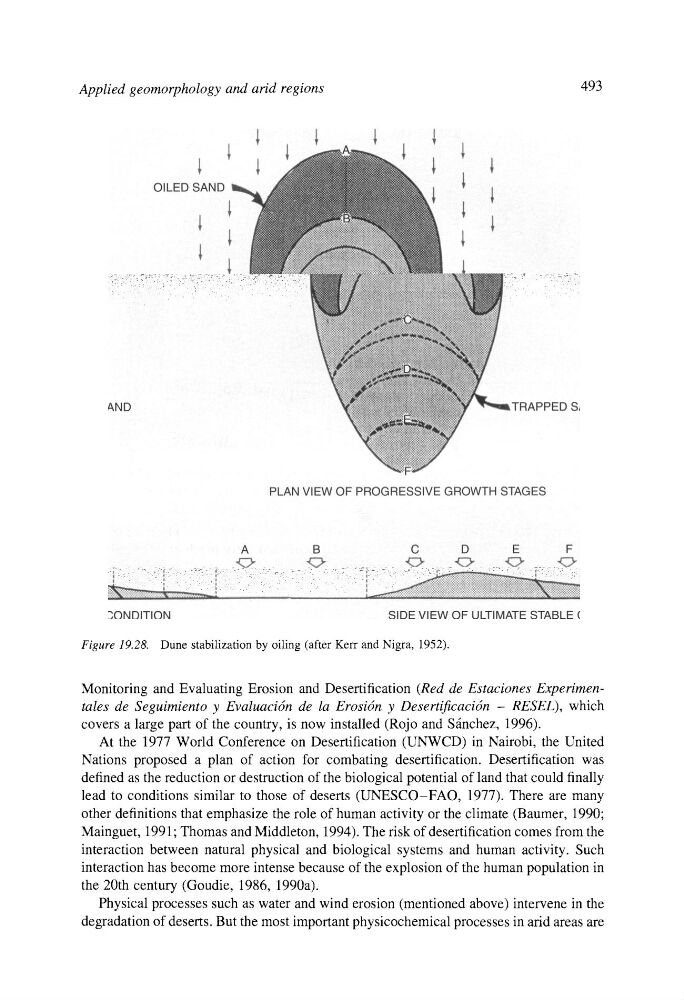
Figure 19.28. Dune stabilization by oiling (after Kerr and Nigra, 1952).
Monitoring and Evaluating Erosion and Desertification (Red de Estaciones Experimentales de Seguimiento y Evaluaci6n de la Erosi6n y Desertificaci6n - RESEL), which
covers a large part of the country, is now installed (Rojo and S~inchez, 1996).
At the 1977 World Conference on Desertification (UNWCD) in Nairobi, the United
Nations proposed a plan of action for combating desertification. Desertification was
defined as the reduction or destruction of the biological potential of land that could finally
lead to conditions similar to those of deserts (UNESCO-FAO, 1977). There are many
other definitions that emphasize the role of human activity or the climate (Baumer, 1990;
Mainguet, 1991; Thomas and Middleton, 1994). The risk of desertification comes from the
interaction between natural physical and biological systems and human activity. Such
interaction has become more intense because of the explosion of the human population in
the 20th century (Goudie, 1986, 1990a).
Physical processes such as water and wind erosion (mentioned above) intervene in the
degradation of deserts. But the most important physicochemical processes in arid areas are
493
Figure 19.28. Dune stabilization by oiling (after Kerr and Nigra, 1952).
Monitoring and Evaluating Erosion and Desertification (Red de Estaciones Experimentales de Seguimiento y Evaluaci6n de la Erosi6n y Desertificaci6n - RESEL), which
covers a large part of the country, is now installed (Rojo and S~inchez, 1996).
At the 1977 World Conference on Desertification (UNWCD) in Nairobi, the United
Nations proposed a plan of action for combating desertification. Desertification was
defined as the reduction or destruction of the biological potential of land that could finally
lead to conditions similar to those of deserts (UNESCO-FAO, 1977). There are many
other definitions that emphasize the role of human activity or the climate (Baumer, 1990;
Mainguet, 1991; Thomas and Middleton, 1994). The risk of desertification comes from the
interaction between natural physical and biological systems and human activity. Such
interaction has become more intense because of the explosion of the human population in
the 20th century (Goudie, 1986, 1990a).
Physical processes such as water and wind erosion (mentioned above) intervene in the
degradation of deserts. But the most important physicochemical processes in arid areas are