

494
Climatic Geomorphology
~]]]]~ Moderate
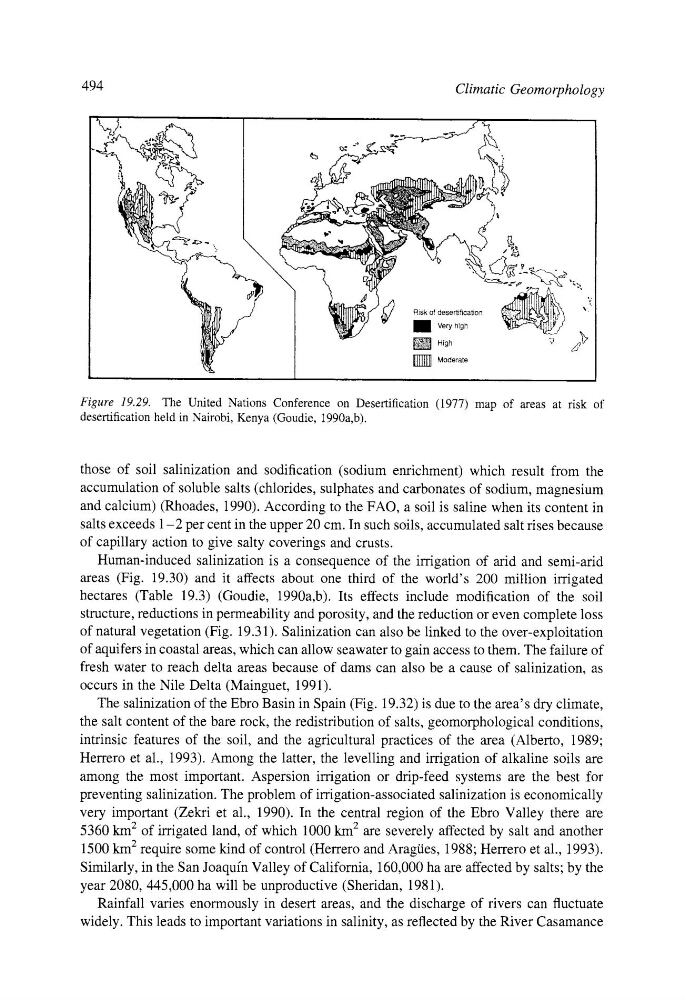
Figure 19.29. The United Nations Conference on Desertification (1977) map of areas at risk of
desertification held in Nairobi, Kenya (Goudie, 1990a,b).
those of soil salinization and sodification (sodium enrichment) which result from the
accumulation of soluble salts (chlorides, sulphates and carbonates of sodium, magnesium
and calcium) (Rhoades, 1990). According to the FAO, a soil is saline when its content in
salts exceeds 1-2 per cent in the upper 20 cm. In such soils, accumulated salt rises because
of capillary action to give salty coverings and crusts.
Human-induced salinization is a consequence of the irrigation of arid and semi-arid
areas (Fig. 19.30) and it affects about one third of the world's 200 million irrigated
hectares (Table 19.3) (Goudie, 1990a,b). Its effects include modification of the soil
structure, reductions in permeability and porosity, and the reduction or even complete loss
of natural vegetation (Fig. 19.31). Salinization can also be linked to the over-exploitation
of aquifers in coastal areas, which can allow seawater to gain access to them. The failure of
fresh water to reach delta areas because of dams can also be a cause of salinization, as
occurs in the Nile Delta (Mainguet, 1991).
The salinization of the Ebro Basin in Spain (Fig. 19.32) is due to the area's dry climate,
the salt content of the bare rock, the redistribution of salts, geomorphological conditions,
intrinsic features of the soil, and the agricultural practices of the area (Alberto, 1989;
Herrero et al., 1993). Among the latter, the levelling and irrigation of alkaline soils are
among the most important. Aspersion irrigation or drip-feed systems are the best for
preventing salinization. The problem of irrigation-associated salinization is economically
very important (Zekri et al., 1990). In the central region of the Ebro Valley there are
5360 km 2 of irrigated land, of which 1000 km 2 are severely affected by salt and another
1500 km 2 require some kind of control (Herrero and Aragties, 1988; Herrero et al., 1993).
Similarly, in the San Joaqufn Valley of California, 160,000 ha are affected by salts; by the
year 2080, 445,000 ha will be unproductive (Sheridan, 1981).
Rainfall varies enormously in desert areas, and the discharge of rivers can fluctuate
widely. This leads to important variations in salinity, as reflected by the River Casamance
Climatic Geomorphology
~]]]]~ Moderate
Figure 19.29. The United Nations Conference on Desertification (1977) map of areas at risk of
desertification held in Nairobi, Kenya (Goudie, 1990a,b).
those of soil salinization and sodification (sodium enrichment) which result from the
accumulation of soluble salts (chlorides, sulphates and carbonates of sodium, magnesium
and calcium) (Rhoades, 1990). According to the FAO, a soil is saline when its content in
salts exceeds 1-2 per cent in the upper 20 cm. In such soils, accumulated salt rises because
of capillary action to give salty coverings and crusts.
Human-induced salinization is a consequence of the irrigation of arid and semi-arid
areas (Fig. 19.30) and it affects about one third of the world's 200 million irrigated
hectares (Table 19.3) (Goudie, 1990a,b). Its effects include modification of the soil
structure, reductions in permeability and porosity, and the reduction or even complete loss
of natural vegetation (Fig. 19.31). Salinization can also be linked to the over-exploitation
of aquifers in coastal areas, which can allow seawater to gain access to them. The failure of
fresh water to reach delta areas because of dams can also be a cause of salinization, as
occurs in the Nile Delta (Mainguet, 1991).
The salinization of the Ebro Basin in Spain (Fig. 19.32) is due to the area's dry climate,
the salt content of the bare rock, the redistribution of salts, geomorphological conditions,
intrinsic features of the soil, and the agricultural practices of the area (Alberto, 1989;
Herrero et al., 1993). Among the latter, the levelling and irrigation of alkaline soils are
among the most important. Aspersion irrigation or drip-feed systems are the best for
preventing salinization. The problem of irrigation-associated salinization is economically
very important (Zekri et al., 1990). In the central region of the Ebro Valley there are
5360 km 2 of irrigated land, of which 1000 km 2 are severely affected by salt and another
1500 km 2 require some kind of control (Herrero and Aragties, 1988; Herrero et al., 1993).
Similarly, in the San Joaqufn Valley of California, 160,000 ha are affected by salts; by the
year 2080, 445,000 ha will be unproductive (Sheridan, 1981).
Rainfall varies enormously in desert areas, and the discharge of rivers can fluctuate
widely. This leads to important variations in salinity, as reflected by the River Casamance