

Applied geomorphology and arid regions
469
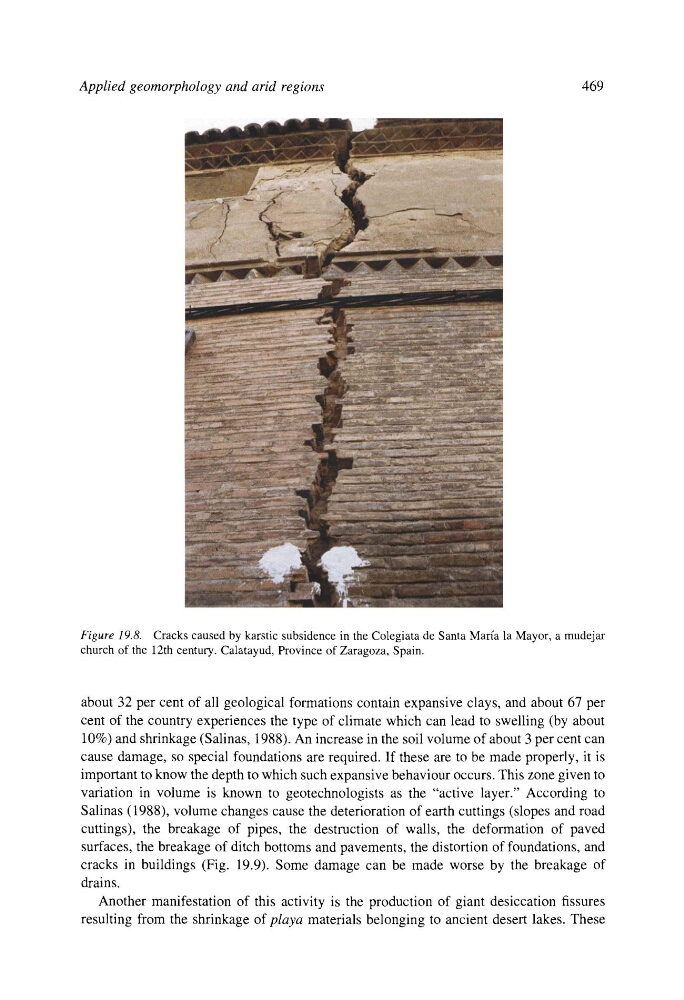
Figure 19.8. Cracks caused by karstic subsidence in the Colegiata de Santa Maria la Mayor, a mudejar
church of the 12th century. Calatayud, Province of Zaragoza, Spain.
about 32 per cent of all geological formations contain expansive clays, and about 67 per
cent of the country experiences the type of climate which can lead to swelling (by about
10%) and shrinkage (Salinas, 1988). An increase in the soil volume of about 3 per cent can
cause damage, so special foundations are required. If these are to be made properly, it is
important to know the depth to which such expansive behaviour occurs. This zone given to
variation in volume is known to geotechnologists as the "active layer." According to
Salinas (1988), volume changes cause the deterioration of earth cuttings (slopes and road
cuttings), the breakage of pipes, the destruction of walls, the deformation of paved
surfaces, the breakage of ditch bottoms and pavements, the distortion of foundations, and
cracks in buildings (Fig. 19.9). Some damage can be made worse by the breakage of
drains.
Another manifestation of this activity is the production of giant desiccation fissures
resulting from the shrinkage of playa materials belonging to ancient desert lakes. These
469
Figure 19.8. Cracks caused by karstic subsidence in the Colegiata de Santa Maria la Mayor, a mudejar
church of the 12th century. Calatayud, Province of Zaragoza, Spain.
about 32 per cent of all geological formations contain expansive clays, and about 67 per
cent of the country experiences the type of climate which can lead to swelling (by about
10%) and shrinkage (Salinas, 1988). An increase in the soil volume of about 3 per cent can
cause damage, so special foundations are required. If these are to be made properly, it is
important to know the depth to which such expansive behaviour occurs. This zone given to
variation in volume is known to geotechnologists as the "active layer." According to
Salinas (1988), volume changes cause the deterioration of earth cuttings (slopes and road
cuttings), the breakage of pipes, the destruction of walls, the deformation of paved
surfaces, the breakage of ditch bottoms and pavements, the distortion of foundations, and
cracks in buildings (Fig. 19.9). Some damage can be made worse by the breakage of
drains.
Another manifestation of this activity is the production of giant desiccation fissures
resulting from the shrinkage of playa materials belonging to ancient desert lakes. These