

38
Climatic Geomorphology
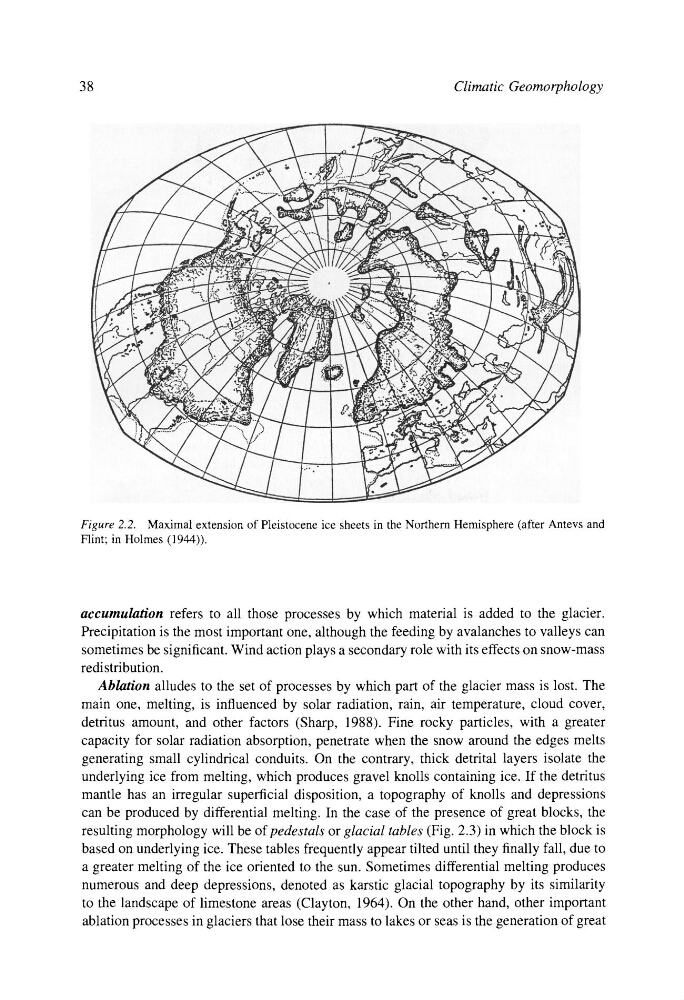
Figure 2.2. Maximal extension of Pleistocene ice sheets in the Northern Hemisphere (after Antevs and
Flint; in Holmes (1944)).
accumulation refers to all those processes by which material is added to the glacier.
Precipitation is the most important one, although the feeding by avalanches to valleys can
sometimes be significant. Wind action plays a secondary role with its effects on snow-mass
redistribution.
Ablation alludes to the set of processes by which part of the glacier mass is lost. The
main one, melting, is influenced by solar radiation, rain, air temperature, cloud cover,
detritus amount, and other factors (Sharp, 1988). Fine rocky particles, with a greater
capacity for solar radiation absorption, penetrate when the snow around the edges melts
generating small cylindrical conduits. On the contrary, thick detrital layers isolate the
underlying ice from melting, which produces gravel knolls containing ice. If the detritus
mantle has an irregular superficial disposition, a topography of knolls and depressions
can be produced by differential melting. In the case of the presence of great blocks, the
resulting morphology will be of pedestals or glacial tables (Fig. 2.3) in which the block is
based on underlying ice. These tables frequently appear tilted until they finally fall, due to
a greater melting of the ice oriented to the sun. Sometimes differential melting produces
numerous and deep depressions, denoted as karstic glacial topography by its similarity
to the landscape of limestone areas (Clayton, 1964). On the other hand, other important
ablation processes in glaciers that lose their mass to lakes or seas is the generation of great
Climatic Geomorphology
Figure 2.2. Maximal extension of Pleistocene ice sheets in the Northern Hemisphere (after Antevs and
Flint; in Holmes (1944)).
accumulation refers to all those processes by which material is added to the glacier.
Precipitation is the most important one, although the feeding by avalanches to valleys can
sometimes be significant. Wind action plays a secondary role with its effects on snow-mass
redistribution.
Ablation alludes to the set of processes by which part of the glacier mass is lost. The
main one, melting, is influenced by solar radiation, rain, air temperature, cloud cover,
detritus amount, and other factors (Sharp, 1988). Fine rocky particles, with a greater
capacity for solar radiation absorption, penetrate when the snow around the edges melts
generating small cylindrical conduits. On the contrary, thick detrital layers isolate the
underlying ice from melting, which produces gravel knolls containing ice. If the detritus
mantle has an irregular superficial disposition, a topography of knolls and depressions
can be produced by differential melting. In the case of the presence of great blocks, the
resulting morphology will be of pedestals or glacial tables (Fig. 2.3) in which the block is
based on underlying ice. These tables frequently appear tilted until they finally fall, due to
a greater melting of the ice oriented to the sun. Sometimes differential melting produces
numerous and deep depressions, denoted as karstic glacial topography by its similarity
to the landscape of limestone areas (Clayton, 1964). On the other hand, other important
ablation processes in glaciers that lose their mass to lakes or seas is the generation of great