

Aeolian accumulations
439
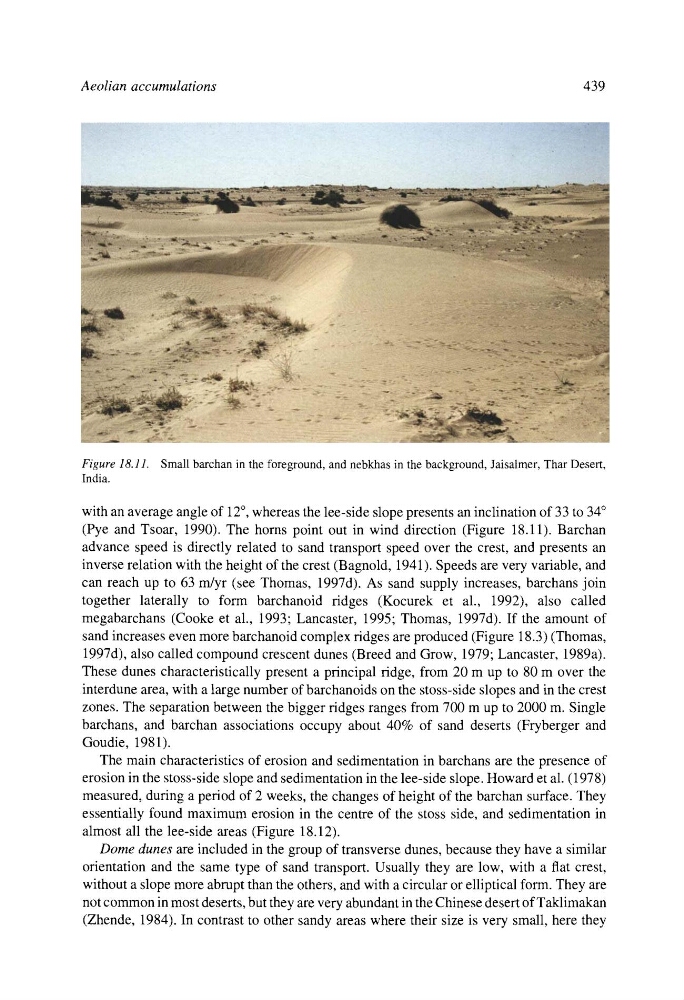
Figure 18.11. Small barchan in the foreground, and nebkhas in the background, Jaisalmer, Thar Desert,
India.
with an average angle of 12 ~ whereas the lee-side slope presents an inclination of 33 to 34 ~
(Pye and Tsoar, 1990). The horns point out in wind direction (Figure 18.11). Barchan
advance speed is directly related to sand transport speed over the crest, and presents an
inverse relation with the height of the crest (Bagnold, 1941). Speeds are very variable, and
can reach up to 63 m/yr (see Thomas, 1997d). As sand supply increases, barchans join
together laterally to form barchanoid ridges (Kocurek et al., 1992), also called
megabarchans (Cooke et al., 1993; Lancaster, 1995; Thomas, 1997d). If the amount of
sand increases even more barchanoid complex ridges are produced (Figure 18.3) (Thomas,
1997d), also called compound crescent dunes (Breed and Grow, 1979; Lancaster, 1989a).
These dunes characteristically present a principal ridge, from 20 m up to 80 m over the
interdune area, with a large number of barchanoids on the stoss-side slopes and in the crest
zones. The separation between the bigger ridges ranges from 700 m up to 2000 m. Single
barchans, and barchan associations occupy about 40% of sand deserts (Fryberger and
Goudie, 1981).
The main characteristics of erosion and sedimentation in barchans are the presence of
erosion in the stoss-side slope and sedimentation in the lee-side slope. Howard et al. (1978)
measured, during a period of 2 weeks, the changes of height of the barchan surface. They
essentially found maximum erosion in the centre of the stoss side, and sedimentation in
almost all the lee-side areas (Figure 18.12).
Dome dunes are included in the group of transverse dunes, because they have a similar
orientation and the same type of sand transport. Usually they are low, with a flat crest,
without a slope more abrupt than the others, and with a circular or elliptical form. They are
not common in most deserts, but they are very abundant in the Chinese desert of Taklimakan
(Zhende, 1984). In contrast to other sandy areas where their size is very small, here they
439
Figure 18.11. Small barchan in the foreground, and nebkhas in the background, Jaisalmer, Thar Desert,
India.
with an average angle of 12 ~ whereas the lee-side slope presents an inclination of 33 to 34 ~
(Pye and Tsoar, 1990). The horns point out in wind direction (Figure 18.11). Barchan
advance speed is directly related to sand transport speed over the crest, and presents an
inverse relation with the height of the crest (Bagnold, 1941). Speeds are very variable, and
can reach up to 63 m/yr (see Thomas, 1997d). As sand supply increases, barchans join
together laterally to form barchanoid ridges (Kocurek et al., 1992), also called
megabarchans (Cooke et al., 1993; Lancaster, 1995; Thomas, 1997d). If the amount of
sand increases even more barchanoid complex ridges are produced (Figure 18.3) (Thomas,
1997d), also called compound crescent dunes (Breed and Grow, 1979; Lancaster, 1989a).
These dunes characteristically present a principal ridge, from 20 m up to 80 m over the
interdune area, with a large number of barchanoids on the stoss-side slopes and in the crest
zones. The separation between the bigger ridges ranges from 700 m up to 2000 m. Single
barchans, and barchan associations occupy about 40% of sand deserts (Fryberger and
Goudie, 1981).
The main characteristics of erosion and sedimentation in barchans are the presence of
erosion in the stoss-side slope and sedimentation in the lee-side slope. Howard et al. (1978)
measured, during a period of 2 weeks, the changes of height of the barchan surface. They
essentially found maximum erosion in the centre of the stoss side, and sedimentation in
almost all the lee-side areas (Figure 18.12).
Dome dunes are included in the group of transverse dunes, because they have a similar
orientation and the same type of sand transport. Usually they are low, with a flat crest,
without a slope more abrupt than the others, and with a circular or elliptical form. They are
not common in most deserts, but they are very abundant in the Chinese desert of Taklimakan
(Zhende, 1984). In contrast to other sandy areas where their size is very small, here they