

360
Climatic Geomorphology
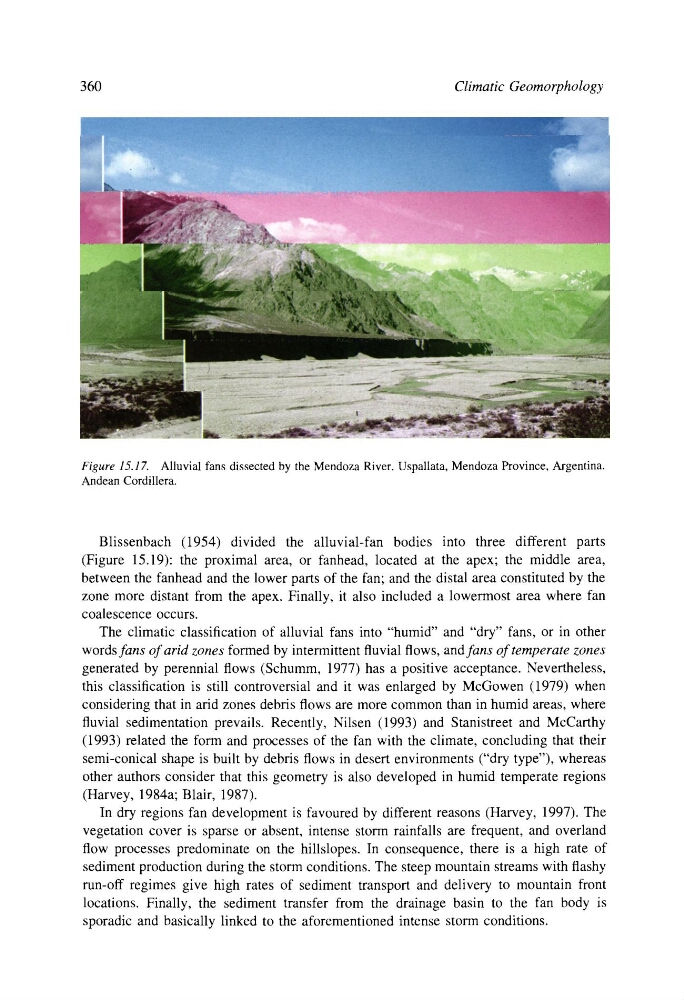
Figure 15.17. Alluvial fans dissected by the Mendoza River. Uspallata, Mendoza Province, Argentina.
Andean Cordillera.
Blissenbach (1954) divided the alluvial-fan bodies into three different parts
(Figure 15.19): the proximal area, or fanhead, located at the apex; the middle area,
between the fanhead and the lower parts of the fan; and the distal area constituted by the
zone more distant from the apex. Finally, it also included a lowermost area where fan
coalescence occurs.
The climatic classification of alluvial fans into "humid" and "dry" fans, or in other
words fans of arid zones formed by intermittent fluvial flows, and fans of temperate zones
generated by perennial flows (Schumm, 1977) has a positive acceptance. Nevertheless,
this classification is still controversial and it was enlarged by McGowen (1979) when
considering that in arid zones debris flows are more common than in humid areas, where
fluvial sedimentation prevails. Recently, Nilsen (1993) and Stanistreet and McCarthy
(1993) related the form and processes of the fan with the climate, concluding that their
semi-conical shape is built by debris flows in desert environments ("dry type"), whereas
other authors consider that this geometry is also developed in humid temperate regions
(Harvey, 1984a; Blair, 1987).
In dry regions fan development is favoured by different reasons (Harvey, 1997). The
vegetation cover is sparse or absent, intense storm rainfalls are frequent, and overland
flow processes predominate on the hillslopes. In consequence, there is a high rate of
sediment production during the storm conditions. The steep mountain streams with flashy
run-off regimes give high rates of sediment transport and delivery to mountain front
locations. Finally, the sediment transfer from the drainage basin to the fan body is
sporadic and basically linked to the aforementioned intense storm conditions.
Climatic Geomorphology
Figure 15.17. Alluvial fans dissected by the Mendoza River. Uspallata, Mendoza Province, Argentina.
Andean Cordillera.
Blissenbach (1954) divided the alluvial-fan bodies into three different parts
(Figure 15.19): the proximal area, or fanhead, located at the apex; the middle area,
between the fanhead and the lower parts of the fan; and the distal area constituted by the
zone more distant from the apex. Finally, it also included a lowermost area where fan
coalescence occurs.
The climatic classification of alluvial fans into "humid" and "dry" fans, or in other
words fans of arid zones formed by intermittent fluvial flows, and fans of temperate zones
generated by perennial flows (Schumm, 1977) has a positive acceptance. Nevertheless,
this classification is still controversial and it was enlarged by McGowen (1979) when
considering that in arid zones debris flows are more common than in humid areas, where
fluvial sedimentation prevails. Recently, Nilsen (1993) and Stanistreet and McCarthy
(1993) related the form and processes of the fan with the climate, concluding that their
semi-conical shape is built by debris flows in desert environments ("dry type"), whereas
other authors consider that this geometry is also developed in humid temperate regions
(Harvey, 1984a; Blair, 1987).
In dry regions fan development is favoured by different reasons (Harvey, 1997). The
vegetation cover is sparse or absent, intense storm rainfalls are frequent, and overland
flow processes predominate on the hillslopes. In consequence, there is a high rate of
sediment production during the storm conditions. The steep mountain streams with flashy
run-off regimes give high rates of sediment transport and delivery to mountain front
locations. Finally, the sediment transfer from the drainage basin to the fan body is
sporadic and basically linked to the aforementioned intense storm conditions.