

336
Climatic Geomorphology
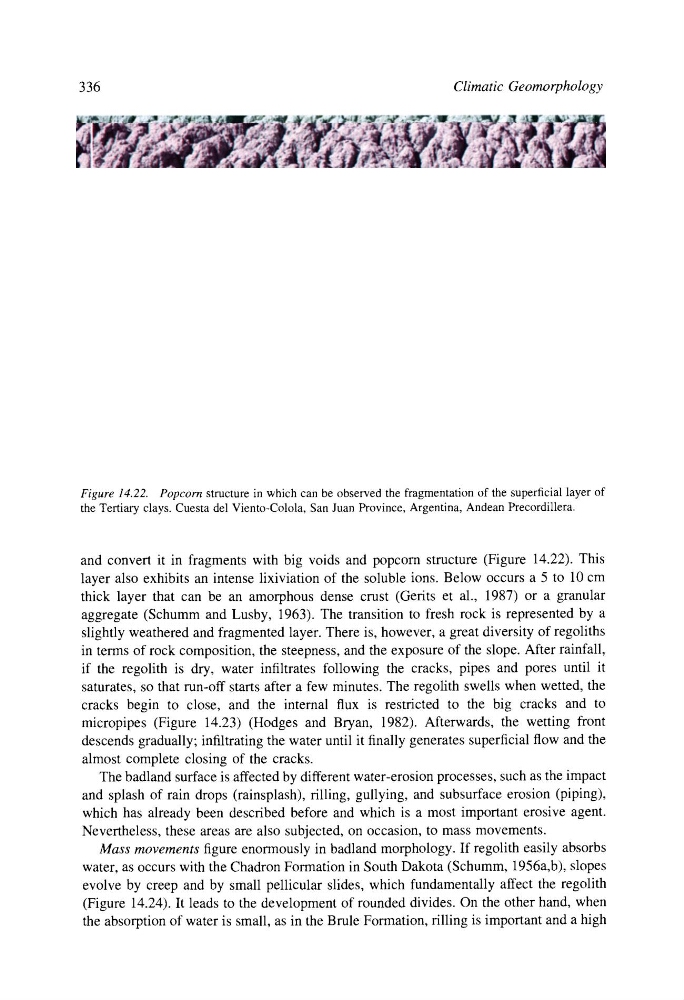
Figure 14.22. Popcorn structure in which can be observed the fragmentation of the superficial layer of
the Tertiary clays. Cuesta del Viento-Colola, San Juan Province, Argentina, Andean Precordillera.
and convert it in fragments with big voids and popcorn structure (Figure 14.22). This
layer also exhibits an intense lixiviation of the soluble ions. Below occurs a 5 to 10 cm
thick layer that can be an amorphous dense crust (Gerits et al., 1987) or a granular
aggregate (Schumm and Lusby, 1963). The transition to fresh rock is represented by a
slightly weathered and fragmented layer. There is, however, a great diversity of regoliths
in terms of rock composition, the steepness, and the exposure of the slope. After rainfall,
if the regolith is dry, water infiltrates following the cracks, pipes and pores until it
saturates, so that run-off starts after a few minutes. The regolith swells when wetted, the
cracks begin to close, and the internal flux is restricted to the big cracks and to
micropipes (Figure 14.23) (Hodges and Bryan, 1982). Afterwards, the wetting front
descends gradually; infiltrating the water until it finally generates superficial flow and the
almost complete closing of the cracks.
The badland surface is affected by different water-erosion processes, such as the impact
and splash of rain drops (rainsplash), filling, gullying, and subsurface erosion (piping),
which has already been described before and which is a most important erosive agent.
Nevertheless, these areas are also subjected, on occasion, to mass movements.
Mass movements figure enormously in badland morphology. If regolith easily absorbs
water, as occurs with the Chadron Formation in South Dakota (Schumm, 1956a,b), slopes
evolve by creep and by small pellicular slides, which fundamentally affect the regolith
(Figure 14.24). It leads to the development of rounded divides. On the other hand, when
the absorption of water is small, as in the Brule Formation, filling is important and a high
Climatic Geomorphology
Figure 14.22. Popcorn structure in which can be observed the fragmentation of the superficial layer of
the Tertiary clays. Cuesta del Viento-Colola, San Juan Province, Argentina, Andean Precordillera.
and convert it in fragments with big voids and popcorn structure (Figure 14.22). This
layer also exhibits an intense lixiviation of the soluble ions. Below occurs a 5 to 10 cm
thick layer that can be an amorphous dense crust (Gerits et al., 1987) or a granular
aggregate (Schumm and Lusby, 1963). The transition to fresh rock is represented by a
slightly weathered and fragmented layer. There is, however, a great diversity of regoliths
in terms of rock composition, the steepness, and the exposure of the slope. After rainfall,
if the regolith is dry, water infiltrates following the cracks, pipes and pores until it
saturates, so that run-off starts after a few minutes. The regolith swells when wetted, the
cracks begin to close, and the internal flux is restricted to the big cracks and to
micropipes (Figure 14.23) (Hodges and Bryan, 1982). Afterwards, the wetting front
descends gradually; infiltrating the water until it finally generates superficial flow and the
almost complete closing of the cracks.
The badland surface is affected by different water-erosion processes, such as the impact
and splash of rain drops (rainsplash), filling, gullying, and subsurface erosion (piping),
which has already been described before and which is a most important erosive agent.
Nevertheless, these areas are also subjected, on occasion, to mass movements.
Mass movements figure enormously in badland morphology. If regolith easily absorbs
water, as occurs with the Chadron Formation in South Dakota (Schumm, 1956a,b), slopes
evolve by creep and by small pellicular slides, which fundamentally affect the regolith
(Figure 14.24). It leads to the development of rounded divides. On the other hand, when
the absorption of water is small, as in the Brule Formation, filling is important and a high