

The action of water in arid regions
295
80
24- 31 August 1969
60
40
30
20O
105"
E
3o.~:
0.20.1
0
24
3O
2o.~:
0.20.1
0
15
2s
2'6
2'7
d8
2~
d0
15- 22 October 1972
[
!
3' I
16
1'7
1'8 " "
i~
2'0
2'i
2~
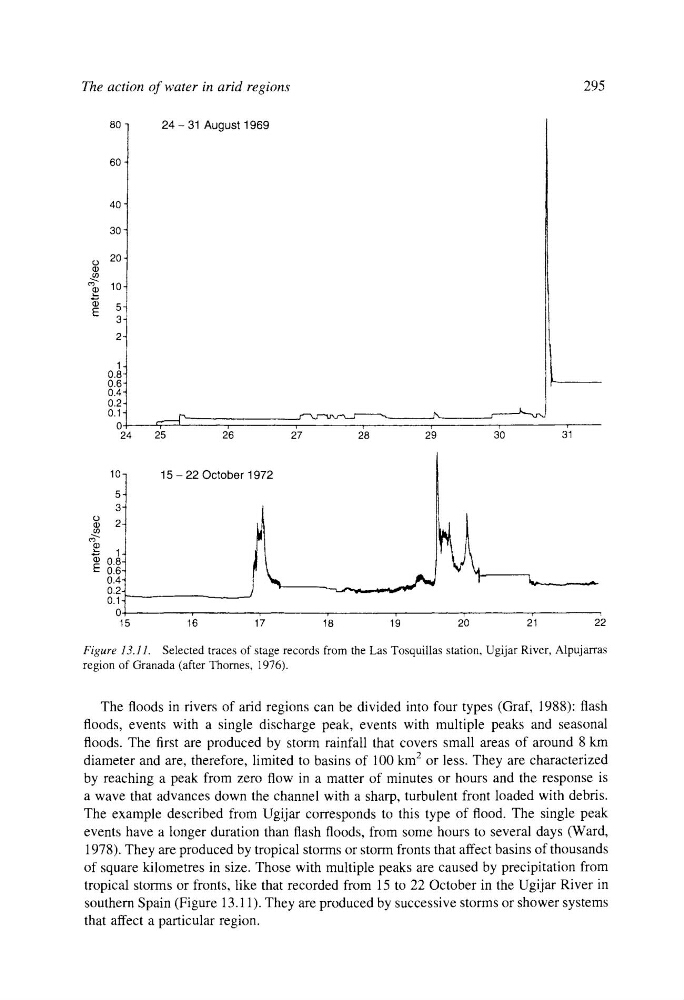
Figure 13.11. Selected traces of stage records from the Las Tosquillas station, Ugijar River, Alpujarras
region of Granada (after Thornes, 1976).
The floods in rivers of arid regions can be divided into four types (Graf, 1988): flash
floods, events with a single discharge peak, events with multiple peaks and seasonal
floods. The first are produced by storm rainfall that covers small areas of around 8 km
diameter and are, therefore, limited to basins of 100 km 2 or less. They are characterized
by reaching a peak from zero flow in a matter of minutes or hours and the response is
a wave that advances down the channel with a sharp, turbulent front loaded with debris.
The example described from Ugijar corresponds to this type of flood. The single peak
events have a longer duration than flash floods, from some hours to several days (Ward,
1978). They are produced by tropical storms or storm fronts that affect basins of thousands
of square kilometres in size. Those with multiple peaks are caused by precipitation from
tropical storms or fronts, like that recorded from 15 to 22 October in the Ugijar River in
southern Spain (Figure 13.11). They are produced by successive storms or shower systems
that affect a particular region.
295
80
24- 31 August 1969
60
40
30
20O
105"
E
3o.~:
0.20.1
0
24
3O
2o.~:
0.20.1
0
15
2s
2'6
2'7
d8
2~
d0
15- 22 October 1972
[
!
3' I
16
1'7
1'8 " "
i~
2'0
2'i
2~
Figure 13.11. Selected traces of stage records from the Las Tosquillas station, Ugijar River, Alpujarras
region of Granada (after Thornes, 1976).
The floods in rivers of arid regions can be divided into four types (Graf, 1988): flash
floods, events with a single discharge peak, events with multiple peaks and seasonal
floods. The first are produced by storm rainfall that covers small areas of around 8 km
diameter and are, therefore, limited to basins of 100 km 2 or less. They are characterized
by reaching a peak from zero flow in a matter of minutes or hours and the response is
a wave that advances down the channel with a sharp, turbulent front loaded with debris.
The example described from Ugijar corresponds to this type of flood. The single peak
events have a longer duration than flash floods, from some hours to several days (Ward,
1978). They are produced by tropical storms or storm fronts that affect basins of thousands
of square kilometres in size. Those with multiple peaks are caused by precipitation from
tropical storms or fronts, like that recorded from 15 to 22 October in the Ugijar River in
southern Spain (Figure 13.11). They are produced by successive storms or shower systems
that affect a particular region.