

194
Climatic Geomorphology
3.6. Grazes lit~es
The gr6zes lit6es are slope deposits made up of alternating layers of well-sorted angular
stones and finer material primarily composed of sand, silt, and clay material (Tricart, 1952)
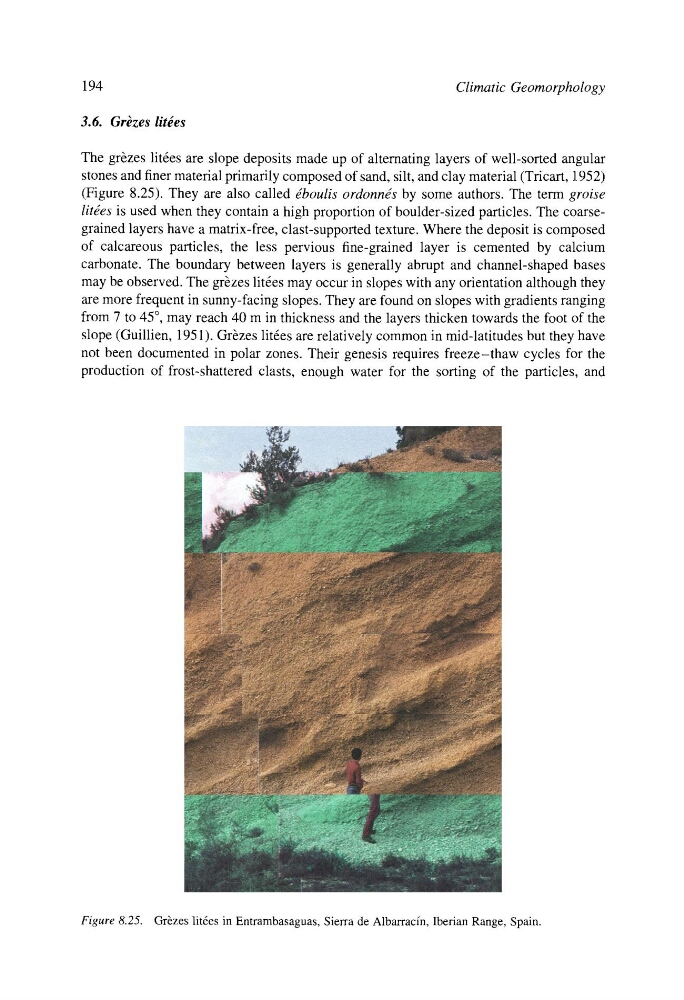
(Figure 8.25). They are also called dboulis ordonn~s by some authors. The term groise
litdes is used when they contain a high proportion of boulder-sized particles. The coarsegrained layers have a matrix-free, clast-supported texture. Where the deposit is composed
of calcareous particles, the less pervious fine-grained layer is cemented by calcium
carbonate. The boundary between layers is generally abrupt and channel-shaped bases
may be observed. The grazes lit6es may occur in slopes with any orientation although they
are more frequent in sunny-facing slopes. They are found on slopes with gradients ranging
from 7 to 45 ~ may reach 40 m in thickness and the layers thicken towards the foot of the
slope (Guillien, 1951). Grazes lit6es are relatively common in mid-latitudes but they have
not been documented in polar zones. Their genesis requires freeze-thaw cycles for the
production of frost-shattered clasts, enough water for the sorting of the particles, and
Figure 8.25. Grazes lit6es in Entrambasaguas, Sierra de Albarracfn, Iberian Range, Spain.
Climatic Geomorphology
3.6. Grazes lit~es
The gr6zes lit6es are slope deposits made up of alternating layers of well-sorted angular
stones and finer material primarily composed of sand, silt, and clay material (Tricart, 1952)
(Figure 8.25). They are also called dboulis ordonn~s by some authors. The term groise
litdes is used when they contain a high proportion of boulder-sized particles. The coarsegrained layers have a matrix-free, clast-supported texture. Where the deposit is composed
of calcareous particles, the less pervious fine-grained layer is cemented by calcium
carbonate. The boundary between layers is generally abrupt and channel-shaped bases
may be observed. The grazes lit6es may occur in slopes with any orientation although they
are more frequent in sunny-facing slopes. They are found on slopes with gradients ranging
from 7 to 45 ~ may reach 40 m in thickness and the layers thicken towards the foot of the
slope (Guillien, 1951). Grazes lit6es are relatively common in mid-latitudes but they have
not been documented in polar zones. Their genesis requires freeze-thaw cycles for the
production of frost-shattered clasts, enough water for the sorting of the particles, and
Figure 8.25. Grazes lit6es in Entrambasaguas, Sierra de Albarracfn, Iberian Range, Spain.