

BORING LIFE
,
Now let us consider how it bores its way through the
.
wood. To understand this it is
-.
necessary to refer to
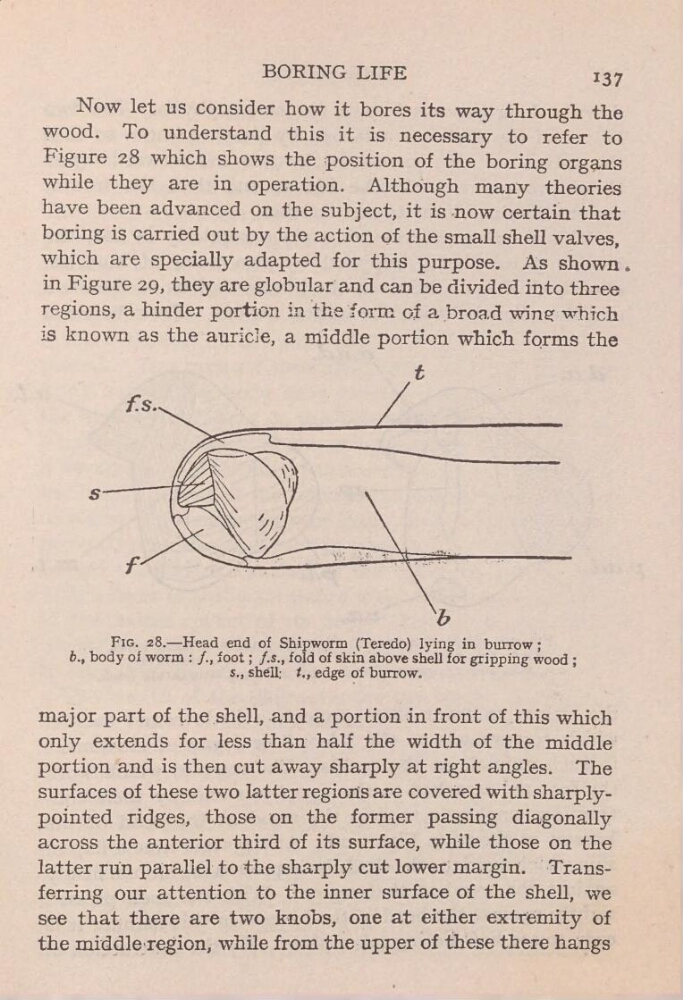
Figure 28 which shows the position of the borig organs
while they are in operation.
Although many theories
have been advanced on-the subject, it is now certain that
boring is carried out by the action of the small shell valves,
which are specially adapted for this purpose.
As shown
.
in Figure 29, they are globular' and can be divided into three
.
regions, a hinder porti0n in the‘form of abroad Wing-which
_
is known as the auricle, a middle portion which forms the
»
/$
s
_
[fé
=
l '
\\
_
;
a
_
_
-
FIG. 28.—Head end of Shipwofm (Teredo) lying in burrow;
b., body of worm : f., foot; f.s., fold of skin 'above shell for gripping wood;
s., shell;
t., edge of
-
.
major part of the shell,
a portion in front of this
'
only extends for less than half the width of the middle
portion and is then cut away sharply ‘at right angles. The '
surfaces of these two latter region‘s are covered With sharply—
pointed ridges, xthose on the former passing diagonally
_
across
anterior third of its surfaCe, while those on the
latter ru‘n parallel to the sharplÿ cut lowerëmargin. “Trans—‘
ferring our attention to the inner surface ofthe shell,
see that» there are
at either extremityof
the middle—region, while from the-upper of these there hangs
,
Now let us consider how it bores its way through the
.
wood. To understand this it is
-.
necessary to refer to
Figure 28 which shows the position of the borig organs
while they are in operation.
Although many theories
have been advanced on-the subject, it is now certain that
boring is carried out by the action of the small shell valves,
which are specially adapted for this purpose.
As shown
.
in Figure 29, they are globular' and can be divided into three
.
regions, a hinder porti0n in the‘form of abroad Wing-which
_
is known as the auricle, a middle portion which forms the
»
/$
s
_
[fé
=
l '
\\
_
;
a
_
_
-
FIG. 28.—Head end of Shipwofm (Teredo) lying in burrow;
b., body of worm : f., foot; f.s., fold of skin 'above shell for gripping wood;
s., shell;
t., edge of
-
.
major part of the shell,
a portion in front of this
'
only extends for less than half the width of the middle
portion and is then cut away sharply ‘at right angles. The '
surfaces of these two latter region‘s are covered With sharply—
pointed ridges, xthose on the former passing diagonally
_
across
anterior third of its surfaCe, while those on the
latter ru‘n parallel to the sharplÿ cut lowerëmargin. “Trans—‘
ferring our attention to the inner surface ofthe shell,
see that» there are
at either extremityof
the middle—region, while from the-upper of these there hangs