

1-38
THE SEAS
down a long process known as the apophysis.
The two
halves of the shell are attached by the two knobs so that
the valves are able torock backwards and forwards upon
these two points, rst the hinder and then the frontal
.
regions coming closer to one another.
«
'
.
This rocking process takes place regularly in life, the
_
power being supplied bÿ two pairs of muscles,
'
one of whiCh runs
regions of the shell
‘
and the other between the frontal regions.
From between
'
'
a.ad.
d.a
.
-
\ËW
_
.
.
‘
_.\ &
\ÏÏ
/
ÿ
‘
._
\_
'
ap—
îË\—
Il]
_
-.
\\\——
—
‘
pad.
p..z.
\:
”"‘ '
'
_
U.“.
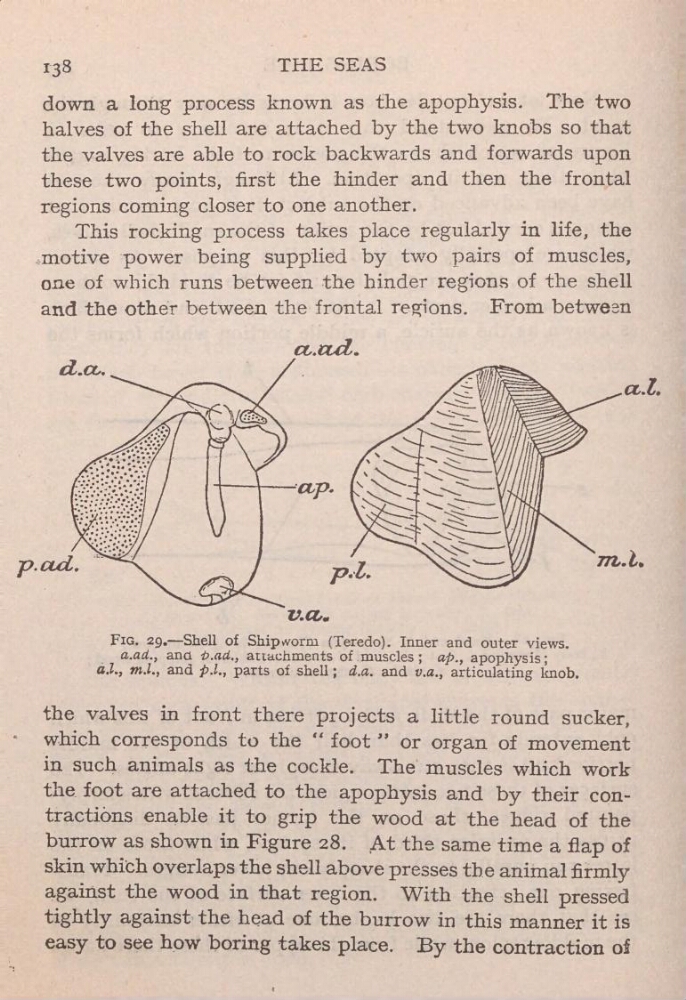
FIG. 29.—Shell of Shipworm (Teredo). Inner and outer views.
a.ad., ana i>.ad., attachments of.muscles;
ap., apophysis;
.
_
a_i.l_., m.l., and p.l., parts,of shell; d.a. and v.a., articulating knob.
the valves in front there projects a little round
_
"
which
to the
“
foot ”
or organ of movement
in such animals-as the cockle.
The‘ muscles which work
the. foot'are- attached to the apophysis and by' their contractions enable it to grip the wood at the head of the
,
burrow as shown in Figure 28.
_At the same time a ap of
skin which overlaps the shell above presses the animal im_ly
‘
against the wood in that region.
With the shell pressed
tightly against the head of the burroW in this manner it is
_
_eaSy to see how boring takes.plaèe; =Bythe contraction o_ .
THE SEAS
down a long process known as the apophysis.
The two
halves of the shell are attached by the two knobs so that
the valves are able torock backwards and forwards upon
these two points, rst the hinder and then the frontal
.
regions coming closer to one another.
«
'
.
This rocking process takes place regularly in life, the
_
power being supplied bÿ two pairs of muscles,
'
one of whiCh runs
regions of the shell
‘
and the other between the frontal regions.
From between
'
'
a.ad.
d.a
.
-
\ËW
_
.
.
‘
_.\ &
\ÏÏ
/
ÿ
‘
._
\_
'
ap—
îË\—
Il]
_
-.
\\\——
—
‘
pad.
p..z.
\:
”"‘ '
'
_
U.“.
FIG. 29.—Shell of Shipworm (Teredo). Inner and outer views.
a.ad., ana i>.ad., attachments of.muscles;
ap., apophysis;
.
_
a_i.l_., m.l., and p.l., parts,of shell; d.a. and v.a., articulating knob.
the valves in front there projects a little round
_
"
which
to the
“
foot ”
or organ of movement
in such animals-as the cockle.
The‘ muscles which work
the. foot'are- attached to the apophysis and by' their contractions enable it to grip the wood at the head of the
,
burrow as shown in Figure 28.
_At the same time a ap of
skin which overlaps the shell above presses the animal im_ly
‘
against the wood in that region.
With the shell pressed
tightly against the head of the burroW in this manner it is
_
_eaSy to see how boring takes.plaèe; =Bythe contraction o_ .