

91
8 Eutrophication in the Great Lakes of the Chinese Pacific Drainage Basin: Changes, Trends, and Management
The result of these differences is that although the amounts of
nutrient input loads to these lakes are similar, effects in term
of eutrophication in these lakes are different. Lake Dongting
has remained eutrophic, while Lakes Chao and Tai, with more
limited water exchanges, are now hypereutrophic.
8.2.2 Water Quality Trends
Changes in water quality in the lakes in the PDB have been
particularly noticeable during the most recent 40 years, as
large increases in urbanization along these lakes and accelerated industrial development in the lakes’ watershed have
increased urban and agricultural run-off to the lakes. These
changes have made water quality a top environmental concern in China. In general, population levels in a lake watershed are a good first approximation for determining the level
of the lake’s eutrophication. The higher the population density, the greater the likelihood that serious pollution and water
quality problems are found (Chang 1993). Water quality is
deteriorating in most lakes close to urban centers (Shu 1991).
Large lakes such as Lakes Tai and Chao are hypereutrophic
and are the final destination of sewage and industrial wastes
from the surrounding urban centers (Yang et al. 2008).
The change in water quality in Lake Tai is a case in point.
Anthropogenic inputs to the lake have been increasing since
1950, as population and human activities in the immediate
watershed of the lake have increased. However, the rate of
the change was slow in the 1960s and 1970s, the types of the
inputs during those periods were primarily agricultural and
household wastes, and the amounts involved were relatively
low. Strong currents provided vigorous water circulation in
the lake and a relatively high dissolved oxygen (DO) level.
During the 1970s, the DO level was greater than 7 ppm, even
at the bottom of the lake. During the 1960s, Lake Tai was
generally oligotrophic (Table 8.2), with inputs of primary organic matter from the immediate watershed.
Untreated effluents from the watershed draining into Tai
Lake have increased substantially over the last 30 years. The
total amount of untreated effluents was estimated in 1987 at
33.83 × 10
6
tons per year (Chang 1996). This amount has increased substantially, primarily from small chemical and manufacturing plants close to Lake Tai. This untreated effluent
rapidly began to change the degree of eutrophication in Lake
Tai and affected the water quality of the lake. Table 8.2 shows
the average concentration of nitrogen (N) and total phosphate
in 1960, 1980, and 1988. The eutrophication thresholds of
phosphorus (P) for freshwaters are from 0.02 to 0.10 mg P L
−1
and of N are from 0.500 to 1.00 mg N L
−1
(Lin et al. 2008; Xu
et al. 2010). In 1960, Lake Tai was categorized as oligotrophic;
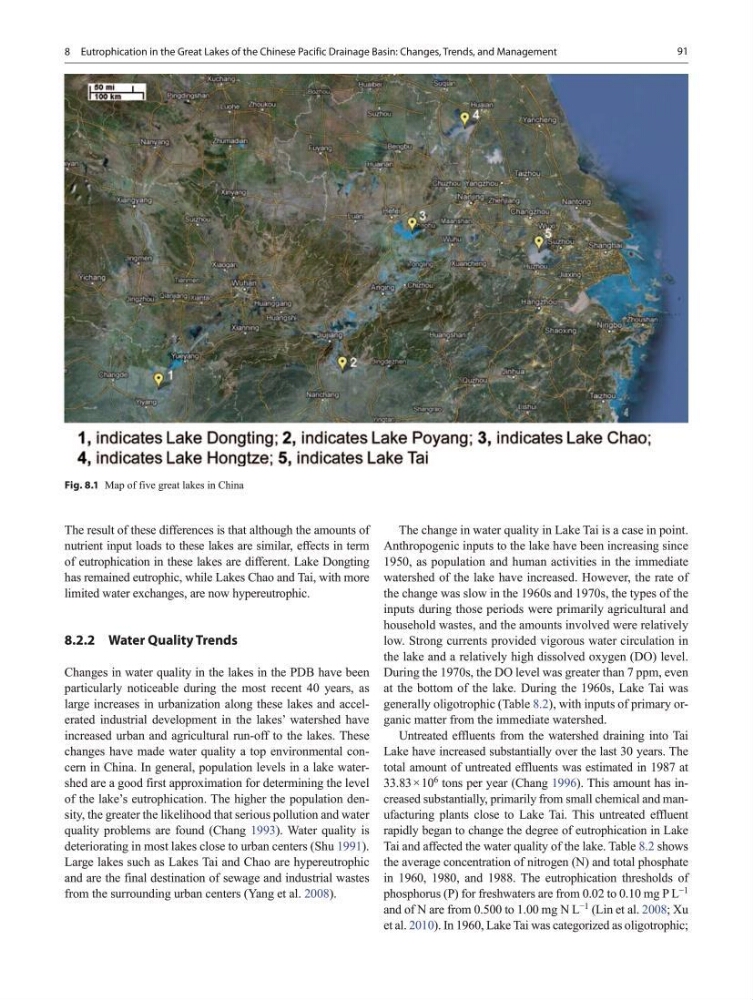
Fig. 8.1 Map of five great lakes in China
8 Eutrophication in the Great Lakes of the Chinese Pacific Drainage Basin: Changes, Trends, and Management
The result of these differences is that although the amounts of
nutrient input loads to these lakes are similar, effects in term
of eutrophication in these lakes are different. Lake Dongting
has remained eutrophic, while Lakes Chao and Tai, with more
limited water exchanges, are now hypereutrophic.
8.2.2 Water Quality Trends
Changes in water quality in the lakes in the PDB have been
particularly noticeable during the most recent 40 years, as
large increases in urbanization along these lakes and accelerated industrial development in the lakes’ watershed have
increased urban and agricultural run-off to the lakes. These
changes have made water quality a top environmental concern in China. In general, population levels in a lake watershed are a good first approximation for determining the level
of the lake’s eutrophication. The higher the population density, the greater the likelihood that serious pollution and water
quality problems are found (Chang 1993). Water quality is
deteriorating in most lakes close to urban centers (Shu 1991).
Large lakes such as Lakes Tai and Chao are hypereutrophic
and are the final destination of sewage and industrial wastes
from the surrounding urban centers (Yang et al. 2008).
The change in water quality in Lake Tai is a case in point.
Anthropogenic inputs to the lake have been increasing since
1950, as population and human activities in the immediate
watershed of the lake have increased. However, the rate of
the change was slow in the 1960s and 1970s, the types of the
inputs during those periods were primarily agricultural and
household wastes, and the amounts involved were relatively
low. Strong currents provided vigorous water circulation in
the lake and a relatively high dissolved oxygen (DO) level.
During the 1970s, the DO level was greater than 7 ppm, even
at the bottom of the lake. During the 1960s, Lake Tai was
generally oligotrophic (Table 8.2), with inputs of primary organic matter from the immediate watershed.
Untreated effluents from the watershed draining into Tai
Lake have increased substantially over the last 30 years. The
total amount of untreated effluents was estimated in 1987 at
33.83 × 10
6
tons per year (Chang 1996). This amount has increased substantially, primarily from small chemical and manufacturing plants close to Lake Tai. This untreated effluent
rapidly began to change the degree of eutrophication in Lake
Tai and affected the water quality of the lake. Table 8.2 shows
the average concentration of nitrogen (N) and total phosphate
in 1960, 1980, and 1988. The eutrophication thresholds of
phosphorus (P) for freshwaters are from 0.02 to 0.10 mg P L
−1
and of N are from 0.500 to 1.00 mg N L
−1
(Lin et al. 2008; Xu
et al. 2010). In 1960, Lake Tai was categorized as oligotrophic;
Fig. 8.1 Map of five great lakes in China