

7 Environmental Impacts of Tourism on Lakes
85
is affected by an increase in turbidity, nutrients or algal biomass. According to Yousef et al. (1980), waves generated
by motorboat propellers increased phosphorus on average
by 28–55 %. Maximum increase in turbidity was observed
shortly after boating activity but remained high for almost
25 h. Sediment re-suspension, higher turbidity and larger TP
concentrations tended to be greater in shallower lakes than
deeper lakes (Asplund 1996).
Fuel leakage and emissions affect water quality by adding
metals, hydrocarbons and other pollutants to the water. According to Wagner (1991), who provides a good review on
the subject, toxic effects on aquatic organisms are in general
minimal because amounts are usually small and hydrocarbons are highly volatile. However, polyaromatic hydrocarbons and fuel additives may have effects on drinking water
supply. Moreover, accumulation in sediments in certain
places, e.g. near marinas might be a problem for water organisms.
Wakes and waves produced by boats can be up to
40–50 cm depending on the size and speed. These waves can
severely increase shoreline erosion (e.g. Johnson 1994) and
may also indirectly affect submerged and emergent aquatic
macrophytes through their movement but also through increased turbidity. Plant communities are more susceptible to
direct effects from boat hulls or propellers (e.g. Asplund and
Cook 1997).
Boats have very little direct effect on fish, fish breeding
or fish behaviour. Of much greater importance are the indirect effects through the disturbance of fish habitats (Lagler
et al. 1950). Similarly, wildlife is indirectly disturbed by the
destruction of habitats and deterioration of water quality. Direct effects of boating on wildlife are noise and direct contact
with propellers (Asplund 2000). Moreover, effects on human
enjoyment, which disturbs peace and quiet, air quality, safety
and crowding should not be under-estimated.
A further aspect of boating is the number of boats permitted on a lake because the effects on lakes mentioned
earlier are cumulative and related to the quantity of boats.
There is, however, very little scientific evidence on this aspect (Anthony and Downing 2003; Beachler and Hill 2003;
Burger 2003). On Neusiedler See, a large shallow lake in
Austria, for example, cumulative boat days for the period
May to September 2004 to 2006 have increased from 488 to
584 with peaks occurring mainly on weekends and an everincreasing tendency (Fig. 7.1).
7.4.4 Impacts on the Shoreline
Shore zones are characterized by the type of substrate, vegetation, slope and structural diversity. The zonation of the
vegetation and the definitions are elegantly summarized
in Fig. 7.2 reproduced here from Ostendorp et al. (2004).
Shorelines are under pressure by a wide variety of human activities in the immediate lakeshore and remotely in the catchment. Recreation and tourism have direct impacts through
facilities and increased numbers of holiday makers resulting
in habitat destruction, trampling, littering and disturbance of
breeding birds or sensitive mammals.
The degree of modification and the accessibility of the
shoreline is an important aspect. In developed regions of
April
M ay
June
July
August September October
Number of boats
0
5
10
15
20
25
30
2004
2005
2006
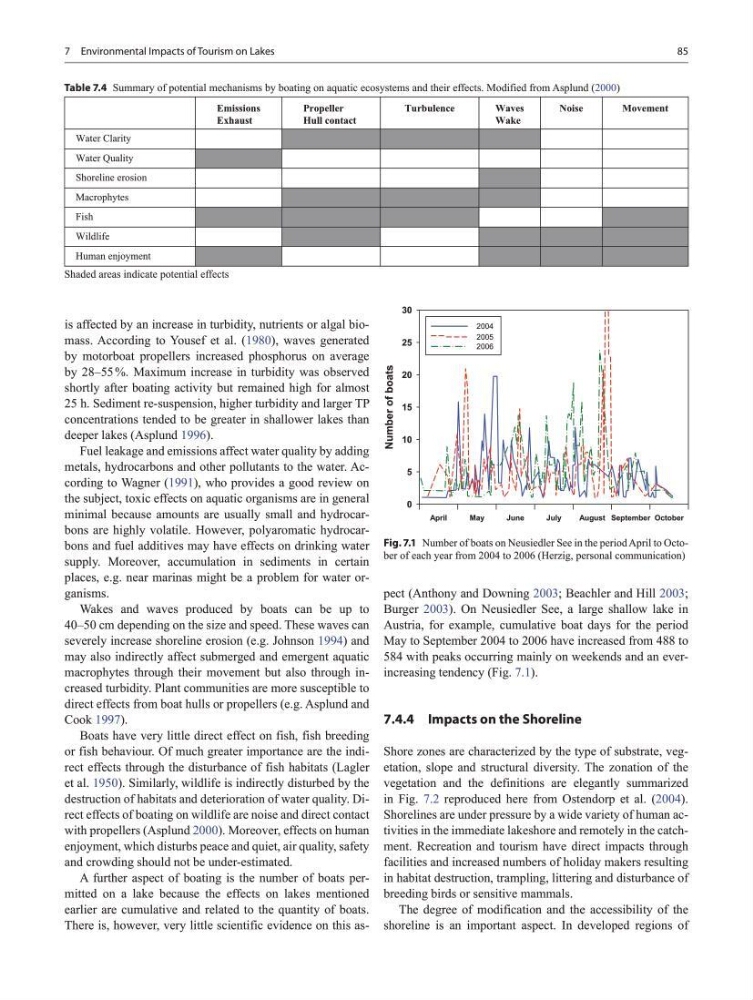
Fig. 7.1 Number of boats on Neusiedler See in the period April to October of each year from 2004 to 2006 (Herzig, personal communication)
Table 7.4 Summary of potential mechanisms by boating on aquatic ecosystems and their effects. Modified from Asplund (2000)
Emissions
Exhaust
Propeller
Hull contact
Turbulence
Waves
Wake
Noise
Movement
Water Clarity
Water Quality
Shoreline erosion
Macrophytes
Fish
Wildlife
Human enjoyment
Shaded areas indicate potential effects
85
is affected by an increase in turbidity, nutrients or algal biomass. According to Yousef et al. (1980), waves generated
by motorboat propellers increased phosphorus on average
by 28–55 %. Maximum increase in turbidity was observed
shortly after boating activity but remained high for almost
25 h. Sediment re-suspension, higher turbidity and larger TP
concentrations tended to be greater in shallower lakes than
deeper lakes (Asplund 1996).
Fuel leakage and emissions affect water quality by adding
metals, hydrocarbons and other pollutants to the water. According to Wagner (1991), who provides a good review on
the subject, toxic effects on aquatic organisms are in general
minimal because amounts are usually small and hydrocarbons are highly volatile. However, polyaromatic hydrocarbons and fuel additives may have effects on drinking water
supply. Moreover, accumulation in sediments in certain
places, e.g. near marinas might be a problem for water organisms.
Wakes and waves produced by boats can be up to
40–50 cm depending on the size and speed. These waves can
severely increase shoreline erosion (e.g. Johnson 1994) and
may also indirectly affect submerged and emergent aquatic
macrophytes through their movement but also through increased turbidity. Plant communities are more susceptible to
direct effects from boat hulls or propellers (e.g. Asplund and
Cook 1997).
Boats have very little direct effect on fish, fish breeding
or fish behaviour. Of much greater importance are the indirect effects through the disturbance of fish habitats (Lagler
et al. 1950). Similarly, wildlife is indirectly disturbed by the
destruction of habitats and deterioration of water quality. Direct effects of boating on wildlife are noise and direct contact
with propellers (Asplund 2000). Moreover, effects on human
enjoyment, which disturbs peace and quiet, air quality, safety
and crowding should not be under-estimated.
A further aspect of boating is the number of boats permitted on a lake because the effects on lakes mentioned
earlier are cumulative and related to the quantity of boats.
There is, however, very little scientific evidence on this aspect (Anthony and Downing 2003; Beachler and Hill 2003;
Burger 2003). On Neusiedler See, a large shallow lake in
Austria, for example, cumulative boat days for the period
May to September 2004 to 2006 have increased from 488 to
584 with peaks occurring mainly on weekends and an everincreasing tendency (Fig. 7.1).
7.4.4 Impacts on the Shoreline
Shore zones are characterized by the type of substrate, vegetation, slope and structural diversity. The zonation of the
vegetation and the definitions are elegantly summarized
in Fig. 7.2 reproduced here from Ostendorp et al. (2004).
Shorelines are under pressure by a wide variety of human activities in the immediate lakeshore and remotely in the catchment. Recreation and tourism have direct impacts through
facilities and increased numbers of holiday makers resulting
in habitat destruction, trampling, littering and disturbance of
breeding birds or sensitive mammals.
The degree of modification and the accessibility of the
shoreline is an important aspect. In developed regions of
April
M ay
June
July
August September October
Number of boats
0
5
10
15
20
25
30
2004
2005
2006
Fig. 7.1 Number of boats on Neusiedler See in the period April to October of each year from 2004 to 2006 (Herzig, personal communication)
Table 7.4 Summary of potential mechanisms by boating on aquatic ecosystems and their effects. Modified from Asplund (2000)
Emissions
Exhaust
Propeller
Hull contact
Turbulence
Waves
Wake
Noise
Movement
Water Clarity
Water Quality
Shoreline erosion
Macrophytes
Fish
Wildlife
Human enjoyment
Shaded areas indicate potential effects