

210
S. Sánchez-Carrillo et al.
15.5.2 Mineralization of Nitrogen and
Phosphorus during Wetland
Eutrophication
Measurements of potential mineralization of N and P (PMN
and PMP; see Box 3) using wetland soil samples have been
used successfully to assess the effects of nutrient enrichment
on the nitrogen and phosphorus cycling. Higher rates of organic matter mineralization occur in the detrital layer, decreasing
with soil depth. In the Everglades at the Water Conservation
Area 2a, White and Reddy (2000) and Corstanje et al. (2007)
found rates of PMP significantly higher in the nutrient impacted areas compared to the unimpacted sites. PMN has also
been negatively correlated with distance from nutrient-rich inflows (White and Reddy 2000). Overall, PMN rates have been
significantly correlated with several soil properties including
MBC ( r = 0.81) and N ( r = 0.85), total P ( r = 0.65) and extractable NH 4
+ ( r = 0.78) with significant negative correlations
with total N ( r = − 0.48). The organic-rich wetland soils have a
low redox potential and may contain a thin (2–4 mm) oxidized
layer owing to high available C coupled with high microbial
activity (Wright and Reddy 2001b). The low O 2 status of the
flooded soil can result in the near complete inhibition of the
autolithotrophic conversion of NH 4
+ to NO 3
− . Therefore, the
concentration of extractable NH 4
+ provides a good indication
of in situ N mineralization rates in flooded soils (Ross et al.
1995). The strong relationship observed between PMN rate
and the size of the microbial pool (MBC and MBN) is likely
one of causation (White and Reddy 2000). Mineralization is
a microbial-mediated process and given a substrate with a
similar C:N ratio, one could expect differences in total active
microbial biomass to influence the rate at which inorganic N
is liberated from the organic fraction. In addition, total P has
been significantly correlated with PMN rate indicating an increase in inorganic N release from soil with increasing total P.
This result suggests that in wetlands availability of P to the microbial pool controls the organic N mineralization as observed
in other organic and inorganic soils (White and Reddy 2000).
The effect of continual P loading over longer terms (many
months to years), not only resulted in increased microbial activity but also an increased size of the microbial pool. It seems
that inorganic P concentrations had a direct influence on increasing the specific heterotrophic microbial activity responsible for net N mineralization of native soil organic matter.
PMP and PMN can also be expressed as a function of total
P and N by means of cumulative potential P, N turnover rates
(PMP/total P and PMN/total N expressed in mg mineralized P or N g
−1
total P or total N) and as a function of MBP
and MBN (PMP-, PMN-quotients as PMP/MBP and PMN/
MBN, respectively, expressed in d
−1
). Both expressions take
the advantage of normalizing the mineralization rates according to the available nutrients and the size of the microbial
loop (Corstanje et al. 2007). The cumulative potential P turnover rates and the PMP-quotient result significantly higher in
wetland soils receiving nutrient enrichment (Corstanje et al.
2007). High cumulative P turnover rate indicates that a larger
pool of P is being mobilized in excess of the increase in soil P
content. Inversely, the microbial communities in nutrient-rich
sites are relatively inefficient with the P obtained from organic matter mineralization as PMP-quotient levels appears to
be significantly high. The combination of PMP-quotient, and
cumulative P turnover rates in nutrient impacted wetlands
describes a very efficient microbial community that initially
responded to the increases in P availability by rising biomass
(P immobilization) and extending P mineralization to pools
previously unattainable (Corstanje et al. 2007). Corstanje
and Reddy (2006) highlight that a general increase in the P
turnover rates can be observed as a result of the P loading
while there appeared no effect of the nutrient loading on the
metabolic coefficient ( qCO 2 , the proportion of aerobic basal
respiration (CO 2 production) to MBC; Anderson and Domsch
1990; see Sect. 15.6; Fig. 15.4). The nutrient loading as such
did not seem to generate stress as to affect the microbial C
metabolism, but did increase P metabolism.
PMN-quotient and the cumulative potential N turnover
pool did not demonstrate significant differences in enriched
soils of Everglades compared to sites having no impact
(Corstanje et al. 2007). The aforementioned variability in the
levels of PMN associated with the soil total P probably reflects increases in microbial biomass as a result of the alleviation of P-limitation. An increase of the cumulative potential
N turnover along with the soil nutrient content reflects higher MBN and higher N-acquiring enzyme activities, probably
contemporaneous to the overall increase in microbial biomass as a result the alleviation of P-limitation.
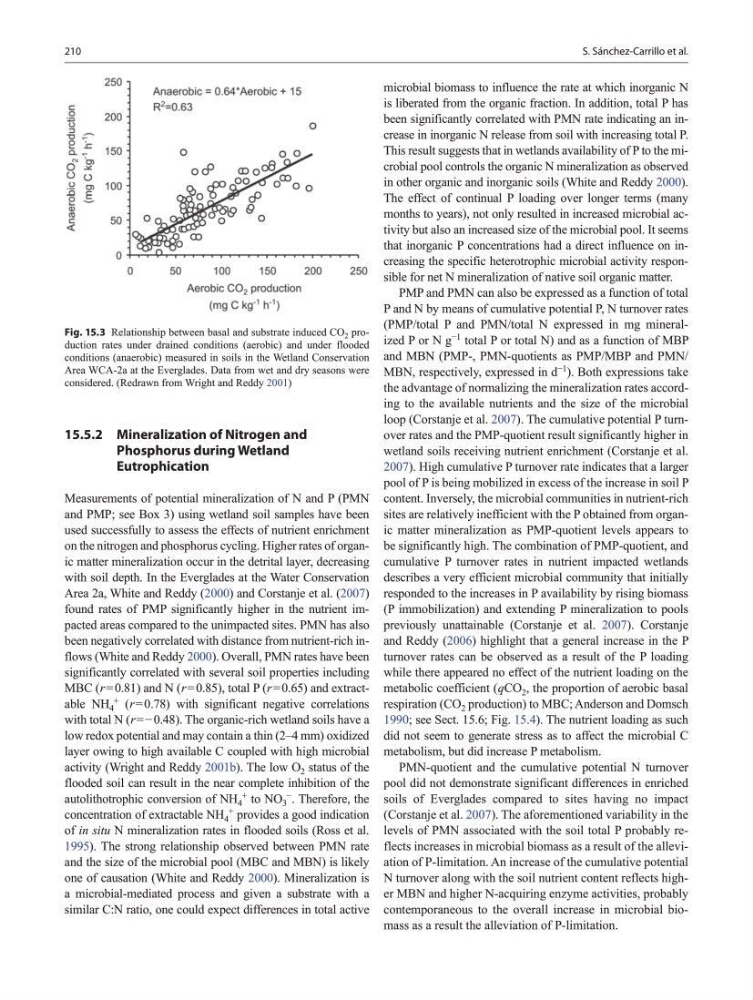
Fig. 15.3 Relationship between basal and substrate induced CO 2 production rates under drained conditions (aerobic) and under flooded
conditions (anaerobic) measured in soils in the Wetland Conservation
Area WCA-2a at the Everglades. Data from wet and dry seasons were
considered. (Redrawn from Wright and Reddy 2001)
S. Sánchez-Carrillo et al.
15.5.2 Mineralization of Nitrogen and
Phosphorus during Wetland
Eutrophication
Measurements of potential mineralization of N and P (PMN
and PMP; see Box 3) using wetland soil samples have been
used successfully to assess the effects of nutrient enrichment
on the nitrogen and phosphorus cycling. Higher rates of organic matter mineralization occur in the detrital layer, decreasing
with soil depth. In the Everglades at the Water Conservation
Area 2a, White and Reddy (2000) and Corstanje et al. (2007)
found rates of PMP significantly higher in the nutrient impacted areas compared to the unimpacted sites. PMN has also
been negatively correlated with distance from nutrient-rich inflows (White and Reddy 2000). Overall, PMN rates have been
significantly correlated with several soil properties including
MBC ( r = 0.81) and N ( r = 0.85), total P ( r = 0.65) and extractable NH 4
+ ( r = 0.78) with significant negative correlations
with total N ( r = − 0.48). The organic-rich wetland soils have a
low redox potential and may contain a thin (2–4 mm) oxidized
layer owing to high available C coupled with high microbial
activity (Wright and Reddy 2001b). The low O 2 status of the
flooded soil can result in the near complete inhibition of the
autolithotrophic conversion of NH 4
+ to NO 3
− . Therefore, the
concentration of extractable NH 4
+ provides a good indication
of in situ N mineralization rates in flooded soils (Ross et al.
1995). The strong relationship observed between PMN rate
and the size of the microbial pool (MBC and MBN) is likely
one of causation (White and Reddy 2000). Mineralization is
a microbial-mediated process and given a substrate with a
similar C:N ratio, one could expect differences in total active
microbial biomass to influence the rate at which inorganic N
is liberated from the organic fraction. In addition, total P has
been significantly correlated with PMN rate indicating an increase in inorganic N release from soil with increasing total P.
This result suggests that in wetlands availability of P to the microbial pool controls the organic N mineralization as observed
in other organic and inorganic soils (White and Reddy 2000).
The effect of continual P loading over longer terms (many
months to years), not only resulted in increased microbial activity but also an increased size of the microbial pool. It seems
that inorganic P concentrations had a direct influence on increasing the specific heterotrophic microbial activity responsible for net N mineralization of native soil organic matter.
PMP and PMN can also be expressed as a function of total
P and N by means of cumulative potential P, N turnover rates
(PMP/total P and PMN/total N expressed in mg mineralized P or N g
−1
total P or total N) and as a function of MBP
and MBN (PMP-, PMN-quotients as PMP/MBP and PMN/
MBN, respectively, expressed in d
−1
). Both expressions take
the advantage of normalizing the mineralization rates according to the available nutrients and the size of the microbial
loop (Corstanje et al. 2007). The cumulative potential P turnover rates and the PMP-quotient result significantly higher in
wetland soils receiving nutrient enrichment (Corstanje et al.
2007). High cumulative P turnover rate indicates that a larger
pool of P is being mobilized in excess of the increase in soil P
content. Inversely, the microbial communities in nutrient-rich
sites are relatively inefficient with the P obtained from organic matter mineralization as PMP-quotient levels appears to
be significantly high. The combination of PMP-quotient, and
cumulative P turnover rates in nutrient impacted wetlands
describes a very efficient microbial community that initially
responded to the increases in P availability by rising biomass
(P immobilization) and extending P mineralization to pools
previously unattainable (Corstanje et al. 2007). Corstanje
and Reddy (2006) highlight that a general increase in the P
turnover rates can be observed as a result of the P loading
while there appeared no effect of the nutrient loading on the
metabolic coefficient ( qCO 2 , the proportion of aerobic basal
respiration (CO 2 production) to MBC; Anderson and Domsch
1990; see Sect. 15.6; Fig. 15.4). The nutrient loading as such
did not seem to generate stress as to affect the microbial C
metabolism, but did increase P metabolism.
PMN-quotient and the cumulative potential N turnover
pool did not demonstrate significant differences in enriched
soils of Everglades compared to sites having no impact
(Corstanje et al. 2007). The aforementioned variability in the
levels of PMN associated with the soil total P probably reflects increases in microbial biomass as a result of the alleviation of P-limitation. An increase of the cumulative potential
N turnover along with the soil nutrient content reflects higher MBN and higher N-acquiring enzyme activities, probably
contemporaneous to the overall increase in microbial biomass as a result the alleviation of P-limitation.
Fig. 15.3 Relationship between basal and substrate induced CO 2 production rates under drained conditions (aerobic) and under flooded
conditions (anaerobic) measured in soils in the Wetland Conservation
Area WCA-2a at the Everglades. Data from wet and dry seasons were
considered. (Redrawn from Wright and Reddy 2001)